

Hi there! I’m Eric. If you’ve spent any time around my shop or seen me at a local market, you probably noticed two things right away: I’m usually wearing a kilt, and I’m almost always covered in a little bit of leather dye or stray thread.
People often ask me how I ended up here, how a guy goes from a quiet garage hobby to running The Kilted Leatherworker LLC. It’s been a wild, rewarding journey, and honestly, it all started with a bit of Scottish pride and a very specific need for better gear.
Why the Kilt? (And the Breeze)
Before we talk about the leather, let’s talk about the kilt. I’ve always been proud of my Scottish heritage. There’s something about putting on a kilt that connects you to the past, to your ancestors, and to a sense of rugged tradition. But if I’m being completely honest and casual with you, there’s a practical side to it, too.
In the heat of a Texas summer or even working in a humid garage, there is nothing, and I mean nothing, quite like what I call the "breeze on the knees." It’s the ultimate comfort. Once you get used to that kind of freedom, going back to regular trousers feels like a chore. So, the kilt became my daily uniform. But wearing a kilt presents a unique problem: no pockets.
If you’re wearing a kilt, you need a sporran (that’s the pouch that hangs in the front) to hold your keys, your phone, and your wallet. And that’s exactly where my journey into leatherworking began.
From Sawdust to Stitches
I didn’t start out as a leatherworker. For a long time, I was a woodworker. I loved the smell of cedar, the sound of a lathe, and the feeling of turning a rough block of wood into something smooth and functional. My garage was filled with sawdust, power tools, and half-finished furniture projects.
But as my love for wearing kilts grew, I found myself frustrated with the accessories available on the market. The mass-produced sporrans I found were either cheaply made or just didn’t have the character I was looking for. I wanted something rugged, something that felt like it could survive a hike through the Highlands but still look good at a formal gathering.
I remember thinking, "I have a garage full of tools. Surely I can figure out how to make a leather pouch."
I went out and bought a small side of leather, a couple of needles, and some waxed thread. I had no idea what I was doing. I sat down at my old woodworking bench, which was still covered in fine wood dust, and I started to cut.
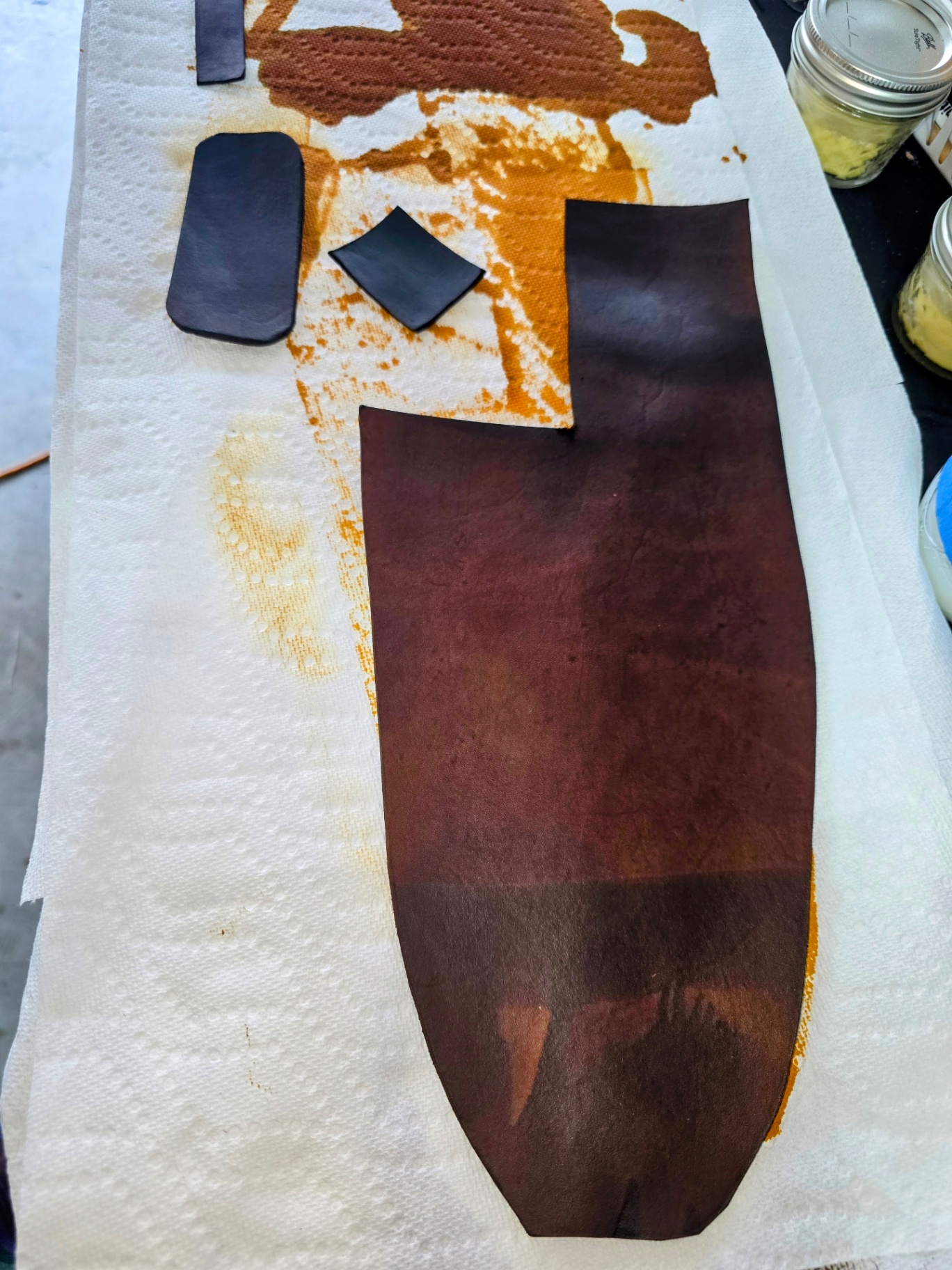
The "Imperfect" First Sporran
My very first sporran was... well, it was a learning experience. If I look at it today, I can see every mistake. The stitches weren't perfectly straight, the edges weren't burnished to a glass-like shine, and the flap was just a tiny bit crooked.
But you know what? I was so incredibly proud of it.
There is a specific kind of magic in creating something with your own two hands. Even with its flaws, that sporran was mine. It held my gear, it looked great with my kilt, and most importantly, it worked. I wore it everywhere. It was the physical proof that I could take a raw material like hide and turn it into something useful. That first project planted a seed. I realized that while I enjoyed woodworking, there was something about the tactile nature of leather that pulled at me even more.
The Evolution of the Three Workbenches
As I got more into the craft, my workspace had to change. You can’t really do fine leatherwork on a surface that’s constantly covered in sawdust from a table saw.
My journey can actually be measured by the three different workbenches I’ve built in my garage.
The first workbench was a repurposed woodworking table. It was heavy, scarred, and a bit too tall for sitting down to stitch. It was where I learned the basics: how to dye leather, how to use a swivel knife, and how to punch holes without waking up the neighbors.
The second workbench was an upgrade. I realized I needed more organization. I needed a place for my mallets, my edge bevellers, and my growing collection of dyes. This bench was more intentional. I started focusing on the "one step at a time" philosophy. I wasn't just making things for myself anymore; I was making gifts for friends and family. I started to see my progress. My stitches were getting tighter, and my designs were becoming more complex.
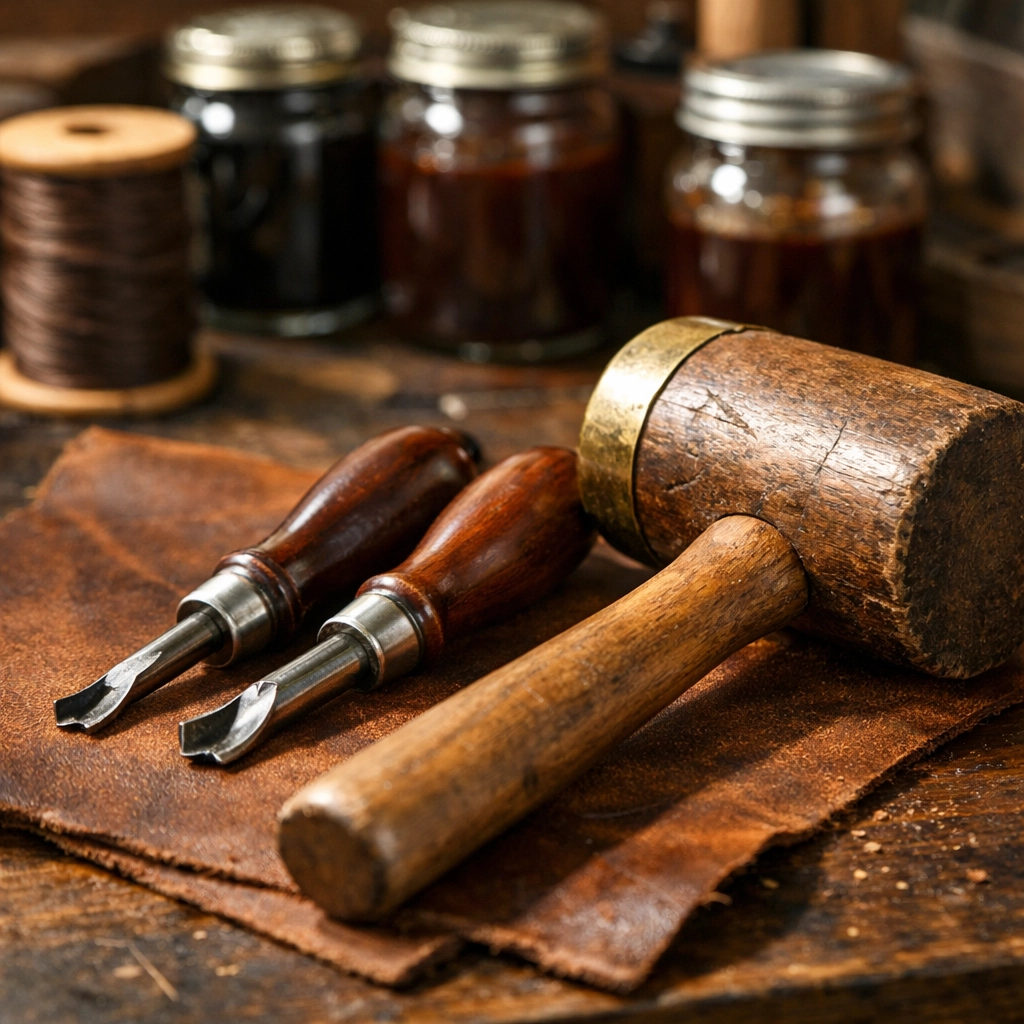
The third workbench: the one I use today: is where the real magic happens. It’s organized, it’s sturdy, and it’s dedicated entirely to The Kilted Leatherworker. This bench has seen the creation of everything from minimalist wallets to custom belt pouches. It’s the heart of my shop. Each bench represented a "level up" in my commitment to the craft.
When a Hobby Becomes a Talent
For a long time, I just called leatherworking my "hobby." It was what I did to relax after a long day. There’s something incredibly meditative about hand-stitching. You can’t rush it. You have to be present, ensuring that every stitch is perfect and every tension pull is consistent.
But then, something shifted. I’d be out at a festival or a grocery store, and people would stop me: not just to ask about the kilt, but to ask about the gear I was wearing.
"Where did you get that pouch?"
"Is that a handmade wallet?"
"Can you make one for me?"
I realized that what I had was more than just a hobby; it was a talent that people actually valued. I saw how much people appreciated the weight of real, high-quality leather and the durability of handmade goods compared to the "fast fashion" items you find in big-box stores.
I decided it was time to share my work with the world. I wanted to provide people with gear that wasn't just a "product," but a piece of craftsmanship that would last a lifetime. That's when The Kilted Leatherworker LLC was officially born.
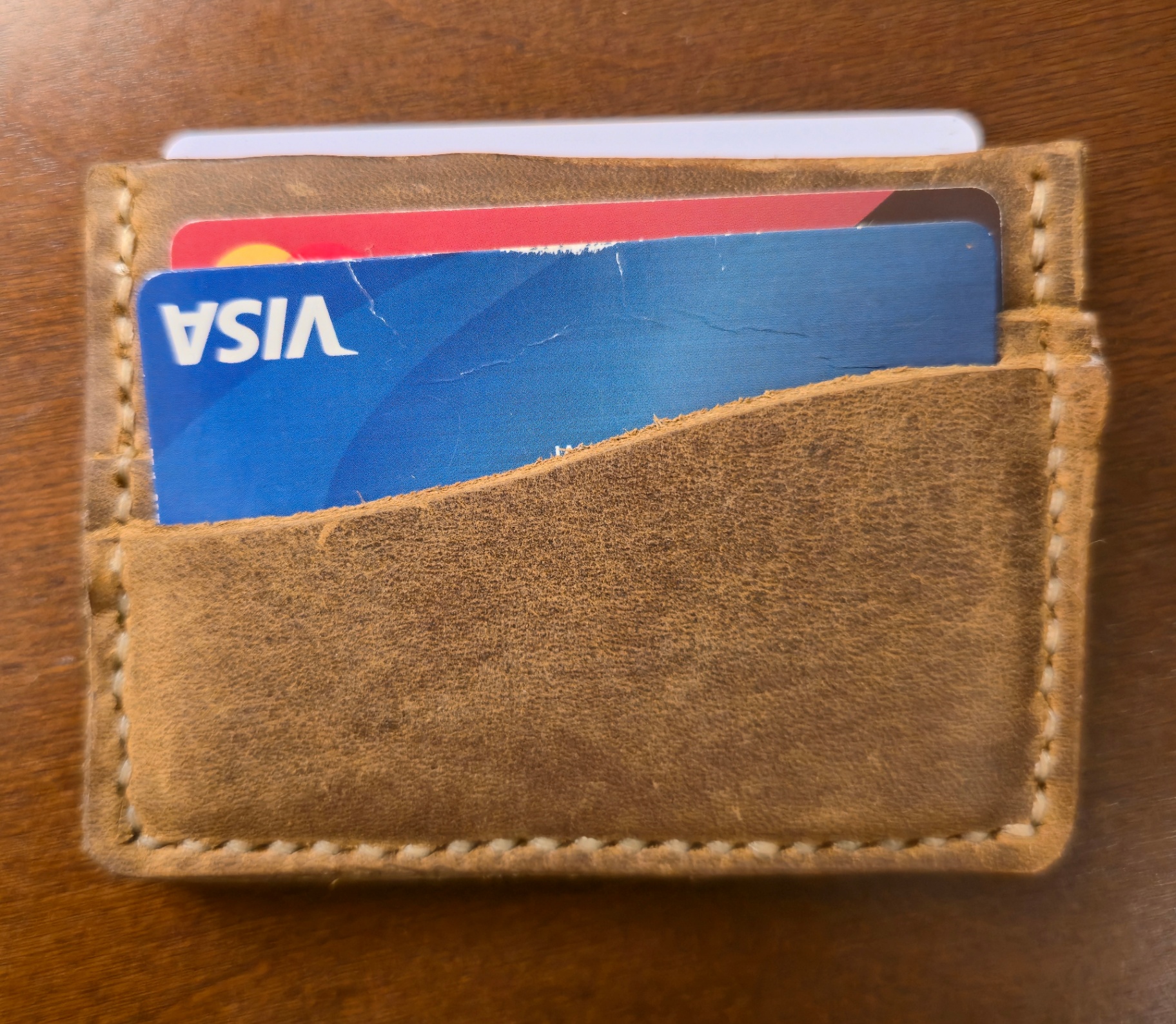
What I Make Now
Today, I spend my time in the garage creating a variety of items, all with that same dedication I had when I made my first sporran (though hopefully with much better technique!).
I love making things that people use every single day. There is something special about knowing a wallet I made is sitting in someone's pocket, or a mini padfolio is being used to jot down important ideas during a business meeting.
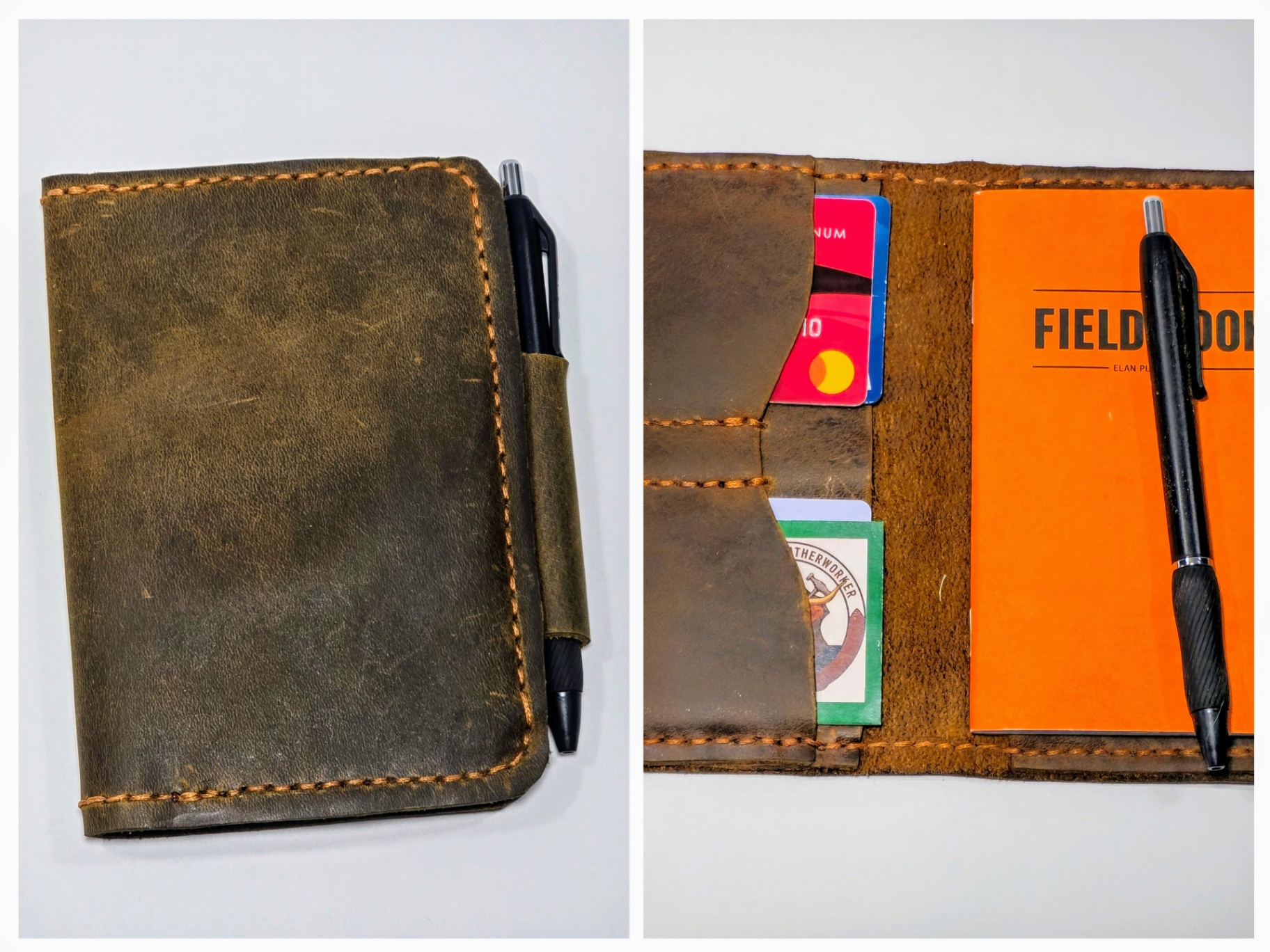
One of my favorite things to craft is the mini leather journal cover. It’s the perfect size for a field book and has pockets for your cards and cash. It’s rugged, functional, and it smells amazing.
Whether it’s a simple belt or a complex belt pouch, I treat every piece with the same respect. I still work out of my garage. I still wear my kilts. And I still get that "breeze on the knees" while I’m finishing up a custom order.
A Sincere Thank You
I want to take a moment to thank you for being here. Whether you’ve bought a dozen items from me or you’re just stopping by the blog to read my story, I truly appreciate your support.
As a small business owner and a solo artisan, every like, share, and purchase means the world to me. It allows me to keep doing what I love, keep improving my craft, and keep that garage light burning late into the night.
If you're ever curious about the process or want to see what I'm currently working on, feel free to check out my latest news or browse the shop. I’m always adding new things and sharing tips on how to care for your leather goods.
Thank you for being a part of this journey from a dusty garage workbench to your pocket. It’s been an honor to share my craft with you.
Stay kilted, my friends.
Eric, Founder and Artisan.