

Hi, I’m Eric, the founder and owner of The Kilted Leatherworker LLC. If you’re anything like me, there’s a certain magic in a blank page. Whether I’m sitting on a mossy log deep in the woods or just sketching out a new design at my workbench, having a place to capture thoughts is essential. But as any adventurer knows, a paper notebook on its own is a bit fragile. It can get crumpled in a pack, stained by a stray splash of soda, or worn down by the simple passage of time.
That’s where a good leather journal cover comes in. I’ve spent years working with hide, and I’ve learned that a cover isn't just about protection, it’s about character. It’s about creating something that ages with you. Today, I want to walk you through how to choose the right one for your specific journey. We’ll look at materials, sizes, and features so you can find the perfect companion for your next adventure.
Why a Leather Cover Matters
You might wonder, "Eric, why not just use a plastic sleeve or a cheap fabric wrap?" Well, little did I know when I first started leatherworking that I was actually getting into the business of storytelling.
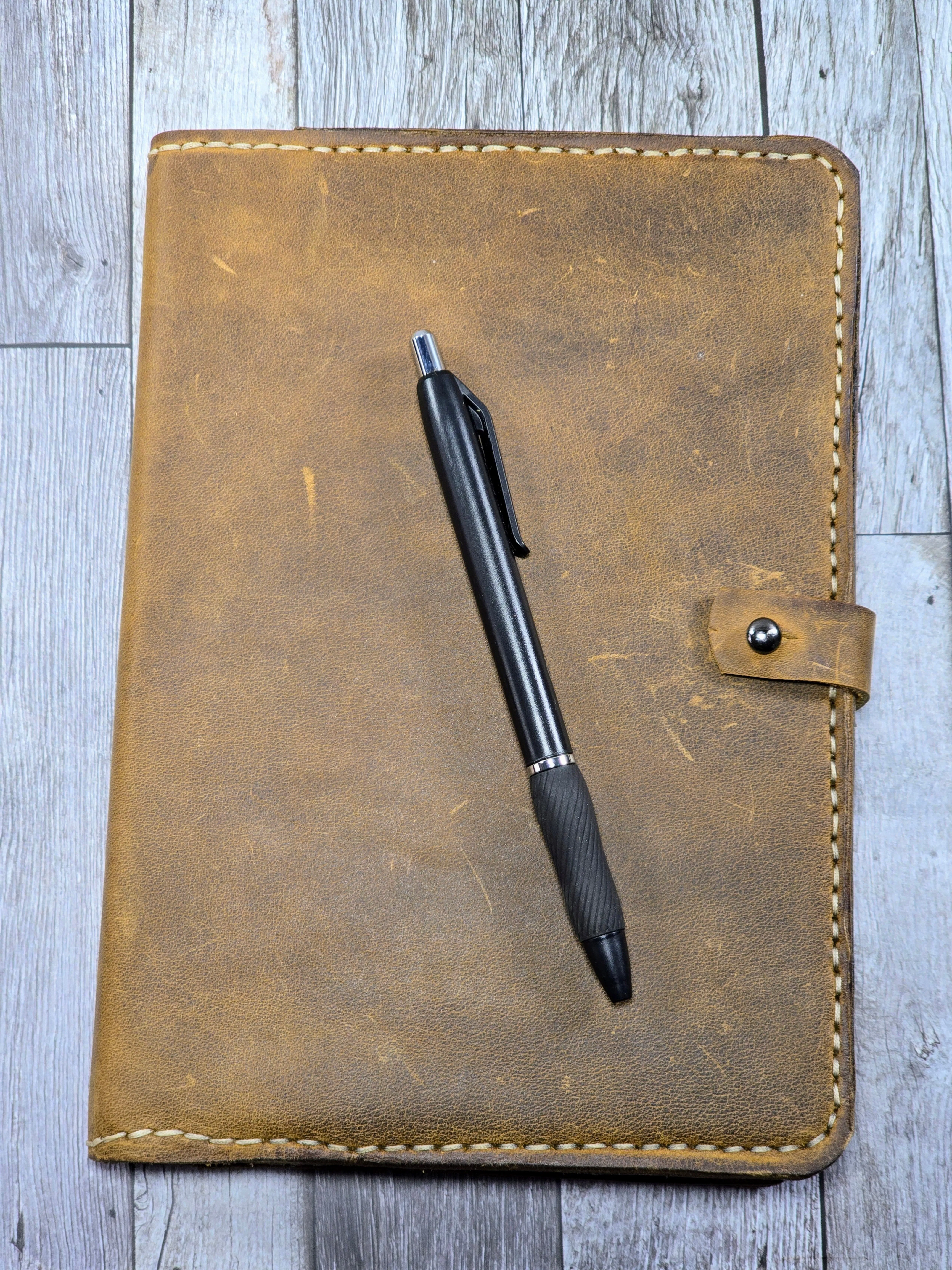
Leather is one of those rare materials that actually gets better the more you use it. We call this a "patina." Every scratch from a briar patch and every sheen from the oils in your hands adds to the story. Beyond the looks, a thick leather cover provides a sturdy writing surface. If you’re out in the field and don't have a desk, that bit of rigid, high-quality hide makes all the difference when you’re trying to jot down a quick note.
Step 1: Choosing the Right Leather Quality
When you’re browsing, you’ll see a lot of terms thrown around: "genuine leather," "top-grain," and "full-grain." I always advocate for the best materials I can get my hands on. For an adventure-ready journal, you want something that can take a beating.
I prefer working with full-grain hides. This is the top layer of the hide, including all the natural grain. It’s the strongest part of the animal skin. In my shop, I love using vegetable-tanned leathers because they have that classic, earthy smell and they develop the best patina.
When you compare covers, look at the thickness. A thin, buttery-soft leather might feel nice at first, but it can stretch out or tear if you’re tossing it into a heavy bag alongside a belt pouch or tools. I ensure that every piece I make uses a weight of leather that feels substantial: enough to protect your words for a lifetime.
Step 2: Size and Compatibility
This is where many people get tripped up. Before you buy a cover, you need to know what you’re putting inside it. There are a few standard sizes you’ll encounter:
- A5 Size: This is the "Goldilocks" size for many writers. It’s large enough for long-form journaling but small enough to fit in a rustic tote. My Handcrafted Leather Journal Cover is designed for those who need space to think.
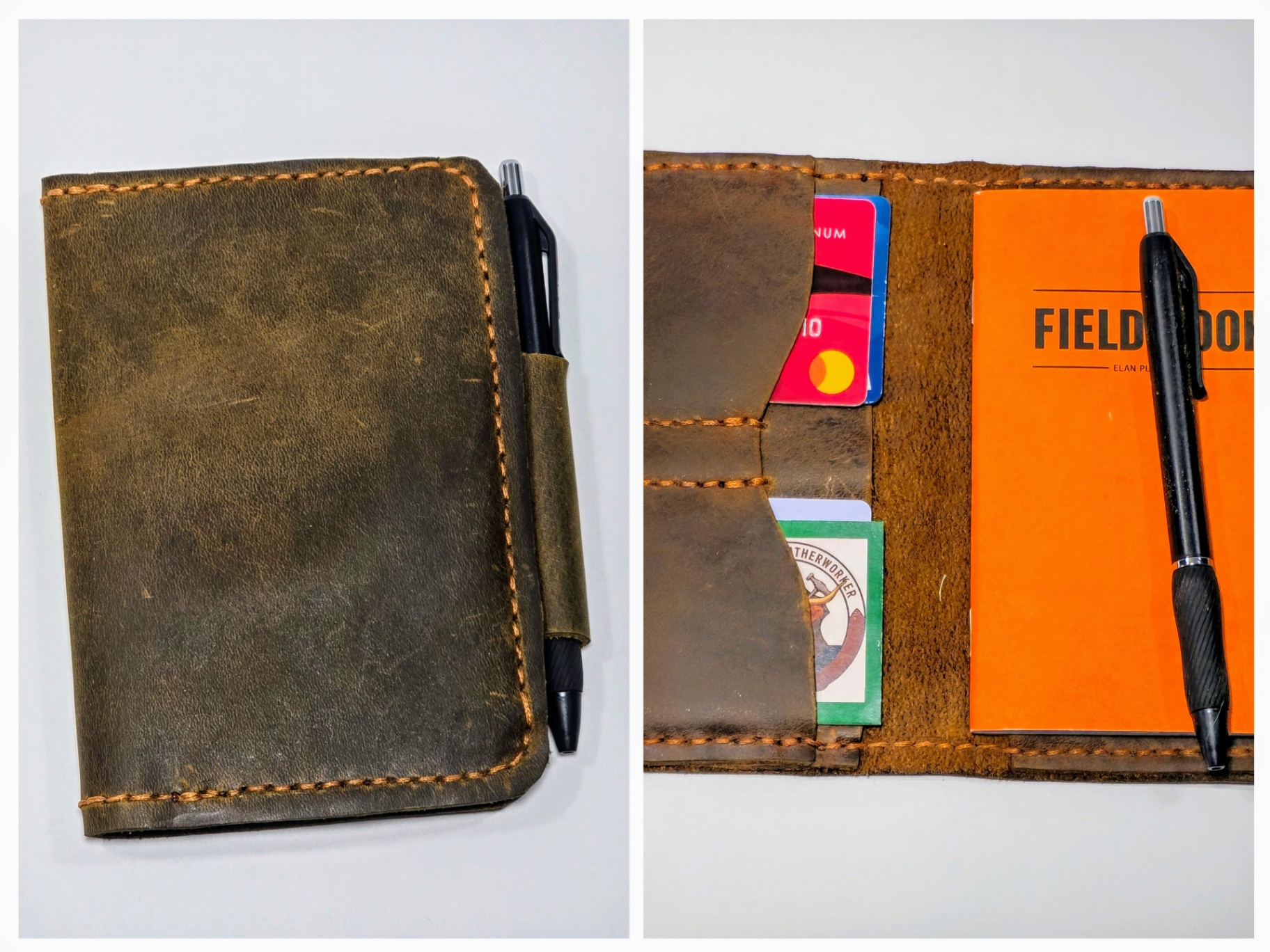
- Field Notes / Pocket Size: If you’re a hiker or someone who’s always on the move, you probably want something that fits in a pocket. This is where the Mini Leather Journal Cover shines.
- A6 and B6: These are less common but very popular in the stationery community for their portability.
When comparing, always check the dimensions. Some covers are built specifically for Moleskine notebooks, while others are more flexible. I try to design mine to be versatile, fitting the most common notebook brands so you aren't locked into one specific paper type.
Step 3: Functionality and Features
As you might have guessed, I’m a big fan of utility. A journal cover can be so much more than just a wrapper. When I’m designing a new piece, I ask myself: "What else will the user need while they're using this?"
Pen Loops
There is nothing more frustrating than having a great idea and no pen. I’ve lived that struggle. That’s why I created the Three Pen Loop Secure Mini Journal Cover. If you’re an artist who needs a pencil, a fineliner, and a fountain pen all at once, this is the one for you. When looking at other brands, see if the pen loop is elastic (which can wear out) or leather (which will last). I always go with leather.
Pockets for the Essentials
If I’m going for a short walk, I don’t always want to carry a full wallet. I love a journal cover that has a few card slots. It lets me carry my ID, a credit card, and maybe a little emergency cash. It effectively turns your journal into a travel wallet. If you want to keep your pockets even lighter, you might pair your journal with a minimalist wallet or a burgundy wrinkle minimalist wallet.
Closure Styles
How do you want to secure your thoughts?
- Elastic Bands: Easy to use, but they eventually lose their stretch.
- Snaps: Very secure and satisfying to "click" shut.
- Leather Ties/Wraps: These give a very "old world" explorer vibe, which I personally find very relaxing to use

Comparing the "Adventure" Styles
To help you decide, let's look at three different scenarios and which cover fits best:
The "Wilderness Explorer"
You’re out in the woods, maybe wearing a Viking style belt pouch to keep your gear handy. You need something rugged.
- My Recommendation: The Mini Leather Journal Cover. It’s small, won't weigh you down, and the pocket size means it stays close to your body.
The "Creative Traveler"
You’re hopping from town to town, sitting in small cafes, and watching the world go by with a cold ginger ale in hand. You want style and space.
- My Recommendation: The Handcrafted Leather Journal Cover or even the Burgundy Leather Journal Cover. The rich color and larger format make it perfect for long letters home or detailed sketches.
The "Daily Commuter"
You need something professional but still want that handmade soul. You’re moving between meetings and the workshop.
- My Recommendation: The Mini Padfolio or the Rustic Leather Mini Padfolio. These give you a bit more structure for loose notes while maintaining that honest, handmade feel.
The Craftsmanship Difference
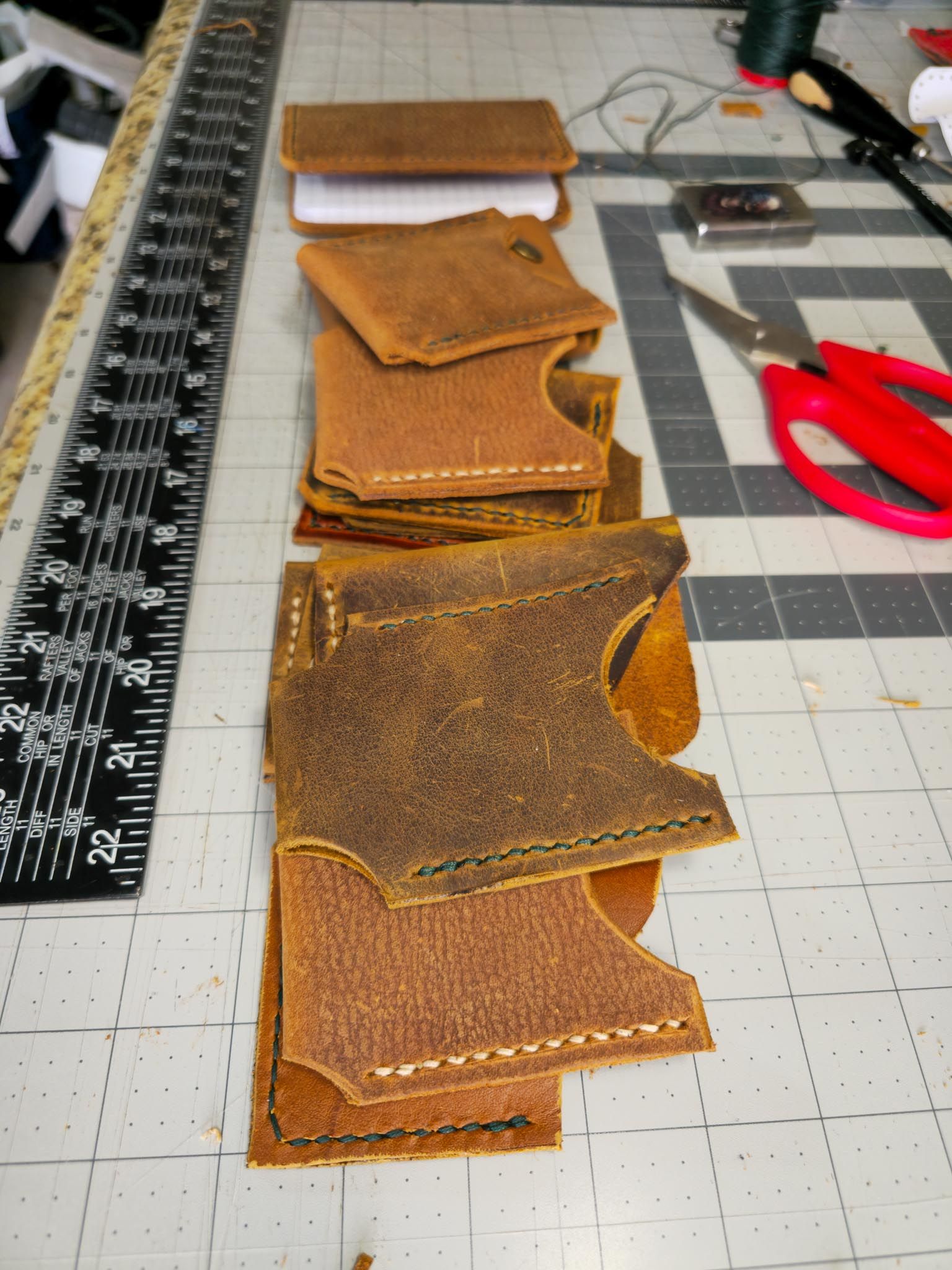
I believe there is something special about an item made one step at a time. When I’m at my bench, I use waxed linen thread and a traditional saddle stitch. Why? Because a saddle stitch is far superior to a machine lockstitch. If one thread breaks on a machine-stitched item, the whole thing can unravel. With a saddle stitch, the rest of the seam stays secure.
I enjoy the process of ensuring every stitch is perfect. It’s a slow way to work, but when you’re making something meant for "adventure," you can't cut corners. Whether it’s a shaving kit or a journal cover, I want it to be the last one you ever have to buy.
Personalizing Your Choice
One of the best parts of choosing a leather cover is making it yours. Some people love charms, others love embossing. I tend to lean towards the "less is more" philosophy: letting the hide speak for itself. However, adding a snap key strap or a custom bolo tie to your overall "look" can really complete the adventure-ready aesthetic.
Final Thoughts
Choosing a leather journal cover is a personal decision. It’s about more than just dimensions; it’s about how it feels in your hand and how it fits into your life. Whether you choose a clutch wallet style or a dedicated notebook protector, make sure it’s made from honest materials that will stand the test of time.
I’m so grateful that I get to spend my days creating these pieces for you. There is something about the smell of fresh leather in the morning that just makes me want to get to work. I hope this guide helps you find the perfect cover for your next chapter.
Thank you so much for taking the time to read this and for supporting small-scale craftsmanship. It means the world to me and my family. If you ever have questions about which cover is right for your specific notebook, don't hesitate to reach out. I'm always happy to talk shop!
Stay adventurous,
Eric The Kilted Leatherworker LLC
