

Hi, I’m Eric. If you’re anything like me, there’s just something about a fresh leather journal cover that makes you want to immediately head out into the woods or find a quiet corner in a coffee shop and start writing. But if you’ve ever held a brand-new, high-quality leather notebook cover in your hands, you know they can be a bit... well, stiff.
When I’m working in my shop at The Kilted Leatherworker LLC, I spend a lot of time thinking about "honest materials." To me, that means leather that hasn't been over-processed or coated in plastic. It means hides that have character. Because of that, a really good Handcrafted Leather Journal Cover needs a little bit of love from you to truly become "yours."
It’s like a good pair of boots or a favorite leather jacket, it gets better with age, but only if you put in the work to break it in. Today, I wanted to share my personal process for taking a fresh piece of leather and turning it into a lifelong companion.
1. The "Cigar Roll" and Conditioning
The very first thing I do when I finish a piece, and what I recommend you do when you get yours in the mail, is to simply get hands-on with it. Leather is a natural material, and the fibers need to be woken up.
I like to start by rolling the leather. I know, it sounds a little scary to take a beautiful new cover and roll it up, but trust me on this. Start at one end and roll it into a tight, cigar-shaped tube. Then, unroll it and roll it the opposite way. I even go diagonally in both directions. You can do this with the finished side out and then again with the unfinished (flesh) side out.
What you’re doing here is physically breaking down the stiffness of the fibers without damaging the integrity of the hide. You’ll hear it "crunch" and "crackle" a bit, that’s just the leather finding its flexibility.
If the leather feels particularly dry, this is also the perfect time to apply a very light coat of conditioner. I love the smell of a good leather balm; it’s one of those things that reminds me why I started this business in the first place. Use a soft cloth and rub it in circular motions.
2. Training the Spine to Lay Flat
There is nothing more frustrating than trying to write in a journal that keeps trying to flip shut on you. Whether you’re using a standard size or our Mini Leather Journal Cover, the spine is the most important part to "train."
Here’s my trick: lay the cover flat on your desk. Open it up and take about 20 pages of your notebook. Lay them flat against the back cover. Run your fingers firmly along the crease where the paper meets the leather. You want to apply enough pressure to create a "memory" in the leather without being so rough that you pull the stitching.
Repeat this from the front cover, and then do it again in the middle of the notebook. I usually suggest leaving the journal under a couple of heavy books overnight after doing this. It might take a few days of consistent use for it to stay perfectly flat, but that’s the beauty of it, it’s learning your habits.

3. Refining the Edges and Corners
While I do my best to ensure every stitch is perfect and every edge is clean before an item leaves my shop, part of personalizing your gear is making it feel right in your hands.
Some folks like a very "raw" and rustic look, while others want something a bit more refined. If you notice the edges are getting a bit fuzzy after a few weeks of being pulled in and out of your bag, you can actually burnish them yourself at home. A tiny bit of water or beeswax on the edge and a firm rub with a piece of canvas (or even an old denim scrap) will slick those fibers right back down.
I also find that over time, the corners of a Burgundy Leather Journal Cover will naturally round off and soften. I enjoy watching that transition. It’s like the leather is slowly losing its sharp "factory" edges and becoming a part of your daily carry.
4. Hardware and Functional Personalization
This is where the fun really starts. Your leather notebook cover is a tool, and you should set it up to work for you.
One of the things I love about our designs, like the Three Pen Loop Secure Mini Journal Cover, is that they are built for utility. But you can take it further! I’ve seen customers add their own elastic closure systems or even small brass charms to the spine.
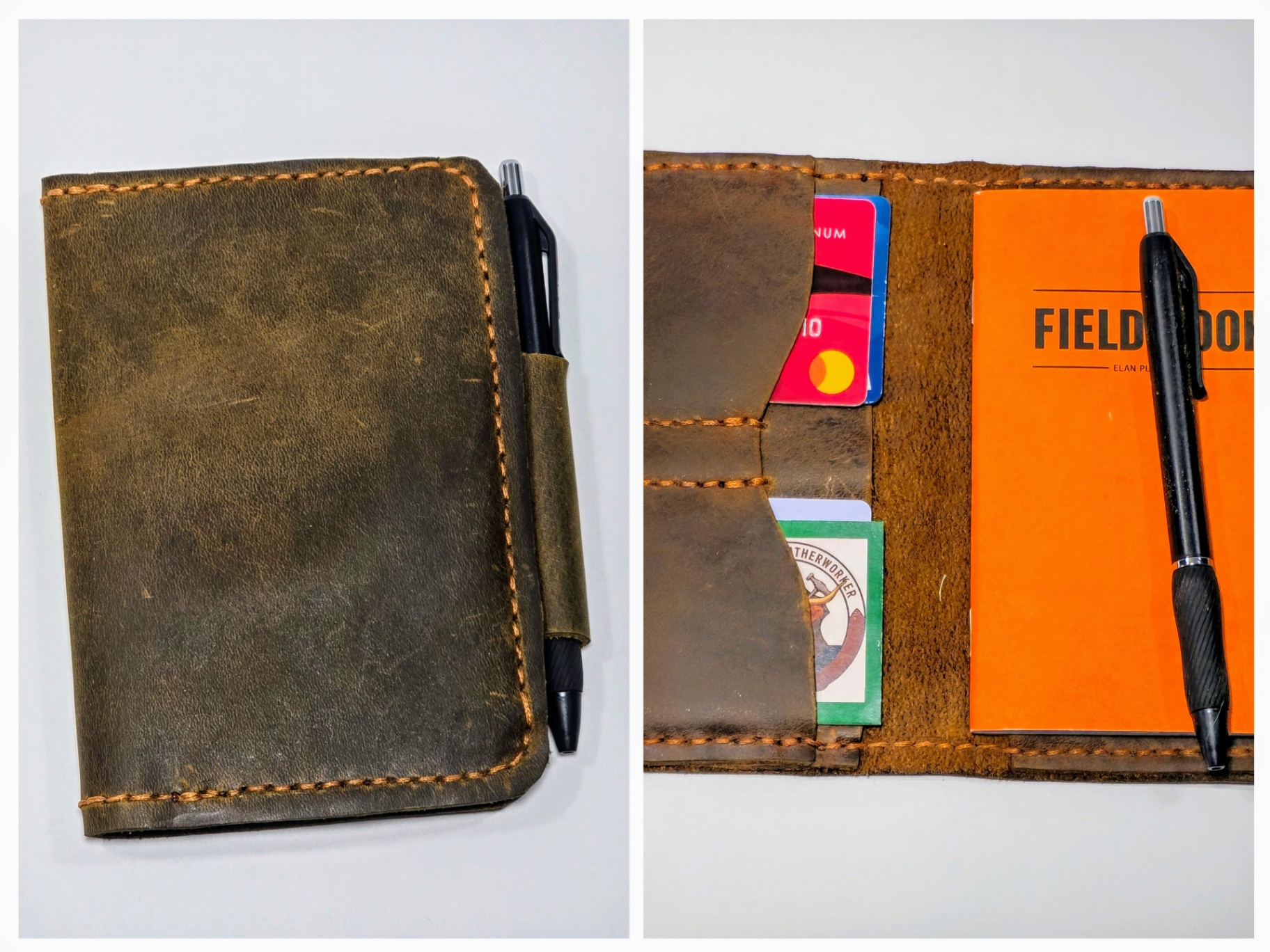
Adding a specific pen is the ultimate personalization. Leather has a way of stretching and molding to whatever you put inside it. If you always carry a specific fountain pen or a rugged metal click-pen, the leather loop will eventually take the exact shape of that pen. Little did I know when I started, but people get very attached to how their pen fits! It becomes a perfect, snug "click" every time you slide it home.
5. The Best Finish: Honest Use and Patina
The final step isn't something you can do in an afternoon. It’s the result of months and years of adventure. We call it "patina."
Every scratch from your keys, every drop of coffee, and even the oils from your hands will change the color and texture of the hide. That’s why I’m so picky about the leather I source. I want it to tell a story.
I’ve had people ask me how to "distress" their leather to make it look old. Honestly? My advice is always the same: just use it. Take it on your hikes, bring it to your business meetings, and let it live your life with you. There is something about a well-worn leather cover that just feels "right." It stops being a product and starts being a record of where you’ve been.

Why We Do It This Way
When I founded The Kilted Leatherworker LLC, I wanted to move away from the "throwaway" culture of cheap, synthetic accessories. Whether it’s a Minimalist Wallet or a full-sized padfolio, I want you to feel the weight of the craftsmanship.
Ensuring that every stitch is perfect and every hide is genuine is my way of making sure that when you sit down to break in your journal cover, you’re working with something that will actually last long enough to see the process through.
I truly enjoy the process of making these items one step at a time, and I hope you enjoy the process of making them yours just as much. There’s a certain kind of peace that comes with sitting down, rolling a piece of leather, and knowing that you’re creating something that might be passed down to your kids one day.
Thank you so much for taking the time to read this and for supporting my small business. It means the world to me that I get to spend my days working with these materials and sharing them with you. If you ever have questions about how to care for your gear, or if you just want to share a photo of how your patina is coming along, please don't hesitate to reach out.
Happy writing and stay adventurous!
Warmly,
Eric
Founder, The Kilted Leatherworker LLC