

Hi, I’m Eric. If you’re anything like me, you’ve probably spent your fair share of money on wallets that looked great on a department store shelf but ended up in the trash less than a year later. It’s a frustrating cycle, isn’t it? You find a design you like, pay twenty or thirty bucks, and within six months, the edges are peeling, the "leather" is cracking, and the stitching is starting to unravel like a bad sweater.
When I started The Kilted Leatherworker LLC, I did it because I was tired of that exact cycle. I wanted something that didn’t just look good on day one, but looked even better on day one thousand. There’s a world of difference between a wallet pulled off a massive factory line and one that was cut, punched, and stitched by hand right here in my shop.
Today, I want to pull back the curtain a bit. I want to talk about why the difference between handmade and mass-produced really matters, not just for your pocketbook, but for the story your gear tells.
The "Genuine Leather" Marketing Trick
Let’s start with the material itself, because this is where most people get tripped up. Have you ever seen a wallet stamped with "Genuine Leather" and thought, “Great, it’s the real deal”?
Well, I hate to be the bearer of bad news, but "Genuine Leather" is often a marketing term for one of the lowest grades of leather out there. It’s usually made by taking the leftover scraps of a hide, bonding them together with glue, and then painting it to look like a high-quality grain. It’s basically the particle board of the leather world. It looks okay for a minute, but it has no structural integrity. It rots, it cracks, and it certainly doesn't age well.
In my shop, I use full-grain leather. This is the top layer of the hide: the toughest, most durable part. It hasn't been sanded down or buffed to remove natural marks. If the cow ran into a barbed-wire fence or got a bug bite, you might see a tiny hint of that history. I love that. It gives the piece character.
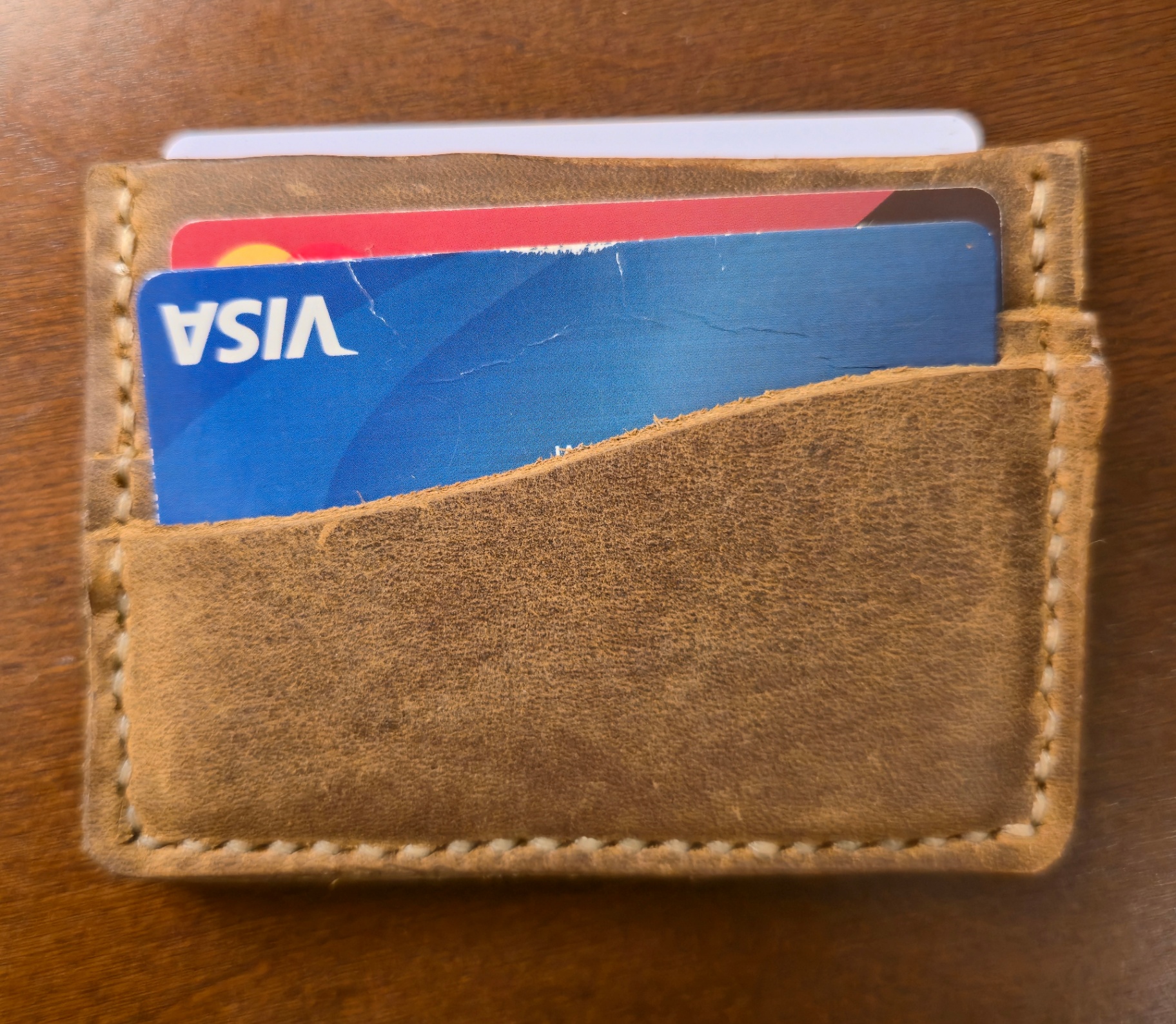
When you pick up one of my minimalist wallets, you’re feeling the strength of the entire hide. Because it’s full-grain, it doesn’t wear out: it wears in. It develops what we call a "patina." That’s the beautiful sheen and darkening that happens over time as the leather absorbs the oils from your hands and the friction of your pocket. A mass-produced wallet just gets uglier as it ages; a handmade one becomes a piece of your personal history.
The Secret Strength of the Saddle Stitch
The biggest technical difference: the one that really keeps me in the shop late at night: is the stitching.
Most mass-produced wallets are made using a sewing machine. These machines use a "lockstitch." It uses two threads: one on top and one on the bottom that "lock" together in the middle of the hole. It’s fast and efficient, which is why factories love it. But there’s a fatal flaw: if one single thread breaks, the whole line starts to unspool. You’ve seen it happen: a little loop of thread pops up, you tug it, and suddenly half your wallet is flapping open.
I don’t use a machine. I use a technique called the Saddle Stitch.
It’s a slow process. I use two needles and a single piece of waxed thread. I pass both needles through every single hole, creating a figure-eight pattern. This means that every single stitch is independent. If: by some crazy chance: you managed to cut one of those stitches, the rest of the seam would stay perfectly intact. It won't unravel.

There is something about the rhythm of hand-stitching that I find incredibly relaxing, but more than that, I enjoy knowing that my clutch wallets are built to survive almost anything you throw at them. (Little did I know when I started that I’d become so obsessed with the perfect stitch line, but here we are!)
Why "Buy Once, Cry Once" is Real
I know what you might be thinking. "Eric, a handmade wallet costs more than the one at the mall."
You’re right. It does. But there’s an old saying I live by: "Buy once, cry once."
Think about the math. If you buy a $25 mass-produced wallet every year because it keeps falling apart, in five years you’ve spent $125 and you’ve owned five pieces of junk that you had no connection to.
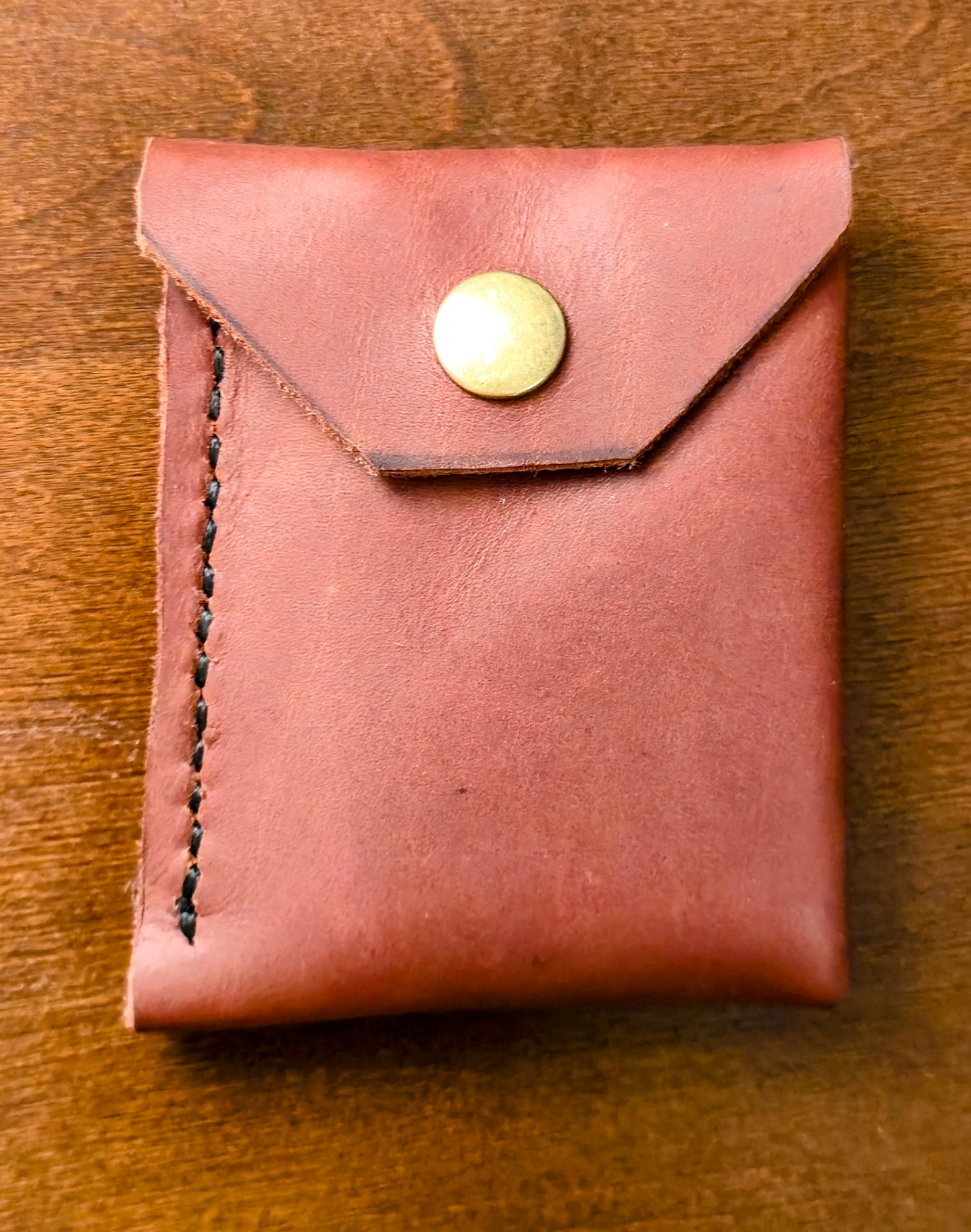
On the flip side, if you invest in a quality handmade piece: like my Burgundy Wrinkle Minimalist Wallet: you pay a bit more upfront, but you never have to buy another one again. You "cry" at the price once, but you smile every time you pull it out of your pocket for the next decade.
There’s also the environmental side of things. Mass production creates an incredible amount of waste. When things are made to be disposable, they end up in landfills. By choosing a handmade item, you’re supporting a "slow fashion" approach. You’re choosing quality over quantity, and you’re supporting a small business (me!) instead of a giant faceless corporation.
A Piece as Unique as You Are
One of my favorite things about working with leather is that no two pieces are ever exactly the same. When a machine stamps out 10,000 wallets, they are all identical. They have no soul.
When I sit down to make a wallet, I’m looking at the grain, deciding how to cut the piece to highlight its best features, and ensuring that every edge is burnished to a smooth, glass-like finish. Whether it’s a minimalist wallet with a two-tone blue and red look or a rugged chestnut brown piece, it has my fingerprints on it (metaphorically speaking, of course).
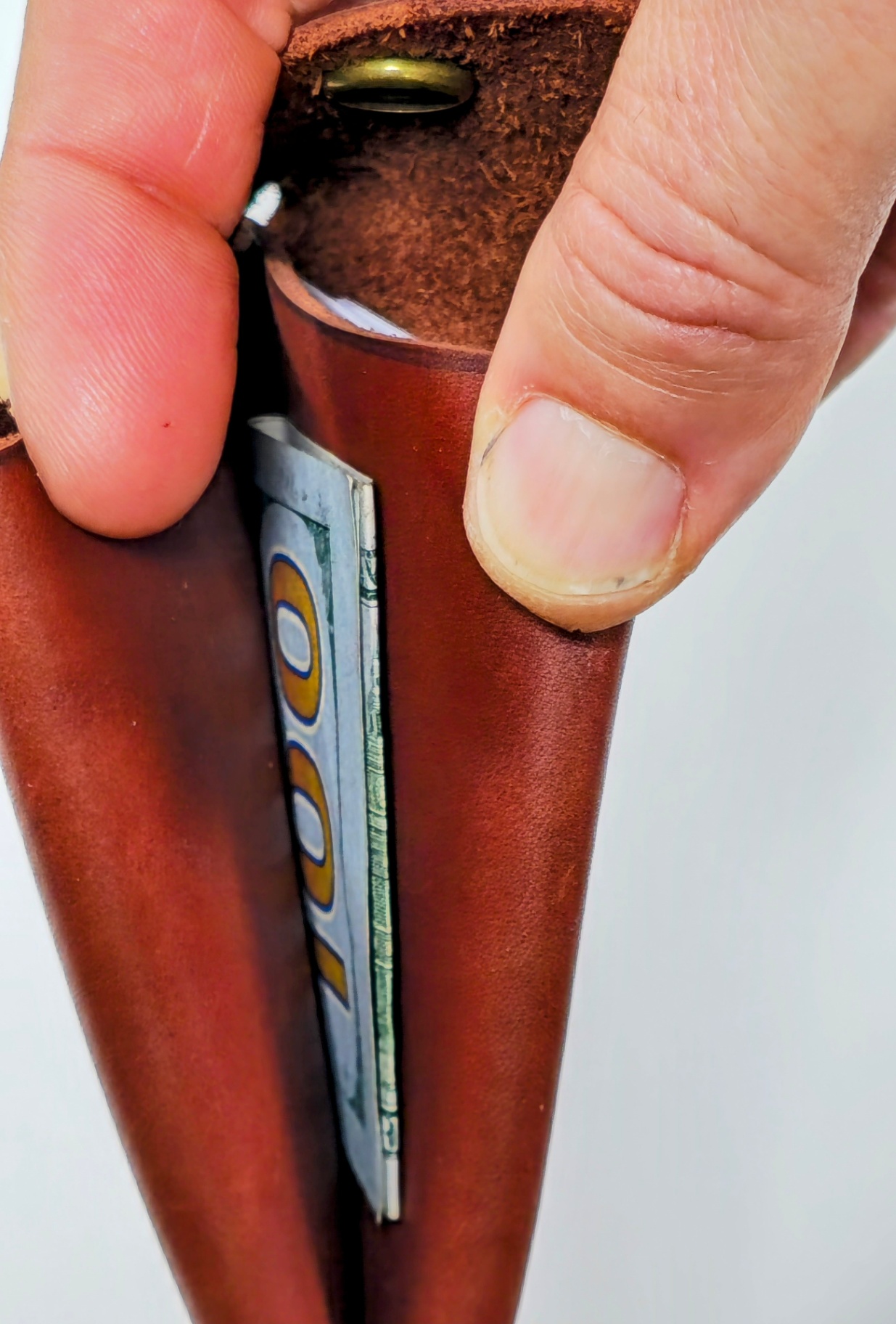
I love the idea that someone out there is carrying a piece of my work through their daily life: at their wedding, on their first big promotion, or just during a coffee run. That wallet is going to change over time, just like you do. It’s going to pick up scratches and marks that remind you of where you’ve been.
The Kilted Leatherworker Promise
When you browse through my collection, I want you to know that you aren't just buying a place to put your credit cards. You’re buying a piece of craftsmanship that I’ve spent years refining.
I take my time. I don't rush the process. Whether I'm working on a simple snap key strap or a complex journal cover, the goal is always the same: make it better than it has to be.

I’ve had people come back to me years after buying a wallet just to show me how it’s aged. Those are my favorite moments. Seeing a wallet that was once a bright, stiff piece of leather transformed into a soft, dark, character-filled companion is the ultimate reward for me as a maker.
Making the Choice
At the end of the day, a wallet is a tool. But why settle for a tool that’s going to fail you?
Choosing handmade means choosing durability, quality materials, and a bit of human connection. It means knowing that the person who made your wallet actually cares if it lasts.
If you’re ready to stop the cycle of buying "disposable" leather goods, I’d love for you to take a look at what I’ve been working on. Whether you need a slim front-pocket carrier or something more substantial, I’ve got you covered.
Thank you so much for taking the time to read this and for supporting small-scale craftsmanship. It really does mean the world to me that I get to do what I love every day.
If you have any questions about the types of leather I use or the process, feel free to reach out. I’m always happy to talk shop!
Stay adventurous,
Eric
Founder, The Kilted Leatherworker LLC