

Hi there! I’m Eric, the founder and owner of The Kilted Leatherworker LLC. If you’ve found your way here, chances are you appreciate the smell of a fresh hide, the feel of a sturdy seam, and the idea that some things should actually be built to last.
I get asked a lot about what makes "handmade" different from what you see on the shelves of a big-box store. Is it just the price tag? Is it just a marketing buzzword? Honestly, it’s neither. For me, it’s about a philosophy I like to call "adventure-ready." It’s the idea that your gear shouldn’t just look good on day one, it should look better on year ten, having survived every trail, coffee spill, and boardroom meeting along the way.
In this guide, I want to take you behind the scenes of my workshop. We’ll talk about the materials I choose, the tools I use, and why I believe true craftsmanship is an investment in your own story.
Why Leather Matters to Me
There is something about leather that no synthetic material can ever replicate. It’s honest. It’s organic. It’s a material that has a history long before it ever reaches my workbench. When I pick up a piece of hide, I’m looking at its character, the tiny imperfections, the grain, and the way it takes a dye.
I started The Kilted Leatherworker because I was tired of things breaking. I wanted items that felt substantial. When you hold a piece of quality leather, you can feel the weight of it. It’s not just an accessory; it’s a tool. Whether it's a wallet that stays in your pocket for a decade or a tote that carries your whole life, these items become a part of who you are.
The Adventure-Ready Philosophy
You might wonder why I focus so much on the "adventure-ready" aspect. Well, life is an adventure, isn't it? Whether you’re hiking through the woods or navigating a busy city, you need gear that doesn't quit.
When I design a new piece, I ask myself: Can this handle a rainstorm? Will these handles hold up if the bag is stuffed to the brim? If the answer is no, it doesn’t leave my shop. This mindset influences everything from the thickness of the thread I use to the way I reinforce a stress point. My goal is to ensure that every stitch is perfect so you never have to worry about your gear failing when you need it most.
Honest Materials: The Foundation of Quality
I’m a firm believer in using "honest materials." To me, that means genuine hide and calfskin that hasn't been sanded down or covered in plastic-like coatings.
Understanding the Hide
When you're shopping for leather, you'll see a lot of confusing terms. Here is the simple version: I use materials that retain their natural strength. Vegetable-tanned leather is one of my favorites because it’s processed using natural tannins found in bark and leaves. It’s better for the environment and, more importantly, it develops a beautiful patina over time. It darkens, softens, and tells the story of how you’ve used it.
The Beauty of Calfskin
For items that need to be a bit more refined but still tough, I love working with calfskin. It’s incredibly soft to the touch but surprisingly durable. It’s perfect for things like the linings of our wallets or the interior of a journal cover.

The Process: One Step at a Time
People often ask me how long it takes to make a bag or a pouch. The truth is, I don’t really keep a stopwatch running. Craftsmanship is about patience. It’s about taking it one step at a time.
- Selection and Cutting: Every project starts with selecting the right part of the hide. I look for the strongest sections for straps and the most beautiful grains for the main body.
- Casing and Tooling: For pieces that need designs, I use a process called "casing." I dampen the leather with just enough water to make it pliable. Then, using a swivel knife and a maul, I carve and stamp patterns into the surface. It’s a rhythmic, almost meditative process.
- Saddle Stitching: This is where the magic happens. Unlike a sewing machine, which uses two threads that lock together (and can unravel if one breaks), I use a traditional saddle stitch. This involves two needles and a single length of waxed thread that serpentines through the leather. It’s incredibly strong. If you're curious about the technical side of this, I've written about choosing quality over fast fashion before.
- Edge Finishing: I hate a raw, fuzzy edge. I use a burnisher: a wooden tool: to smooth and harden the edges through friction. It gives the piece a professional, finished look that feels great in the hand.
A Deep Dive Into My Favorite Pieces
I have a few items in the shop that I’m particularly proud of. They each represent a different side of the "Kilted Leatherworker" spirit.
The Buffalo Belt Pouch

This is the ultimate adventure companion. It’s made from a rugged buffalo leather body with a hand-tooled flap. I often include an embossed American flag or intricate geometric patterns on these. They are perfect for Renaissance faires, hiking, or just keeping your essentials handy without carrying a full bag. If you've ever debated between a belt pouch and a purse, this pouch might just change your mind.
The Rustic Tote

The Rustic Tote is designed for the person who needs to carry everything but wants to look good doing it. One of the most important parts of this bag is the reinforced handle assembly. I use heavy-duty thread and hand-stitched reinforcements to ensure those handles never give out on you.

Leather Journal Covers
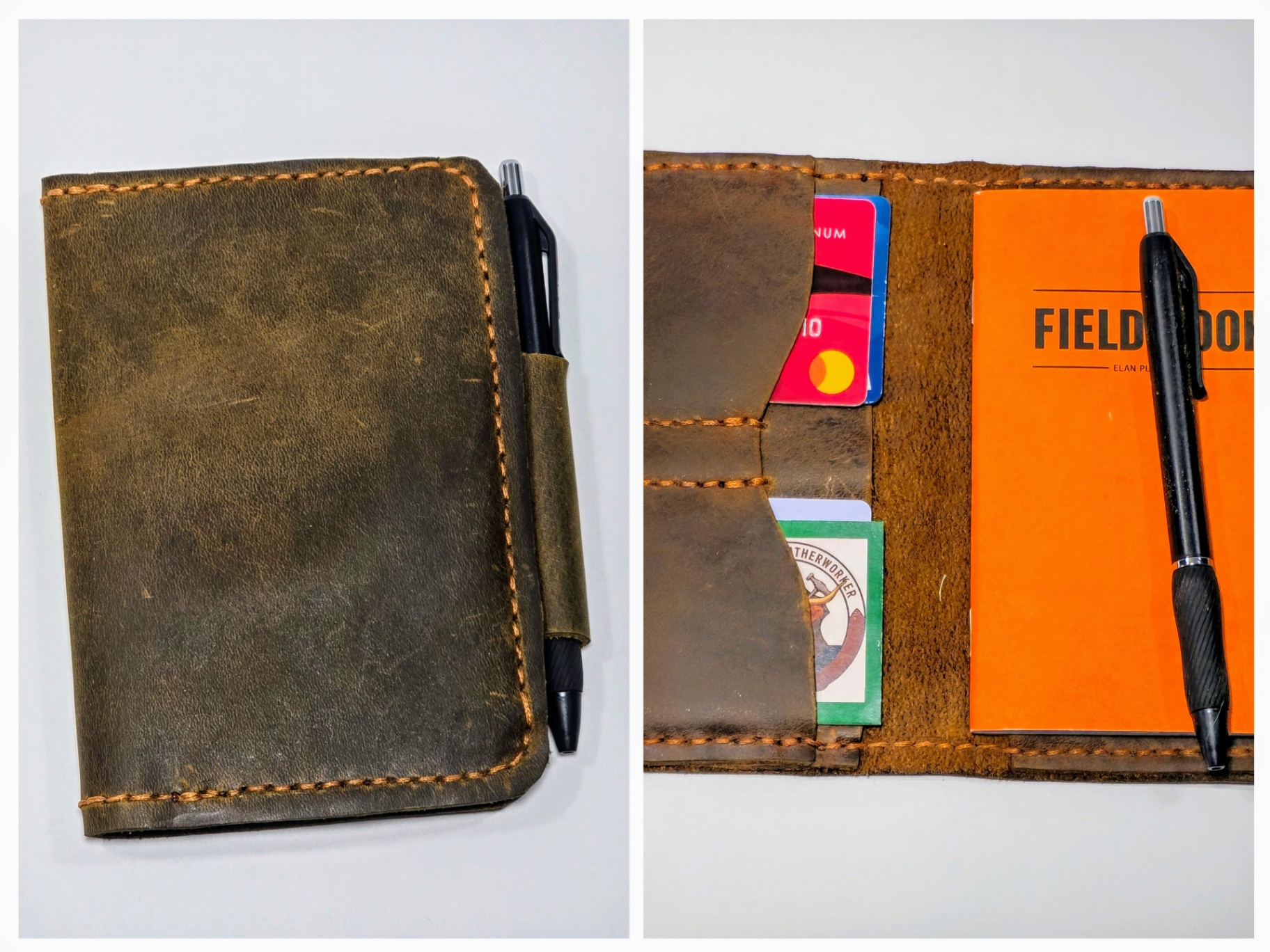
As a writer and a maker, I have a soft spot for journals. There is something special about protecting your thoughts and sketches in a cover that feels as substantial as the ideas inside. Whether it's a full-sized cover or a mini padfolio, these are built to be passed down. Not sure which one you need? Check out my post on journal covers vs. notebook covers.
Quality vs. Fast Fashion: The Real Cost
I know it can be tempting to buy a cheap "genuine leather" wallet for twenty bucks. But here’s the secret the industry doesn't want you to know: "Genuine leather" is often the lowest grade of leather available. It’s basically the particle board of the leather world.
When you choose a handmade piece, you’re avoiding the common mistakes people make with leather goods. You’re getting something that doesn't have hidden fillers or plastic components. You’re getting honesty.

My Journey: From Hobby to The Kilted Leatherworker
As you may have guessed, I didn't start out as a master leatherworker. It began as a hobby, a way to relax after a long day. I loved the tactile nature of the work. Little did I know that my passion for creating unique, "made with love" items would grow into The Kilted Leatherworker LLC.
The name comes from my own heritage and my love for the traditional ways of doing things. I’ve always felt a connection to the craftsmen of the past: the ones who didn't have power tools or mass-production factories. They just had their hands, their tools, and a piece of hide. I try to carry that same spirit into every piece I create today.
Final Thoughts
I truly enjoy what I do. Every time I finish a piece and see the way the light hits the burnished edges, I feel a sense of pride. But more than that, I feel grateful. I'm grateful that I get to spend my days creating items that will go out into the world and join you on your adventures.
Whether you're looking for a minimalist wallet or a heavy-duty tote, I hope this guide has given you a little more insight into what goes into true craftsmanship. It's not the easiest way to make things, but I believe it's the right way.
Thank you so much for taking the time to read this and for supporting small businesses like mine. Your support means the world to me and my family.
If you have any questions about my process or a specific product, don't hesitate to reach out. I’m always happy to chat about the craft!
Warmly,
Eric The Kilted Leatherworker LLC