Industry reference

U.S. Leather Industry Statistics

Seven sourced figures on the material, manufacturing and skilled work behind American leather goods.

Last updated July 27, 2026

At a glance

A practical snapshot of a far-reaching trade.

Leather goods begin with a large agricultural and industrial supply chain, then become personal through the work of tanneries, repairers and small workshops. These figures put that path in context using the latest available U.S. government data.

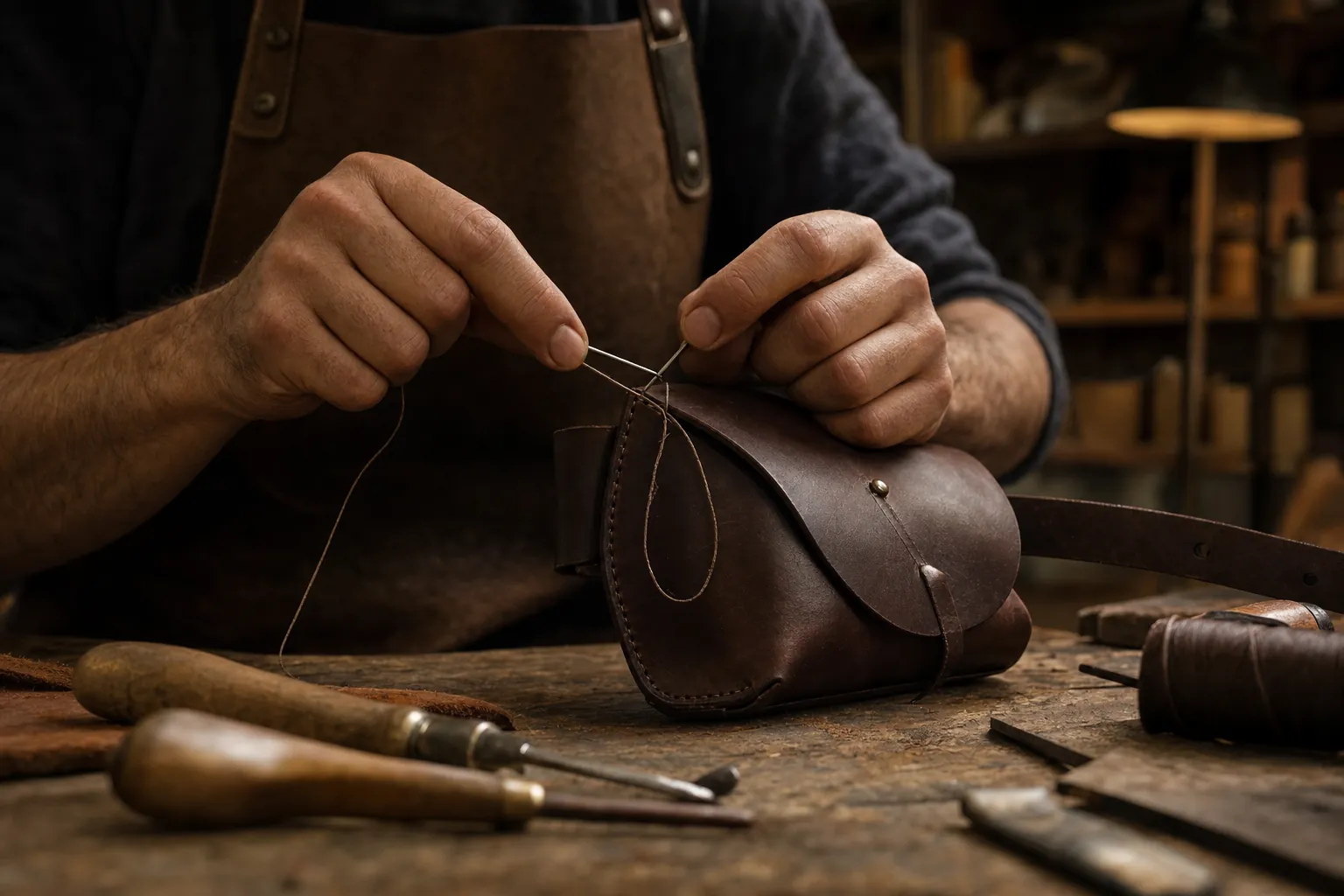
Leatherworker hand-stitching a dark brown leather pouch

The human scale

Large supply chain. Personal work.

Federal industry totals capture the scale behind leather. A finished piece is still shaped by the choices made at the bench: how it is cut, stitched, finished and carried over time.

Read the leather care guide

Methodology and sources

How to use these figures.

This page uses the latest final annual slaughter figures from the U.S. Department of Agriculture and the latest industry figures published by the U.S. Bureau of Labor Statistics as of July 27, 2026. “Leather and allied product manufacturing” is a federal classification that includes tanning, footwear and other leather goods, along with comparable substitute-material goods made in the same kinds of establishments.

Cite this page

The Kilted Leatherworker. “U.S. Leather Industry Statistics (2026).” Updated July 27, 2026. https://kiltedleatherworker.com/leather-industry-statistics