Adventure Journaling
B5 Notebook Size: Dimensions, Uses and Cover Fit
Learn B5 notebook dimensions in inches and millimeters, the ISO and Japanese B5 difference, and how to choose a cover that actually fits.
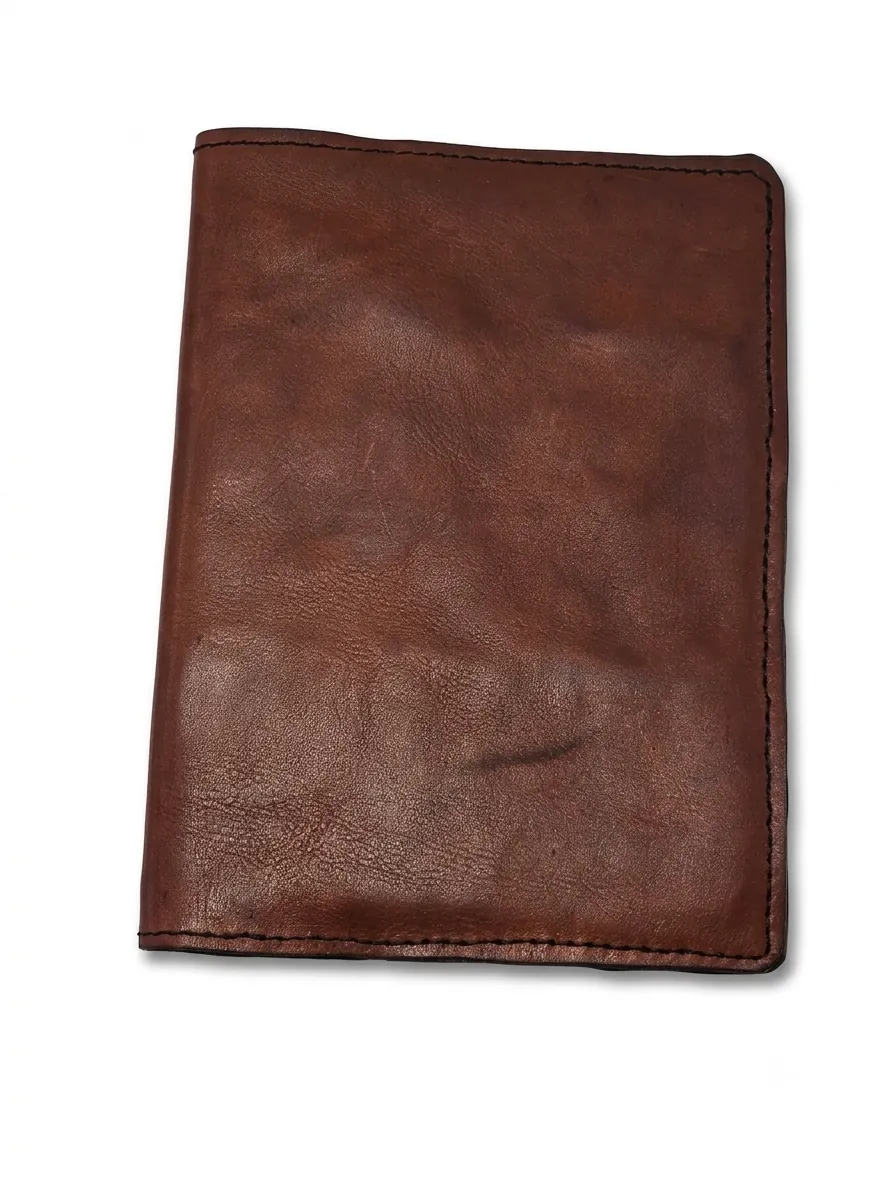
A B5 notebook gives you a noticeably roomier page than A5 without becoming as large as an A4 pad. It is a strong choice for class notes, project planning, detailed lists, sketches and anyone who prefers not to squeeze an idea into a small page.
There is one catch: B5 is not always one exact size. ISO B5 measures 176 by 250 millimeters, or about 6.9 by 9.8 inches. Japanese B5, commonly called JIS B5, measures 182 by 257 millimeters, or about 7.2 by 10.1 inches. That gap is small enough to miss in a product title and large enough to matter in a close-fitting leather cover.
This guide shows what B5 means in the real world, how it compares with A5 and composition notebooks, and what to measure before choosing a cover. The goal is simple: pick the notebook you will enjoy filling, then give it a cover that lets it work properly.
What size is a B5 notebook?
The international ISO B5 paper size is 176 by 250 millimeters. In inches, that is about 6.9 by 9.8. The ISO 216 standard defines the A and B paper series, including B5, for writing paper and printed materials. It sits between A5 and A4: larger than the familiar A5 journal, smaller than the full desk-sized A4 sheet.
A B5 notebook is not necessarily the same dimensions as its paper. A hard cover, spiral, elastic band, pockets and page count all add to the outside measurement. That is why a notebook called B5 can be slightly wider, taller or thicker than another B5 book. The page size tells you where to begin. The closed book tells you what a cover needs to fit.
For many shoppers in the United States, B5 also feels close to a composition notebook. They are similar in purpose and general footprint, but they are not automatically identical. If fit matters, do not rely on a label, a photo or an approximation. Measure the specific notebook in front of you.
ISO B5 and Japanese B5 are different
The first thing to check is which B5 standard your notebook follows. ISO B5 is 176 by 250 millimeters. Japanese B5 is 182 by 257 millimeters. That makes Japanese B5 6 millimeters wider and 7 millimeters taller, a difference that can be enough to strain a snug sleeve or stop a notebook from settling into an interior pocket.
Japanese B5 is common in notebooks and loose-leaf paper from Japanese stationery brands. For a concrete example, Kokuyo lists its B5 loose-leaf paper at 257 by 182 millimeters. Its official B5 product details show why the country of origin and the actual listed dimensions are worth checking instead of assuming every B5 book follows the same measurement.
This does not make either version better. ISO B5 is a little shorter and narrower. Japanese B5 gives a slightly larger page. The practical choice is the one whose paper, binding and refill system you like. Once you choose it, use its finished outside dimensions for every cover decision.
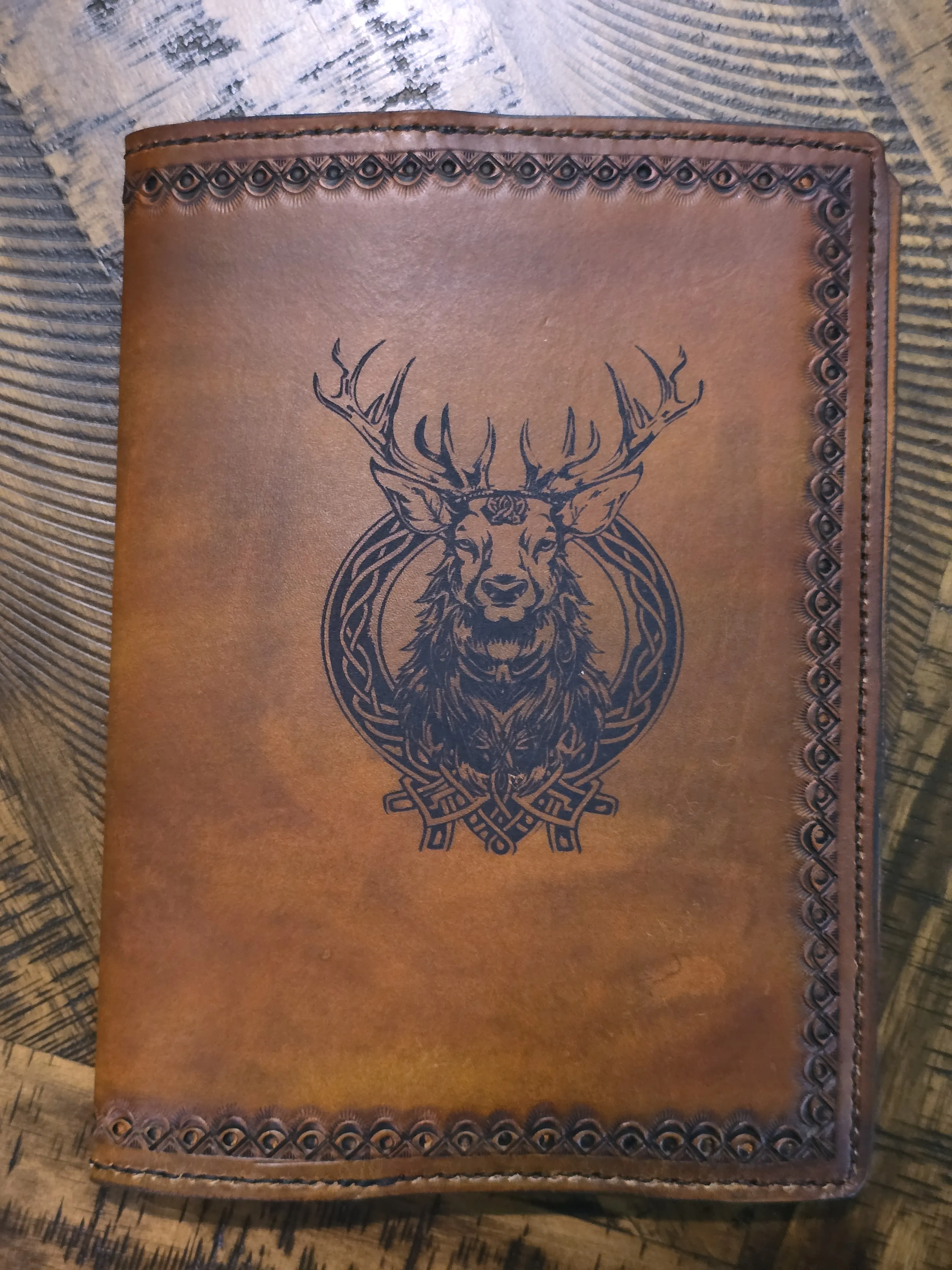
How B5 compares with A5, A4 and composition notebooks
B5 is substantially larger than A5. An A5 page measures 148 by 210 millimeters, or about 5.8 by 8.3 inches. ISO B5 measures 176 by 250 millimeters, which gives you roughly 40% more writing area. The extra room is obvious when you make tables, annotate class notes, sketch diagrams or want a full weekly plan on one spread.
B5 remains more manageable than A4. A4 is 210 by 297 millimeters, about 8.3 by 11.7 inches, and works well for reports, large diagrams and desk work. B5 keeps much of that useful space while being easier to carry in a tote, backpack or portfolio. Think of it as a desk-friendly notebook that can still travel when it needs to.
A typical U.S. composition notebook is in the same neighborhood, but its exact finished dimensions vary by maker and binding. That is good news for people who like the practical feel of a composition book and want a more intentional cover. It is also a reason to measure. The composition notebook cover guide walks through the height, width and spine measurements that determine a comfortable fit.
When B5 is the right notebook size
Choose B5 when your notes need room to breathe. It is especially good for lectures, meetings, project planning, language study, recipe development and sketches that need labels or written context beside them. A larger page makes it easier to keep one topic together instead of continuing it across several cramped sheets.
B5 also works well when you use a notebook at a desk most of the time. Its width gives your hand more space, and its height leaves room for headings, margin notes and a useful amount of detail. If you often divide the page into columns or turn the book sideways for a chart, B5 feels less restrictive than A5 without becoming an oversized pad.
The tradeoff is portability. B5 is usually too large for a small crossbody or compact everyday bag. It belongs in a tote, backpack, messenger bag or portfolio where its corners will stay protected. If you want a notebook that can come everywhere, compare it with an A5 notebook before committing. A notebook you carry often can be more useful than a larger one that stays on the shelf.
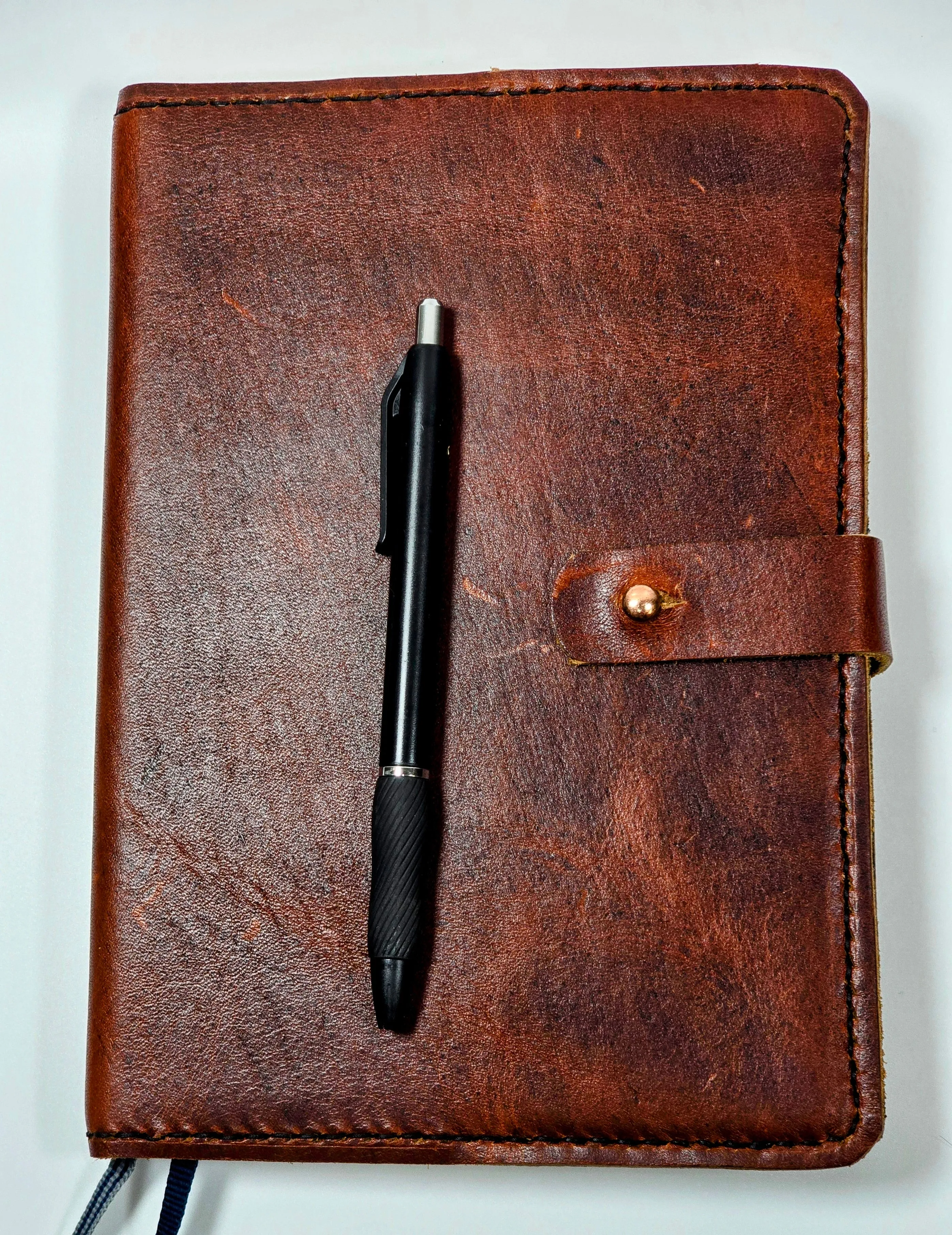
Paper, binding and thickness change the fit
A B5 label only describes height and width. The binding tells you a great deal about how the book will behave in a cover. A stitched or glued notebook has a smooth profile and usually slips into a sleeve or interior pocket easily. A spiral or wire-bound notebook can lie flatter and turn back on itself, but the coil adds width and creates a hard edge that a close leather cover must accommodate.
Thickness matters just as much. A thin 40-page school notebook and a 250-page hardback journal may share the same B5 paper size while needing very different amounts of room at the spine. Add elastic closures, tabs, pen loops, pasted-in notes and the normal bulk that comes from actually using a notebook, then you have the measurement a long-lasting cover must respect.
Do a real-world check before you buy. Close the notebook naturally with the bookmarks, pen and papers you normally keep inside. Measure the full height, full width and thickest point of the spine. If the notebook is going to grow throughout a semester or year, allow for that future thickness instead of designing around the first empty day.
How to measure B5 for a leather cover
Start with the closed notebook on a flat surface. Measure from outer edge to outer edge, not only the printed paper. Write down the height, width and thickness. For a spiral notebook, measure across the coil. For a hardback, include the cover boards. For a disc-bound planner, include the discs and the pages you normally keep loaded.
Next, decide how the cover should hold the book. A flexible wrap can tolerate a little variation. A stitched sleeve or pocket needs more exact dimensions. The right fit holds the notebook securely without bowing the cover, pinching the spine or making page turns feel like work. Leather can flex, but forcing it to make up for the wrong size is not a fitting strategy.
If you are shopping for a cover that needs an exact fit, give the maker the notebook's real measurements and a photo of the front, spine and open book. The custom leather notebook cover page explains the details that help turn those measurements into a piece that is easy to use every day.
A B5 cover should support the way you work
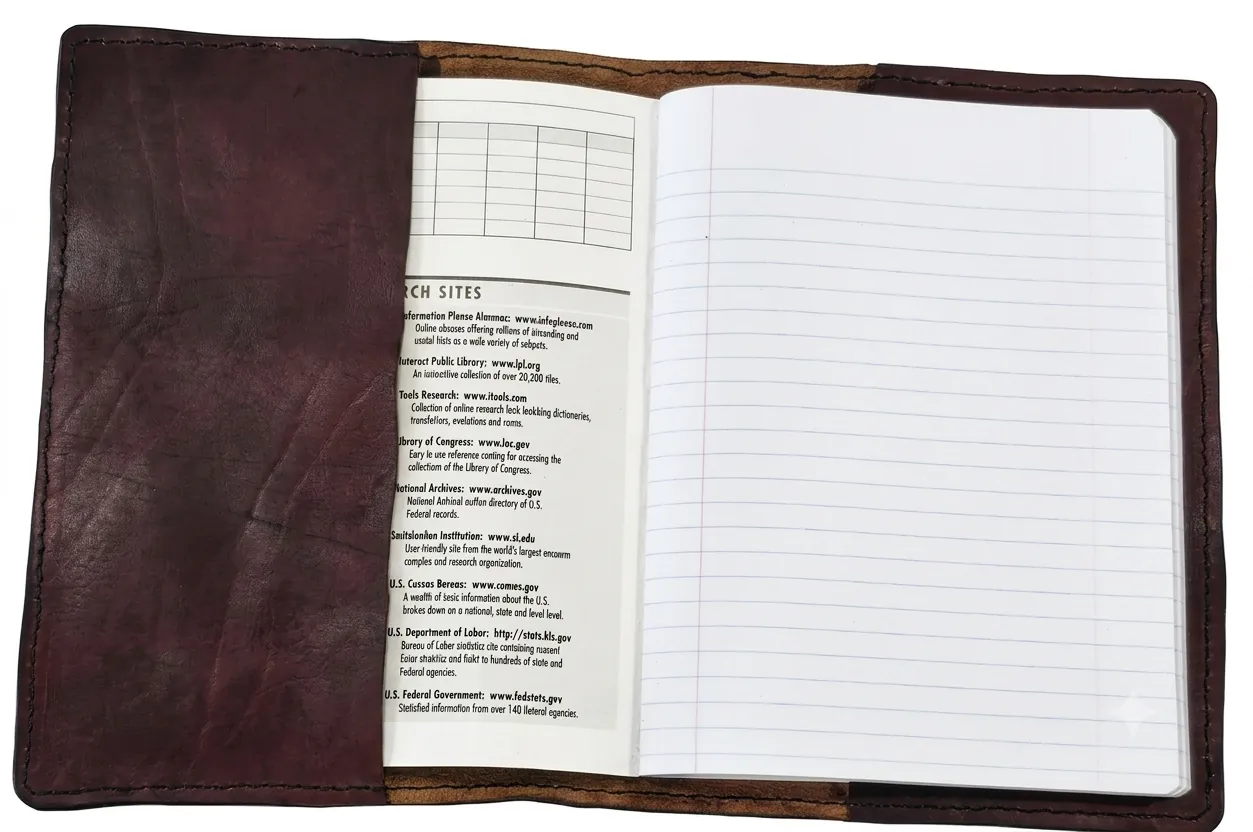
A leather cover is most useful when it protects the notebook without adding fuss. For a B5 book that lives at a desk, a sturdy wrap or cover can keep notes, plans and sketches together while giving the outside a material that gets better with use. For a class or meeting notebook, it can make a familiar paper tool feel more considered and ready to carry.
The Kilted Leatherworker makes covers around the real books people use, not only a size label. If your B5 notebook has a standard stitched profile, a custom cover can be made around its finished dimensions. If it has a coil, unusual thickness or extra features, those details simply become part of the fit conversation. The aim is a cover that opens comfortably and stays useful long after the first notebook is filled.
For a more portable everyday format, The Chronicler’s Cover is designed for a standard A5 notebook. For a larger B5 setup, begin with the exact notebook you already enjoy. That approach creates a better result than trying to make an almost-right cover behave like a custom fit.
The simple B5 decision
Choose B5 when you want a generous page for focused work, study, detailed planning or sketching, and you have a bag or desk setup that welcomes the size. Choose A5 when you want a capable notebook that moves easily through everyday life. Neither is universally better. They serve different rhythms.
Before adding leather, confirm the standard, measure the finished notebook and think about the binding and future thickness. Those few minutes prevent the most common disappointment: a handsome cover that does not feel good to use. The right cover should make you want to open the notebook, not negotiate with it.
Frequently asked questions
What size is a B5 notebook in inches?
ISO B5 measures 176 by 250 millimeters, or about 6.9 by 9.8 inches. Japanese B5 measures 182 by 257 millimeters, or about 7.2 by 10.1 inches. Check the maker's listed dimensions because both can be sold as B5.
Is B5 bigger than A5?
Yes. ISO B5 is 176 by 250 millimeters, while A5 is 148 by 210 millimeters. B5 is both wider and taller, giving it roughly 40% more writing area.
Is B5 the same size as a composition notebook?
They are similar in overall footprint, but not always identical. Composition notebooks vary by manufacturer, cover style and binding. Measure the finished notebook before choosing a close-fitting cover.
Will an ISO B5 cover fit Japanese B5?
Not reliably. Japanese B5 is 6 millimeters wider and 7 millimeters taller than ISO B5. A flexible wrap may have some tolerance, but a sleeve or stitched interior pocket should be made around the exact outside dimensions of the notebook.
How do I measure a B5 notebook for a leather cover?
Close the real notebook and measure its full outside height, width and thickness. Include the cover boards, spiral or discs, elastic, tabs, pen loop and any normal contents. Use those finished measurements, not only the page size, when comparing a cover fit.
Keep reading
More from the journal.
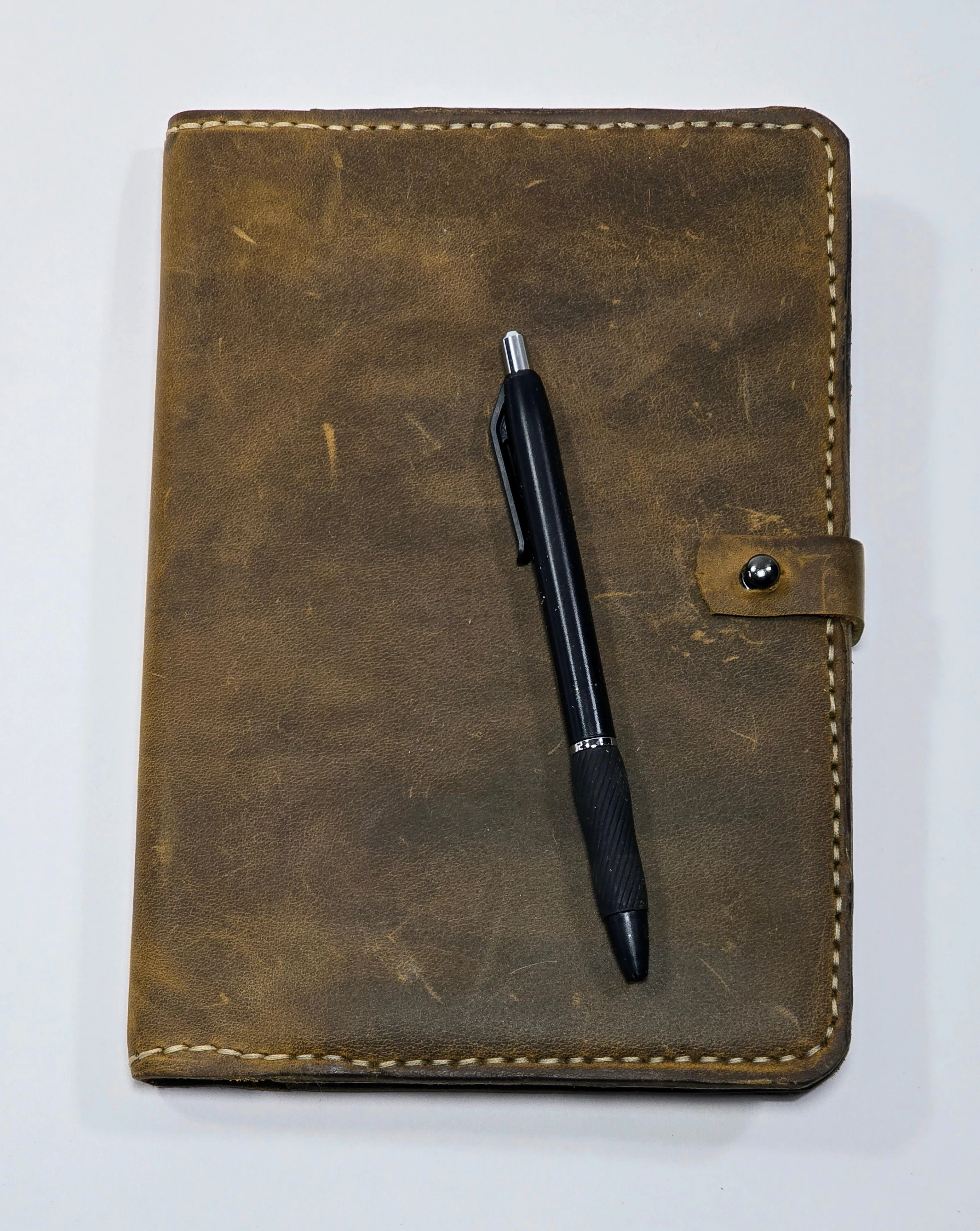
A5 vs. B5 Notebook Size: Is B5 Bigger? Dimensions & Differences
Is B5 bigger than A5? Yes. See A5 and B5 dimensions in inches and millimeters, the writing-space difference and which size fits your routine.
Read the guide ↗Composition Notebook Cover: How to Get the Fit Right
Measure a composition notebook before choosing a cover, account for real-world size differences, and avoid a fit that is too tight or too loose.
Read the guide ↗A5 Notebook Cover Size: How to Get the Fit Right
Measure an A5 notebook the practical way, account for thickness, and choose a leather cover that fits without fighting the pages.
Read the guide ↗