Adventure Journaling
How to Choose the Best Leather Journal Cover for Your Next Adventure
A practical guide to finding a leather journal cover that protects your notes, travels well and earns its patina.
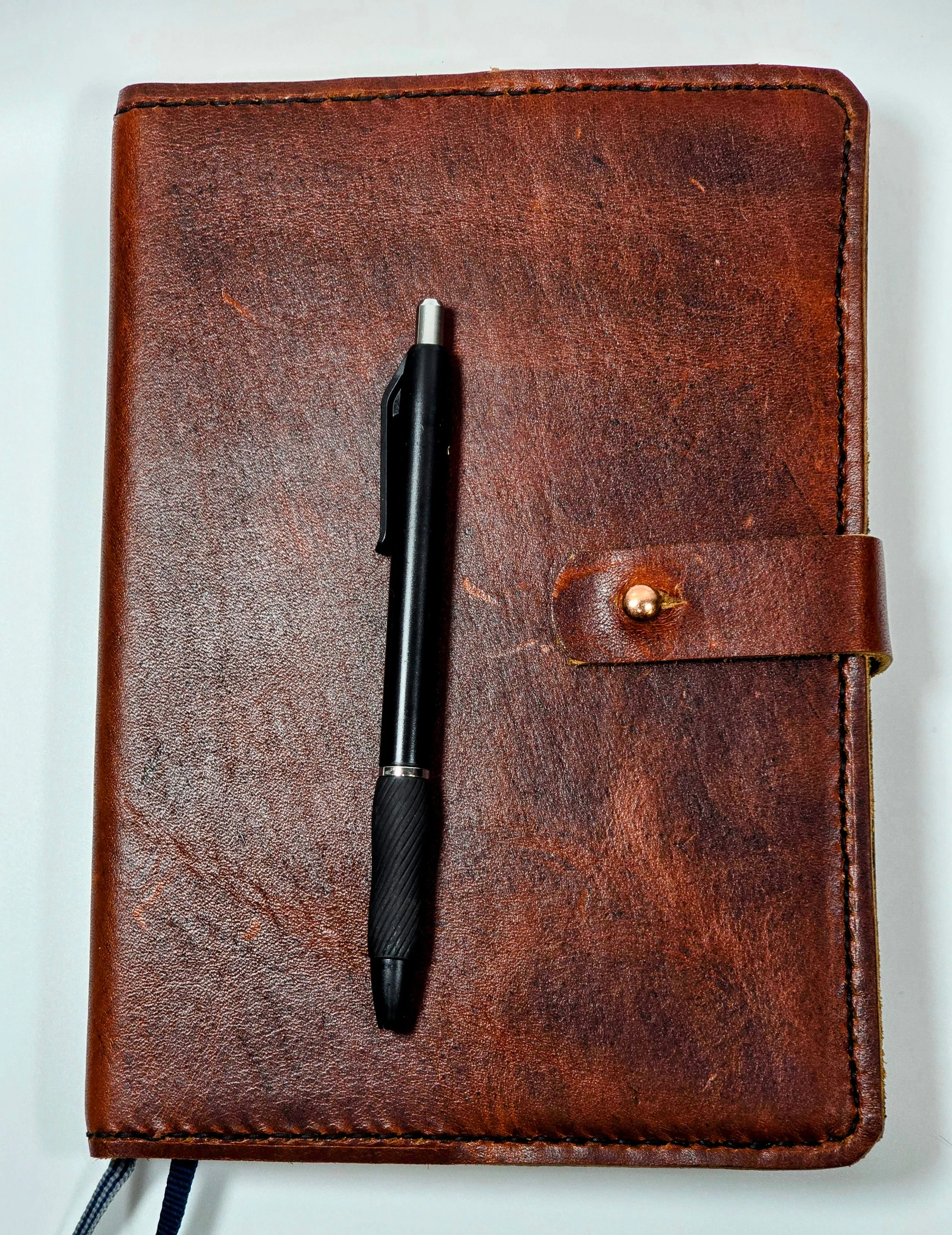
Hi, I’m Eric, and I’m a journal addict. I have a shelf of half-finished notebooks, each one tied to a different season, project or trip. When I leave home for a real adventure, though, a paper-backed notebook on its own is not enough. Backpacks compress. Rain arrives at the wrong moment. A notebook gets shoved in and out of a bag until its corners are soft and its cover gives up.
That is why I started making leather journal covers. The right cover protects the pages, keeps the tools you need together and becomes more personal with use. It is not another thing to baby. It is a piece of kit that is meant to pick up a few scuffs, a little sun and stories of its own.
Start with the way you travel
The best leather journal cover is not automatically the largest, thickest or most feature-packed one. It is the one you will actually bring along. Before comparing leathers, pockets and closures, picture where the journal will live during a normal day. Will it ride in a daypack with a water bottle and camera? Sit in the passenger seat for a weekend road trip? Stay close at hand while you move through airports and coffee shops?
That answer decides what “practical” means. A person who makes long sketches and route notes wants room to spread out. Someone keeping a trail log may only need a compact notebook and a reliable pen. If your journal stays in a larger carry-all, a structured A5 cover can be a comfortable companion. If it has to disappear into a pocket or belt pouch, smaller and simpler wins.
Choose a notebook size before you choose the leather
Fit is the first non-negotiable. A cover can be beautifully made and still be frustrating if the notebook slides around, bulges at the spine or is so tight that replacing an insert becomes a chore. Measure the notebook you plan to carry, including its thickness. If you paste in photos, tickets or maps, leave room for the notebook to grow.
The A5 standard
A5, roughly 5.8 by 8.3 inches, is the sweet spot for many travelers. It gives you enough page for a sketch, a map reference or a proper end-of-day reflection without asking for half your bag. It also works comfortably on a café table, a camp stool or your knee. The Chronicler’s Cover is made around this kind of everyday A5 carry.
Small covers for light carry
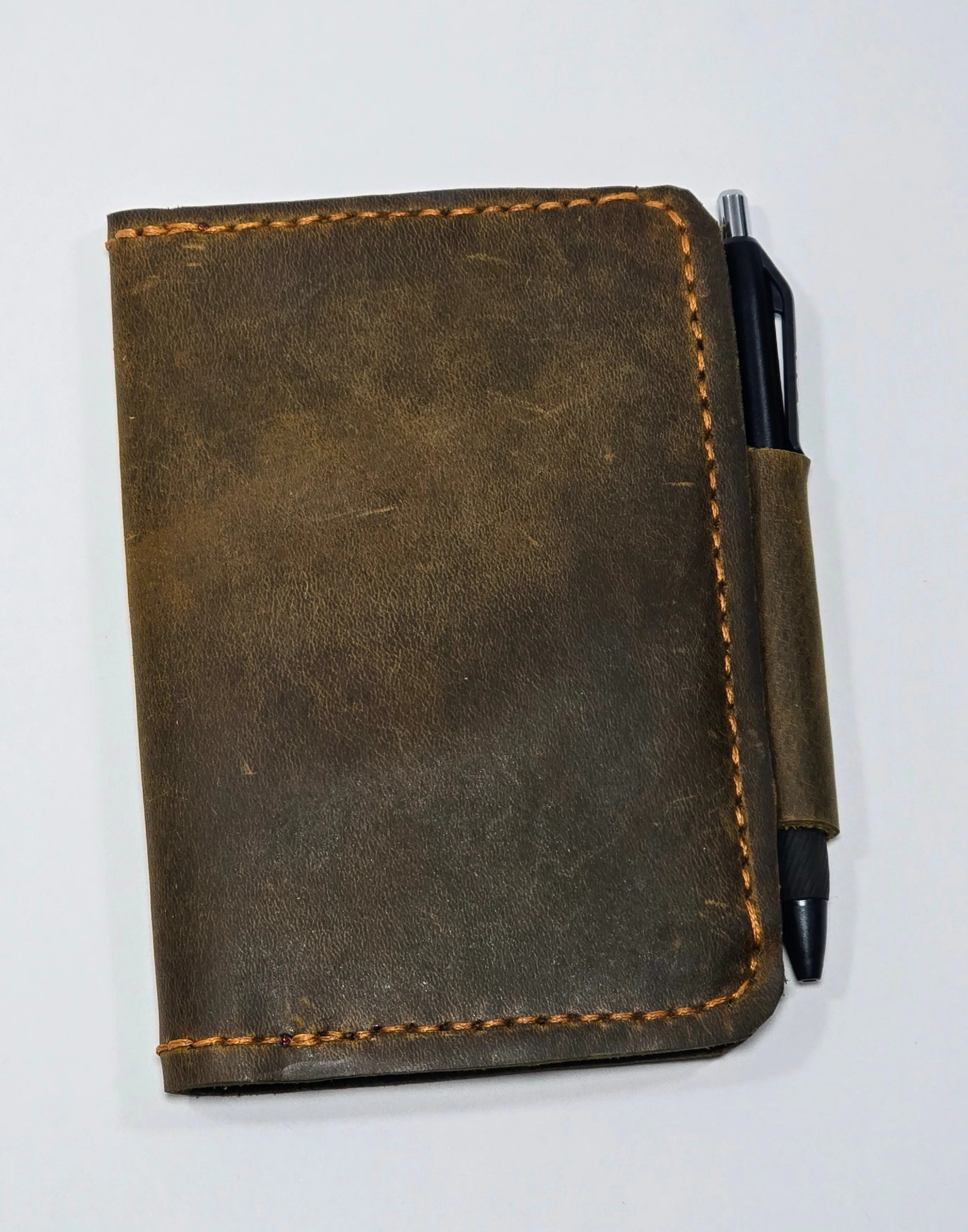
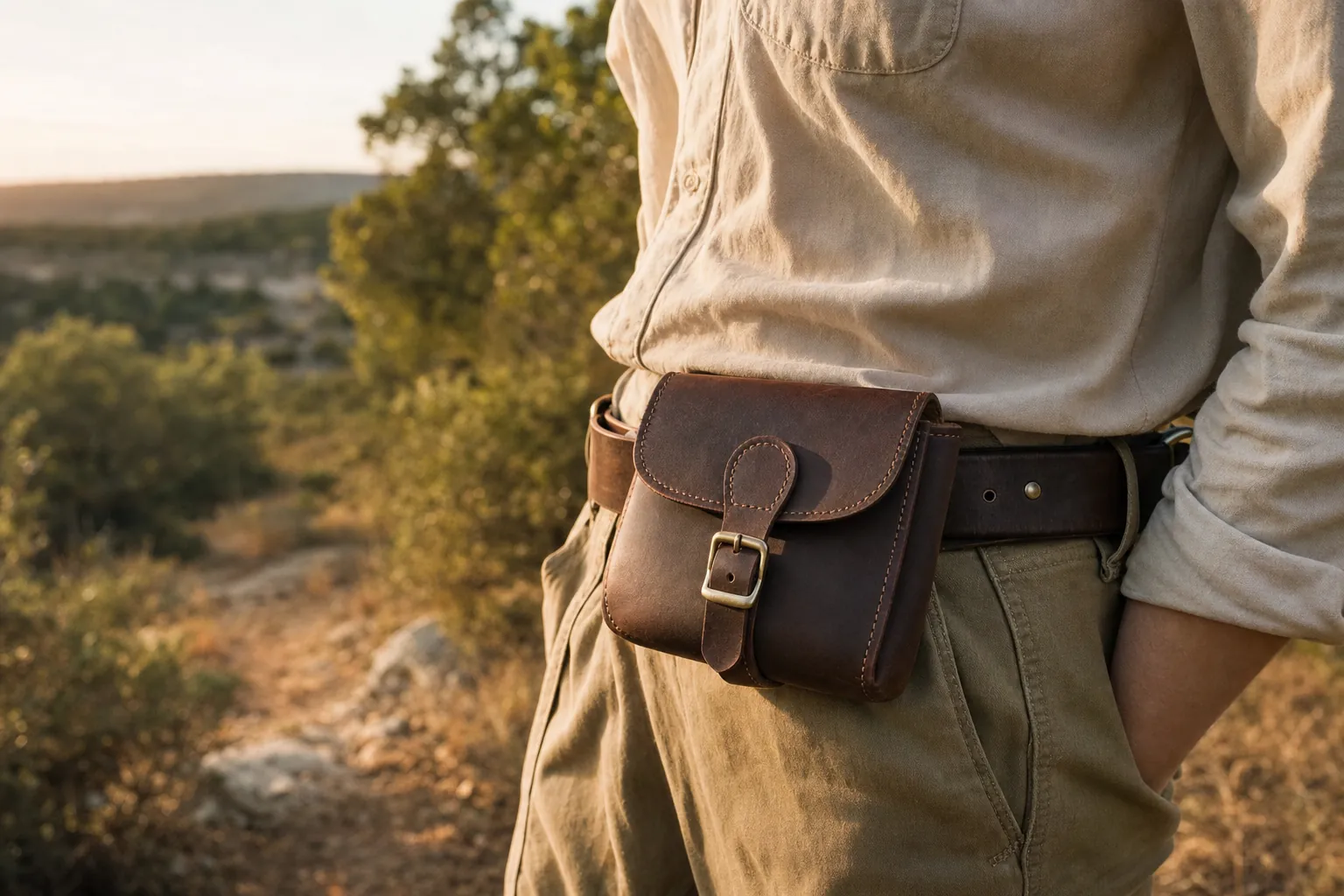
Pocket notebooks are right for quick field notes, a packing list, directions or the sentence you do not want to lose. They are also easier to carry every day, which is half the battle with journaling. A compact cover pairs naturally with a hands-free pouch, especially when you would rather keep a pen and notebook close than rummage through a larger bag.
Look for leather that can age honestly
Leather is not all the same. For a cover that will see travel, choose material that feels natural, substantial and comfortable rather than overly slick or plastic-coated. Full-grain and top-grain leather are both sensible places to start because they retain the strength and character of the hide. They can show wear over time, but that is part of the point. A scratch becomes a record, not a reason to throw the piece away.
Thickness matters too. A cover should be firm enough to protect page edges and give you a steadier writing surface when there is no table, but it should not be so heavy that you leave it behind. Pick it up. Flex it gently. A good cover feels capable without feeling clumsy.
Pay attention to the details that take stress. Neat, secure stitching matters around corners, sleeves and pen loops. A saddle stitch is a durable hand-sewn construction for the places where a cover is opened and handled again and again. Hardware should close smoothly and feel proportionate to the job. The goal is not a pile of decoration. It is useful construction that stays useful.
Keep the features focused
Travel gear gets less pleasant as it gets more complicated. It is easy to be tempted by twenty slots, several zippers and a place for every hypothetical item. In practice, you want to open the cover, write, and put it away again without a small ceremony.
A pen loop is worth having
A journal without a pen becomes a nice object you cannot use. A secure loop keeps your writing tool with the notebook, whether you are at a trail overlook, waiting for a train or standing in line with an idea. Check that the loop suits the kind of pen you actually carry, not just a thin display pen.
Refillable sleeves make the cover the keepsake
Interior sleeves let you swap a finished notebook for a fresh one. That is the long-term value of a good leather cover. The paper gets filled, archived and replaced, while the leather stays in service. Simple sleeves are often better than complicated fasteners because they make changing inserts quick and do not add bulk where your hand rests.
Use extra pockets with restraint
A flat pocket is handy for a folded map, a few business cards, a boarding pass or a small stack of photographs. It is not an invitation to turn the cover into your whole bag. The more you put inside, the thicker and heavier it becomes, and the harder it is to write on. Let the journal be a journal.
Choose a closure for your routine
Closures are not just a style choice. They decide how the cover behaves in a crowded bag and how quickly you can get to a blank page. There is no universal winner, just the right tradeoff for how you travel.
- Snap closures keep pages and loose notes contained when the journal gets tossed in with other gear.
- Leather straps or wraps adjust gracefully when a notebook becomes thicker with mementos, and they bring a more traditional field-journal feel.
- Open sleeve covers are clean and quick when the journal has its own protected slot in your bag.
Think about the annoying moment, not the perfect product photo. If you usually dig through a crowded tote, a closure gives welcome security. If you write several times a day and keep the journal in a dedicated compartment, an open cover may be the more pleasant choice.
Notice the small signals of good construction
Shopping from photographs can make every cover look roughly the same, so slow down and inspect the information that tells you how it will behave in use. Clear dimensions, a stated notebook fit and photographs of the inside matter more than a romantic product name. You want to see the sleeves, the edge finish, the places where stitching begins and ends, and how much of the notebook is held securely.
Look for an honest description of the leather, too. “Genuine leather” only confirms that the material contains leather. It does not tell you the grade, finish, thickness or how the piece has been assembled. A maker who explains the material, fit and construction gives you the information you need to choose. That sort of clarity is more useful than grand promises about an item lasting forever.
Finally, think about repairability. A cover is a long-term object. Hardware can eventually need attention, and thread can meet an unlucky snag. Simple, well-built construction gives a piece a better chance of being repaired rather than replaced. That is a quiet advantage of choosing a handmade cover with visible, straightforward craftsmanship.
Match the look to the life you want it to live
There is no need to pretend style does not matter. A journal is personal, and the cover should make you want to pick it up. Burgundy, dark brown and natural tones each wear differently and work with different bags and notebooks. A rich color can feel distinctive without being loud. A darker neutral may disappear into daily carry and hide the dust of a trip a little better. The right choice is the one that still feels like yours after the novelty fades.
Just keep style from overruling function. Heavily decorated tooling, dramatic hardware and layers of fringe can be wonderful when they suit the way you use a cover, but they can also make a simple writing tool harder to pack or rest your hand on. The best balance is a design with character where you can see it, and a working surface that stays calm and comfortable.
A quick pre-trip checklist
Before you buy, or before you set out with a cover you already own, run through a few practical questions. They catch the small mismatches that usually become irritating halfway through a trip.
- Does the cover fit the notebook you plan to use? Check height, width and thickness, not only the notebook label.
- Can you write with the cover on your knee? A little structure helps when tables are scarce.
- Is the pen secure? Put your own pen in the loop and make sure it does not catch or fall out.
- Will it fit your actual bag? Measure the compartment instead of assuming a cover will find space.
- Do the pockets solve a real need? Bring only the paper bits you expect to use.
- Will you enjoy the closure? Open and close it a few times. Small annoyances repeat quickly on the road.
- Is it ready for weather? A simple zip bag inside a pack can protect the paper on truly wet days without changing how the cover feels.
This is not about making travel precious. It is the opposite. When your journal setup is settled before departure, you can stop thinking about it and pay attention to where you are. That is the whole point.
What a good cover does on a real trip
Adventure is hard on ordinary objects in very ordinary ways. A notebook gets compressed between a jacket and a water bottle. It slides under a car seat. A map folded into the back cover catches on the zipper of a bag. None of this is dramatic, but it is exactly why the cover matters. A little structure keeps the paper from becoming the weak point in your setup.
It also gives the act of writing a home. When you can pull the same cover from your bag every time, with the pen already beside the notebook, it becomes easier to make a note before the moment passes. That can be a route detail, the name of a roadside town, a rough sketch of a view or something a friend said around dinner. The cover does not create the memory. It makes room for you to catch it.
Over time, the leather begins to answer to your habits. The place where you open it may soften. The corners may darken. A small scuff from a campsite or a coffee shop does not make it less useful. It makes the object more clearly yours. That is a different relationship from a disposable notebook cover, and it is the reason many people keep using the same leather cover long after they have filled its first insert.
Pack the journal so it is ready when you are
A cover can only protect the journal as well as you pack it. In a larger bag, give it a flat spot where it will not be bent around a bottle or forced against a sharp charger. Keep the pen loop facing inward when possible, so the pen does not catch every time you reach into the bag. If you carry loose tickets or photographs, place them in the interior pocket rather than letting them drift between the pages.
On a day with uncertain weather, use a simple plastic sleeve or small zip pouch around the cover inside your bag. That is not glamorous, but it protects the paper while letting you use the leather cover normally once the rain passes. If the outside of the cover gets damp, take a moment that evening to remove the notebook and let both parts air out separately. A few minutes of care is easier than trying to flatten wrinkled journal pages later.
There is value in keeping the kit consistent. Use one pen you know you enjoy, a notebook format you can replace easily and a cover that lives in the same part of your bag. Familiarity removes the little excuses that stop you from writing. You do not need the perfect sentence or a full page. A date, a place and a few honest lines are enough to bring a day back to you years from now.
When a leather cover is not the right answer
Leather is a good companion for many kinds of travel, but it is not a magic shield. If you expect sustained heavy rain, river crossings or a very wet trip, protect the paper with a dry bag or choose a waterproof notebook system for that leg of the journey. A leather cover can handle a passing shower and the occasional spill, but soaked paper is still soaked paper.
Likewise, a large cover is not always the best choice for ultralight travel. If every ounce and inch is planned, a tiny notebook or a phone note may serve the moment better. There is nothing wrong with that. The point is to choose a journal setup that matches the trip instead of trying to make one object do every job.
For most weekend escapes, road trips and day-to-day wandering, leather hits a lovely middle ground. It is protective without looking technical, durable without feeling industrial, and personal without asking for special treatment. Pick the size you will carry, keep the features useful, and let the material do what it does best: get better in your hands.
Make the first page easy
Once you have the cover, give the first page a simple job. Write the date, the place and one thing you want to notice. That is enough to break the blank-page spell. Some travelers keep a running list of meals, weather and small encounters. Others write one longer reflection at the end of the day. There is no right method, but a cover that feels good to use makes it more likely that you will return to the page.
After a few trips, the notebook will become more than notes. It will hold directions you no longer need, tiny sketches that make sense only to you, and details that would otherwise vanish. The leather around it will carry its own evidence of the journey. That is a pretty good return for a piece of gear made to last.
Consider the whole carry setup
A journal cover should work with the rest of your kit. For a longer day out, that may mean a bag with room for water, layers and a camera. The Wayfarer’s Tote gives a journal a protected home without demanding a technical-looking travel bag. Its structured shape makes it easier to find the things you reach for, then softens naturally with use.
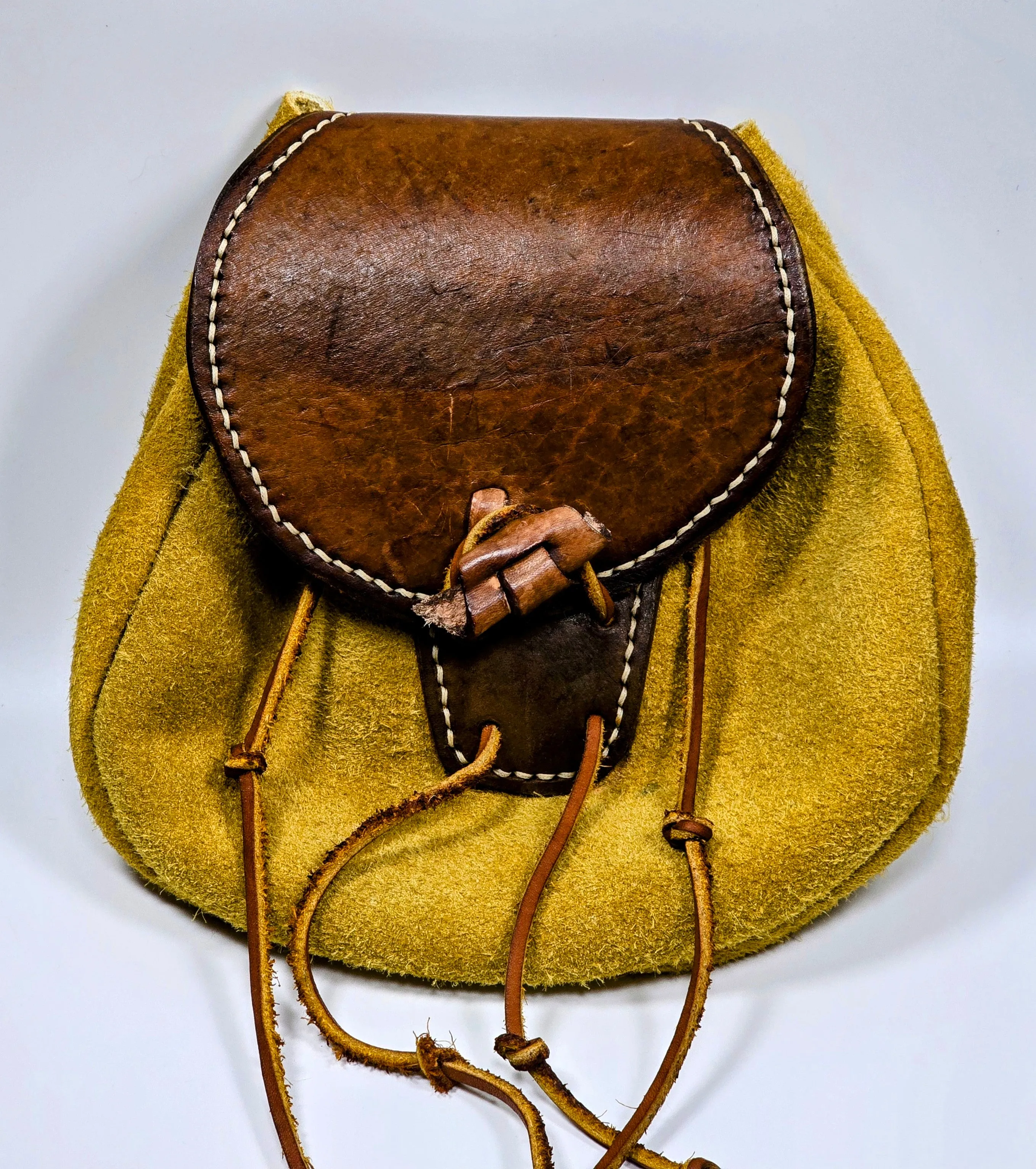
For the minimalist route, a smaller cover paired with The Highland Nomad keeps the notebook and a few essentials close at hand. That setup is especially useful for walks, markets and days when you want your pockets clear. Your choice does not need to be dramatic. It just needs to remove the friction between noticing something and writing it down.
Care for the cover without fussing over it
Leather is tough, not invincible. If a cover gets caught in rain, blot it with a soft cloth, take out the paper insert and let the leather air dry naturally. Keep it away from a heater or direct blast of hot air, which can leave it stiff. Once or twice a year, or when the leather begins to feel dry rather than merely worn, use a light coat of conditioner suited to its finish.
Do not panic at the first scuff. A good cover should look lived with. Patina is the quiet evidence of being carried, handled and useful. The one exception is damage that affects function, such as broken stitching, hardware that no longer secures or leather that has stayed soaked. Deal with that early, before a small problem becomes an interruption to the next trip.
A cover that becomes part of the story
If I were packing for my next trip, I would reach for the Chronicler’s Cover. The burgundy leather has enough presence to feel special, but it is not fussy. The hand-stitched build is made for regular use, and the A5 format gives most people the writing room they want without making the journal awkward to carry.
The right choice is personal. You may want a compact cover for quick observations, or a larger one for maps and long reflections. What matters is that it feels good in the hand, fits the notebook you trust and makes you more likely to capture the day while it is still fresh. That is when a leather journal cover stops being an accessory and becomes a companion.
Frequently asked questions
What size leather journal cover is best for travel?
A5 is a useful all-round size for most trips because it leaves room for writing, sketches and tickets without taking over a daypack. Choose a smaller cover when quick notes and minimum bulk matter more than page space.
Should a travel journal cover have a closure?
A closure is useful when the journal will move around inside a crowded bag or carry loose maps and receipts. A sleeve-style cover is a good fit when you prefer quick access and keep the journal in a protected compartment.
Can a leather journal cover handle rain?
Leather can handle a little weather, but it should not stay soaked. Blot off surface water, remove the notebook if it is damp, and let the cover dry naturally away from direct heat.
How do I know if a cover will fit my notebook?
Measure the notebook's height, width and thickness, then compare those dimensions with the cover description. Allow a little room if you plan to add photos, tickets or other keepsakes as you travel.
Keep reading
More from the journal.
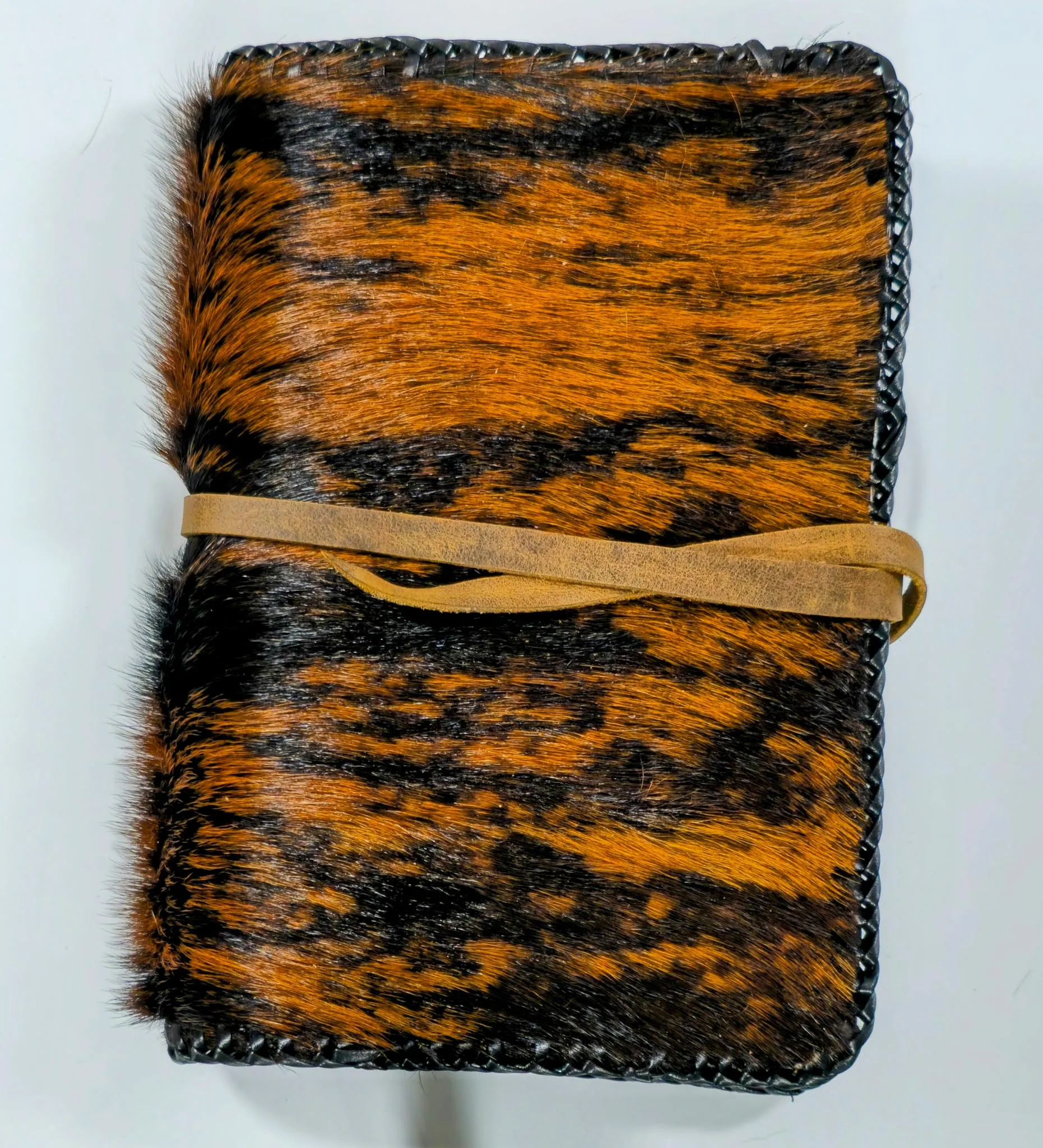
How to Make a Leather Journal Cover: A Maker’s Starter Guide
A practical introduction to planning, cutting and finishing a simple leather journal cover, with the measurements and mistakes worth understanding before you begin.
Read the guide ↗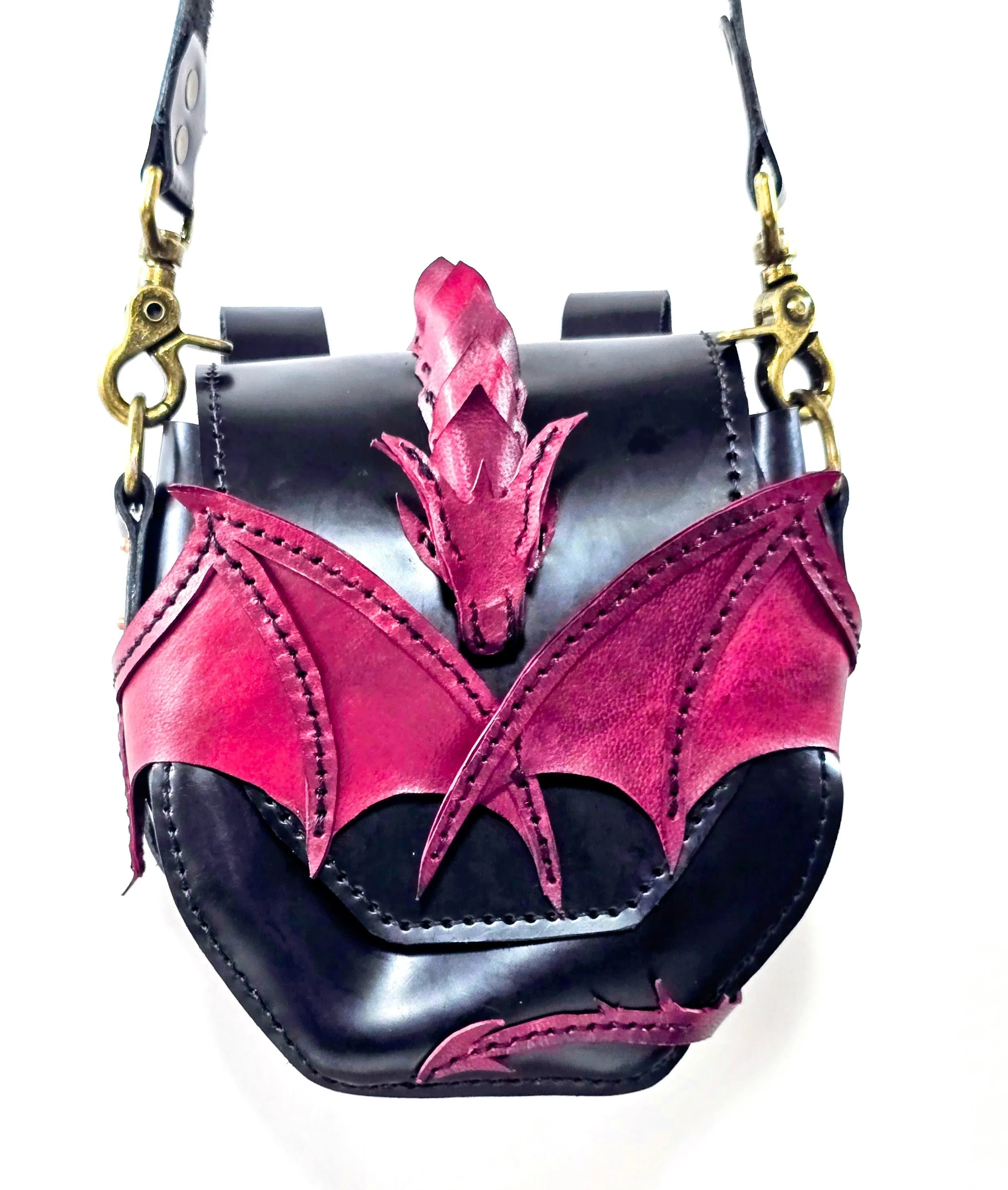
How to Clean Leather: A Gentle 5-Step Guide
Learn how to clean leather without overdoing it, what to avoid, and when a handmade pouch, bag or cover needs professional help.
Read the guide ↗