Adventure Journaling
Refillable Leather Journal Cover: How to Choose One
Choose a refillable leather journal cover by notebook fit, refill style, carry needs and the details that make it pleasant to use every day.
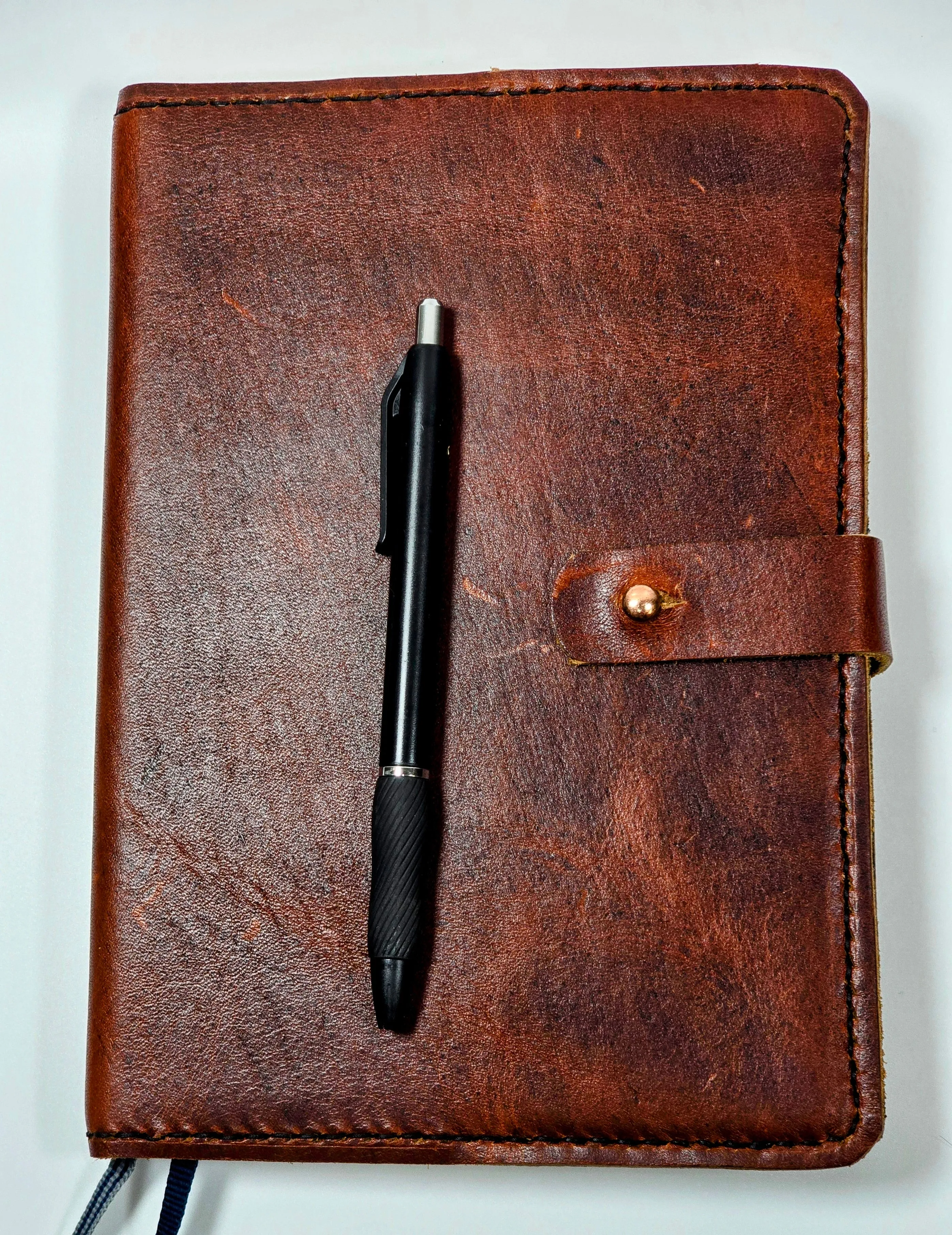
A refillable leather journal cover is a simple idea with a useful payoff: the leather stays with you while the paper changes as your writing, planning or sketching fills it. Instead of replacing an entire bound journal whenever the last page is used, you keep the part that becomes more familiar with time and swap in a fresh notebook that suits the next chapter.
The right cover is not just the one with the nicest photo. It needs to fit the notebook you actually use, open without a fight, carry comfortably and make changing refills feel easy. Start with the book, then choose the leather cover around its real dimensions and your daily rhythm.
What makes a journal cover refillable?
A refillable cover is a separate leather outer that holds a removable notebook or paper insert. The cover may use inside pockets, elastic bands, a wrap-and-tie system or a removable spine arrangement. When the notebook is full, you take it out and place a new one inside. The leather is the lasting part, while the paper is the working part.
That is different from a leather-bound journal, where the leather and pages are permanently joined. A bound journal can be beautiful, but it is a complete object. A refillable cover is a small system. It lets you keep one familiar piece of leather while changing paper weight, ruling, color or notebook brand as your work changes.
Start with the notebook you already enjoy
Before choosing a cover, decide what you want to write in. A daily planner, a slim travel notebook, a thick hardback journal and a spiral sketchbook can all have the same page label while occupying very different amounts of space. Close your actual notebook and measure its full outside height, width and spine thickness. Include its boards, elastic closure, pen loop, tabs and anything you normally keep tucked inside.
A5 is a common starting point because it is large enough for real writing and still easy to carry, but the label alone is not a measurement. The A5 notebook-cover size guide explains why a finished notebook can be larger than its paper. If you use a composition book, the composition notebook cover guide gives the same fit-first approach.
Choose a refill system that matches your habits
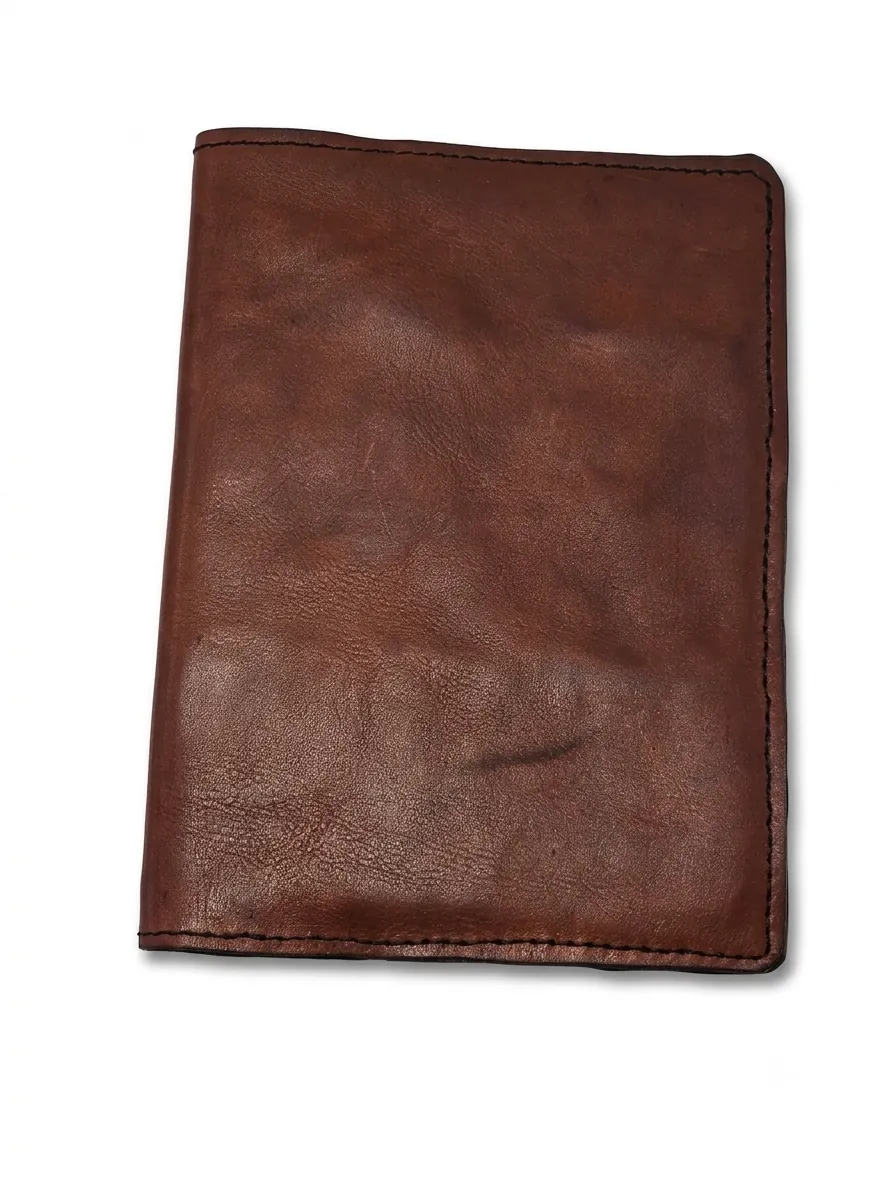
Pocket-style covers hold the front and back covers of a notebook inside leather sleeves. They feel tidy, protect the book well and make a good choice when you stick with one notebook shape. They also keep the notebook stable while you write. The tradeoff is that they need a reasonably close fit, especially with a hard cover, thick spine or wire binding.
Elastic-bound traveler-style covers are more flexible. They can hold one or several slim inserts and make it easy to swap notebooks as projects change. A wrap-style cover can offer similar flexibility with a more open feel. None is universally better. Choose a pocket cover for a clean, steady home for a familiar notebook. Choose an elastic or wrap system when you rotate several thinner inserts or want more room to experiment.
Check the details that make a cover easy to live with
The useful details are usually quiet ones: a cover that opens flat enough to write comfortably, inside pockets that do not crowd the page, edges that feel smooth in the hand and a closure you can use without fumbling. If you carry cards, receipts or loose notes, consider whether you need a pocket. If you always carry a pen, decide whether a pen loop is helpful or simply adds bulk.
Think about where the journal spends its time. A desk journal can welcome a fuller cover with pockets and a heavier notebook. A bag journal needs a profile that stays comfortable beside a phone, charger and keys. A cover should protect your notes, not turn them into another object to manage.
Leather choice affects the feel, not just the look
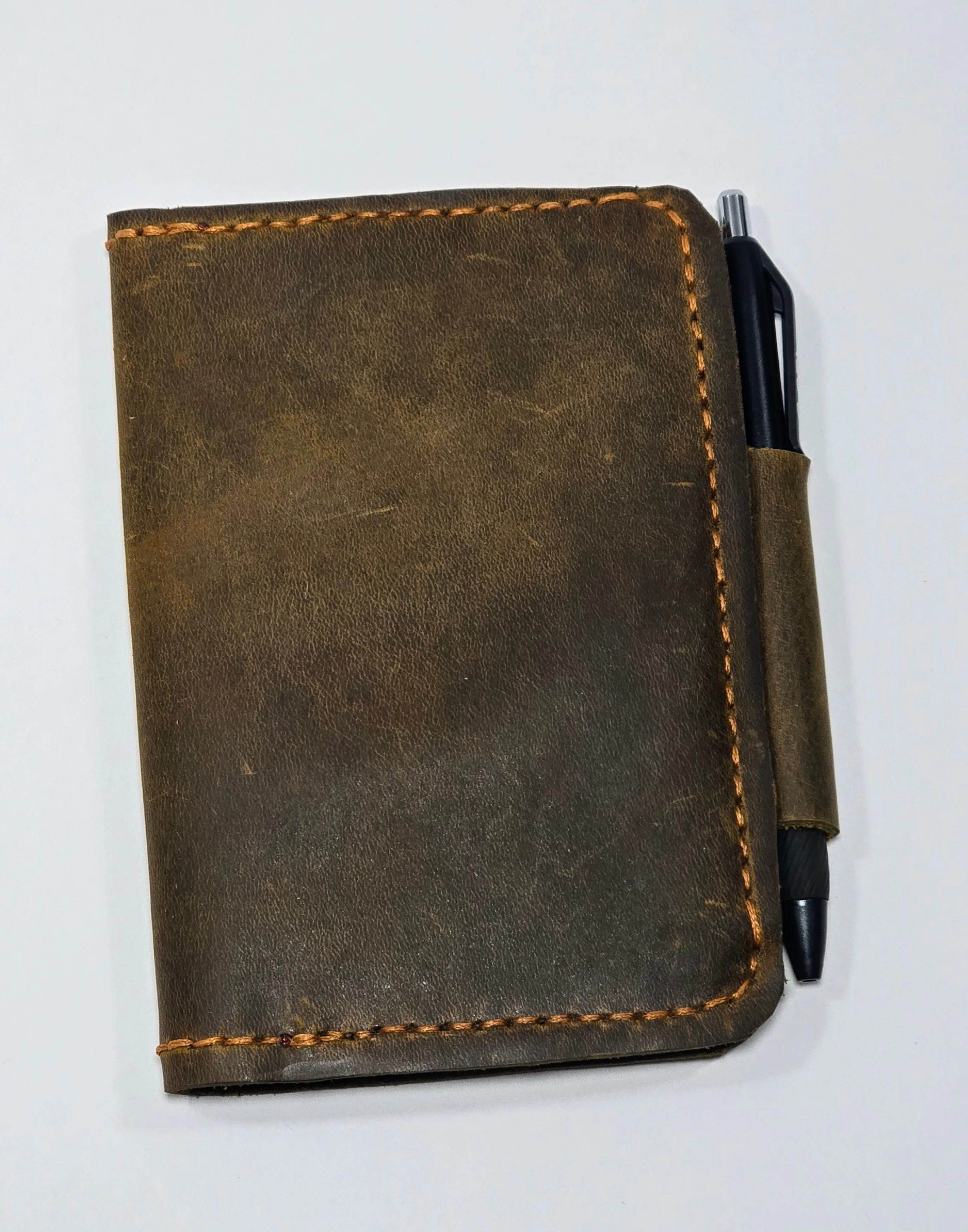
Leather has a range of personalities. Full-grain and vegetable-tanned leathers often develop softened edges, marks and patina with use. Softer leathers can make a relaxed, flexible cover that folds easily. A more structured leather can keep a cleaner shape and feel substantial around a notebook. The right choice depends on how much structure you want and how roughly the cover will be carried.
Natural variation is part of the material, not a defect to be edited away. Small grain changes and signs of use become the visual record of a cover that travels with you. If you want to understand how that character develops, the guide to natural leather patina explains the simple care habits that help leather age well without overdoing it.
Fit matters more than a familiar size name
A cover that is too tight bows the notebook, pulls at the spine and makes page turns feel like work. One that is too loose lets the book shift and loses the satisfying sense that the cover has a job. Leather can flex, but it should not be expected to correct a mismatch between a cover and the book it is meant to hold.
Measure the closed notebook on a flat surface. Record its outside height, outside width and thickest point. For a spiral, measure across the coil. For a hardback, include the boards. Then decide whether your notebook will grow with pasted notes, tabs or a thicker refill. A little planning now is kinder than trying to stretch a handsome cover around the wrong book later.
Match the cover to the way you write
For morning pages, daily reflections or meeting notes, a standard A5 setup gives a generous writing area without taking over a bag. The Chronicler’s Cover is made around that familiar format. For quick lists, travel observations and smaller everyday notes, a Mini Leather Journal Cover keeps the carry lighter.
For a larger composition notebook, a Large Leather Journal Cover is built for the standard 7 by 9.5-inch format and includes the first notebook. If the book has an unusual spine, a coil or a size that does not fit a standard cover, a custom leather notebook cover is the sensible route. The useful question is always the same: what do you want to write, and what book helps you do it?
Choose paper and refills with the same care
The cover is only half of the experience. Paper weight, ruling and binding decide what happens when your pen reaches the page. A thin ruled notebook can be perfect for lists and meeting notes. A heavier dot-grid or blank notebook may be better for fountain pens, sketches or planning layouts. If you know you enjoy one particular paper, choosing a cover around that refill is more useful than buying a cover first and hoping the paper will cooperate.
Refill availability matters as well. A notebook that is easy to replace is more likely to become a real habit. Look for a size carried by stationery shops you already use, or keep a small stack of refills ready at home. That does not mean you need one brand forever. It means the dimensions and binding style should be repeatable enough that a full notebook feels like an invitation to begin another, not a reason to retire the cover.
Some writers like to keep one notebook for each role: daily writing, work notes, travel observations or project planning. A multi-insert elastic cover can make that arrangement neat. Others find several inserts distracting and prefer one substantial notebook at a time. Neither approach is more organized by default. The useful system is the one you can open quickly and understand at a glance.
Consider thickness now and later
A notebook rarely stays the same thickness. Tabs, ticket stubs, photographs, folded letters and the occasional page of notes tucked into a pocket can make a slim book grow. If that is part of how you journal, choose a cover with enough ease for the life of the notebook, not just for its first clean day. A cover that closes smoothly at the beginning should still behave well after months of use.
The spine is where a poor fit announces itself first. If the cover pulls the book open, bows the boards or makes the notebook spring shut, the setup is too tight. If the notebook slides out of its sleeves or shifts every time you write, it is too loose. With a pocket-style cover, a close but unforced fit is the goal. With an elastic cover, make sure the bands hold an insert without creasing its pages or putting the knot where your hand rests.
Be especially realistic about hardbacks, planners and spiral-bound notebooks. Their width is not just paper. Measure the hardware, cover boards and closure. A notebook size comparison can help with choosing a page format, but the final cover decision should always come back to the full, finished book in front of you.
Think about carry before adding every feature
A leather cover can collect features quickly: card slots, a phone pocket, several pen loops, a zipper, a place for receipts and extra notebook inserts. Those details can be useful, but each one changes the weight, thickness and way the cover opens. A cover that lives on a desk can carry more. One that goes into a small tote every day is often better when it stays focused.
Picture a normal day rather than an idealized one. Do you write at a kitchen table, take notes in meetings, keep a journal in a travel bag or pull it out for five minutes in a café? Do you carry a separate wallet and phone, or do you want the cover to hold a few paper items? The answers help separate a feature you will use from one that merely sounds impressive in a product description.
Comfort is part of the design. A cover should feel easy to pick up, not like a small binder you postpone opening. If you carry it beside other essentials, pair it with a bag that has room for the format you chose. The goal is not to bring everything. It is to keep the notebook and a few important notes protected, ready and close.
Care for the leather without over-managing it
A journal cover is meant to be handled. Light scuffs, softened corners and a change in tone are normal signs of use, especially on natural leather. Most days, the right care is simply keeping it dry, brushing off dust and not leaving it in prolonged heat or on a wet surface. Let it gain a little honest history rather than trying to keep it frozen at day one.
When a cover needs more attention, start gently. A soft dry cloth handles ordinary dust. If something spills, blot the moisture and let the leather dry slowly at room temperature. Avoid soaking, harsh household cleaners and direct heat. The leather cleaning guide explains a careful approach, while the conditioning guide helps you avoid using too much product too often.
Paper needs consideration too. Do not store a wet notebook inside the leather cover. Let both dry separately and completely. If you use a fountain pen or carry loose ink, keep the cap secure and give new paper a quick test before committing a favorite cover to it. A small bit of prevention protects both the leather and the writing inside.
When a custom cover is worth considering
Standard covers are the simplest answer when you use a common notebook size and want a straightforward, dependable fit. Custom work begins to make sense when your notebook has an unusual height, a thick hardback spine, a coil binding, a specialized planner layout or a specific feature that changes its shape. The goal is not customization for its own sake. It is a cover that serves the book and routine you already know you like.
Good custom details begin with good information. Take a photo of the closed notebook, its spine and its open spread. Share the full outside height, width and thickness, plus anything that sticks out or changes how it closes. Mention how you use it: at a desk, on the road, with a pen, with loose papers or as part of a larger bag. Those details are what turn an idea into a cover that feels easy from the first use.
The Kilted Leatherworker can make a custom leather piece around the things you carry and the way you use them. For notebook-specific work, start with the custom cover page. A clear measurement and an honest description of your routine are more valuable than trying to force a nearly-right standard size to work.
Use the first refill as a fit check
The first notebook you place in a new cover teaches you more than a product listing can. Put in the refill you expect to use most, close the cover and open it across several spreads. Write near the center of the page, then near the front and back. Carry it in the bag you normally use. That small trial reveals whether the spine has enough room, whether the cover lies comfortably under your hand and whether any pocket or closure gets in the way.
Pay attention to friction. A good setup lets the notebook slide into place without forcing the cover corners. The book should not need to be tugged out every time you want to write, and the cover should not pull against the binding when you lay a page flat. If you use elastic bands, check that they hold the insert securely without pulling the paper into a curve. If you use interior sleeves, make sure the notebook covers can tuck in without folding or scraping.
Try the practical moments, too. Turn the journal upside down in your hand, open it while standing, write with the cover folded back only if its construction allows it, and set it beside the laptop or mug that normally shares your workspace. Check that a pen stored with the cover does not leave pressure marks on the pages. If you keep receipts or reference cards inside, make sure they do not make the notebook feel lumpy where your palm rests. Small irritations are easy to overlook in a product photo and impossible to ignore once a journal becomes part of a daily routine.
Then use the journal normally for a week. Carry it to the places you genuinely write, not just the places that make a good photograph. Take notes at a desk, make a grocery list in the kitchen, jot down a thought in the car before an appointment or pack it for a weekend away. A cover that stays out of your way during ordinary life is the one that will still feel right several refills from now.
This trial also makes it easier to learn what you want next. You may discover that you prefer a slimmer notebook, a pen loop, a different paper weight or less storage. That is useful information, not a failure. Refillable covers work well because they leave room for your writing practice to change while the leather remains the familiar part of the ritual.
A quick checklist before you choose
Bring the decision back to a few practical checks. Confirm the notebook’s full outside dimensions. Choose a pocket, elastic or wrap system based on how often you change inserts. Decide whether you need room for a pen, loose notes or multiple notebooks. Think about whether the cover will live on a desk, in a tote or in a smaller everyday bag. Then choose leather that feels right for how you intend to use it, not just how it photographs.
If you are buying a cover as a gift, begin with the recipient’s existing notebook rather than trying to guess their ideal format. A photo of the closed book beside a ruler is more useful than a vague size name. When that information is not available, a standard, widely available format is usually kinder than an elaborate cover built around assumptions. The best gift is one they can start using immediately, then keep using when the first notebook is full.
Finally, leave room for preference. Some people want a slim cover with nothing but a notebook inside. Others enjoy a pen, a few cards and a place for travel notes. Some want smooth leather that stays quiet, while others want a cover that shows every softened edge and scuff from the road. A refillable cover earns its place because it can become part of a person’s own writing ritual, not because it checks the longest list of features.
A good refillable leather journal cover makes the first blank page easier to approach. It keeps your favorite format close, gives each new notebook a familiar home and becomes more personal as the years and refills add up. That is the appeal: one well-made cover, many places to put the thoughts worth keeping.
Frequently asked questions
What is a refillable leather journal cover?
It is a separate leather cover that holds a removable notebook or paper insert. When the notebook is full, you replace the paper while keeping the leather cover.
How do I know whether a notebook will fit?
Measure the finished notebook’s outside height, width and thickness while it is closed. Include boards, coils, tabs, elastic and anything you normally keep inside. Compare those measurements with the cover’s stated fit.
Are pocket-style or elastic journal covers better?
Pocket-style covers are a good choice for one familiar notebook shape and a stable, tidy fit. Elastic systems are more flexible for several slim inserts or changing formats. The better choice depends on your refill habits.
Can a leather journal cover hold a spiral notebook?
Sometimes, but the coil adds width and a firm edge. Measure across the coil and choose a cover with enough room for the notebook to sit comfortably and open without strain.
What size refillable journal cover should I buy?
Choose the size around the exact notebook you plan to use, not only its page label. A5, composition and B5 notebooks can vary once their covers, binding and thickness are included.
Keep reading
More from the journal.
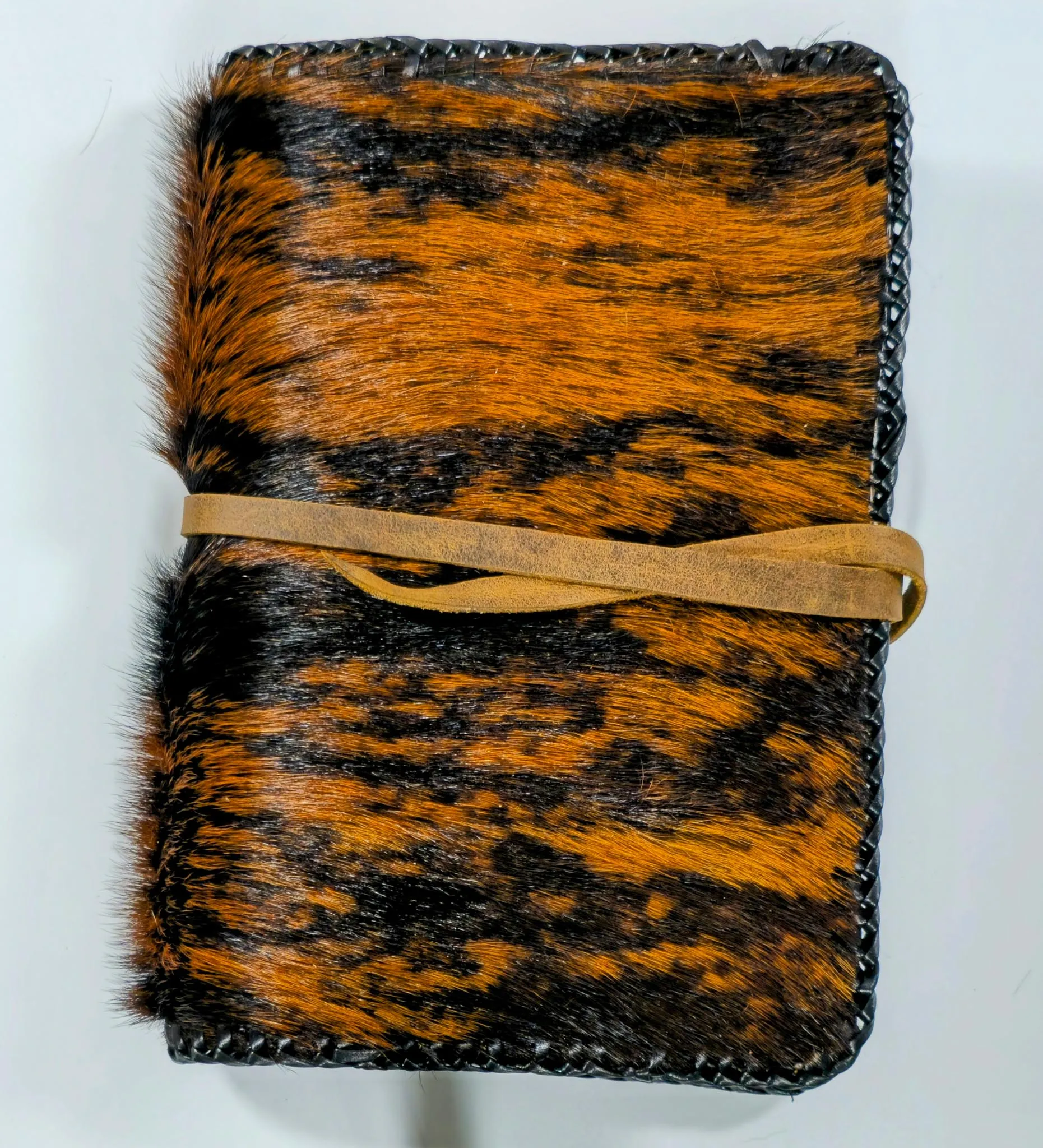
How to Make a Leather Journal Cover: A Maker’s Starter Guide
A practical introduction to planning, cutting and finishing a simple leather journal cover, with the measurements and mistakes worth understanding before you begin.
Read the guide ↗The Best Gifts for Writers, Travelers and Tabletop Gamers
Thoughtful handmade leather gift ideas for people who write, roam, roll dice and keep the good details close.
Read the guide ↗