Leather Style
Why a Leather Belt Pouch Will Change the Way You Travel in 2026
A practical travel guide to carrying essentials closer, choosing the right fit and building a leather belt pouch system that works on the move.
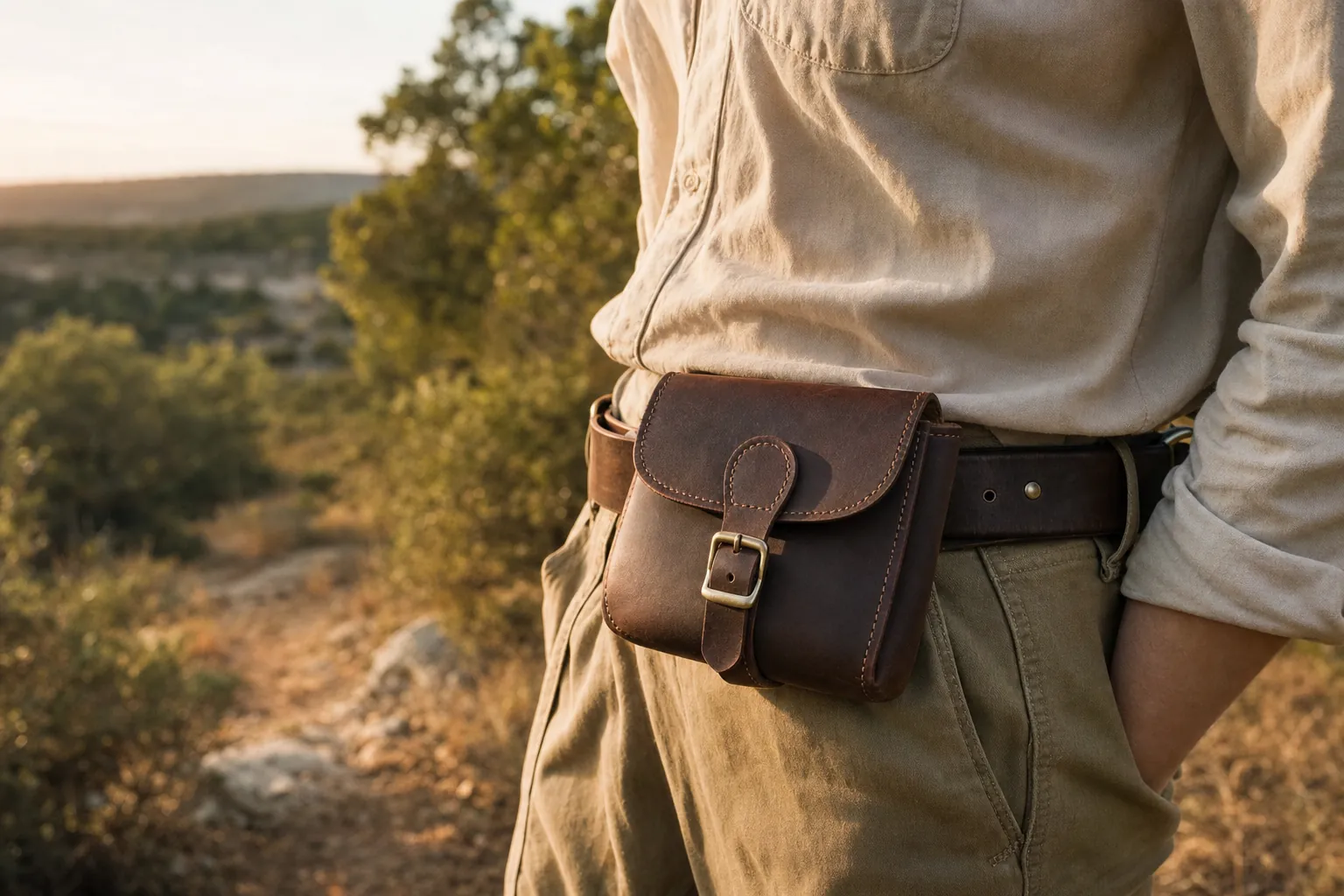
Hi there, I’m Penny. I work alongside Eric at The Kilted Leatherworker, and we are a little obsessed with gear that does more than look good. The best piece earns its place because it makes the day smoother, whether that means getting through an airport without a pocket scramble or taking a long walk with your hands free.
That is why I keep coming back to the leather belt pouch. Modern travel asks us to keep more small essentials within reach: a larger phone, a wallet, an ID, a charger, a key and the travel papers that are always needed at exactly the wrong moment. A well-chosen pouch does not replace every bag. It solves the immediate-access problem beautifully.
The direct answer: pouch or backpack?
A leather belt pouch is better than a backpack for the items you need now. A backpack still earns its keep for the laptop, jacket, water and change of clothes. The pouch carries the compact, high-priority things you would rather not hunt for at the bottom of a larger bag.
Wear the pouch near the front or just beside your hip, where you can see and feel it easily. That placement is not a magic security device, and it does not remove the need for awareness in a crowded terminal or market. It does make it easier to notice your belongings, open the pouch deliberately and move through a busy day without repeatedly taking off a larger bag.
Why the traditional sporran still makes sense
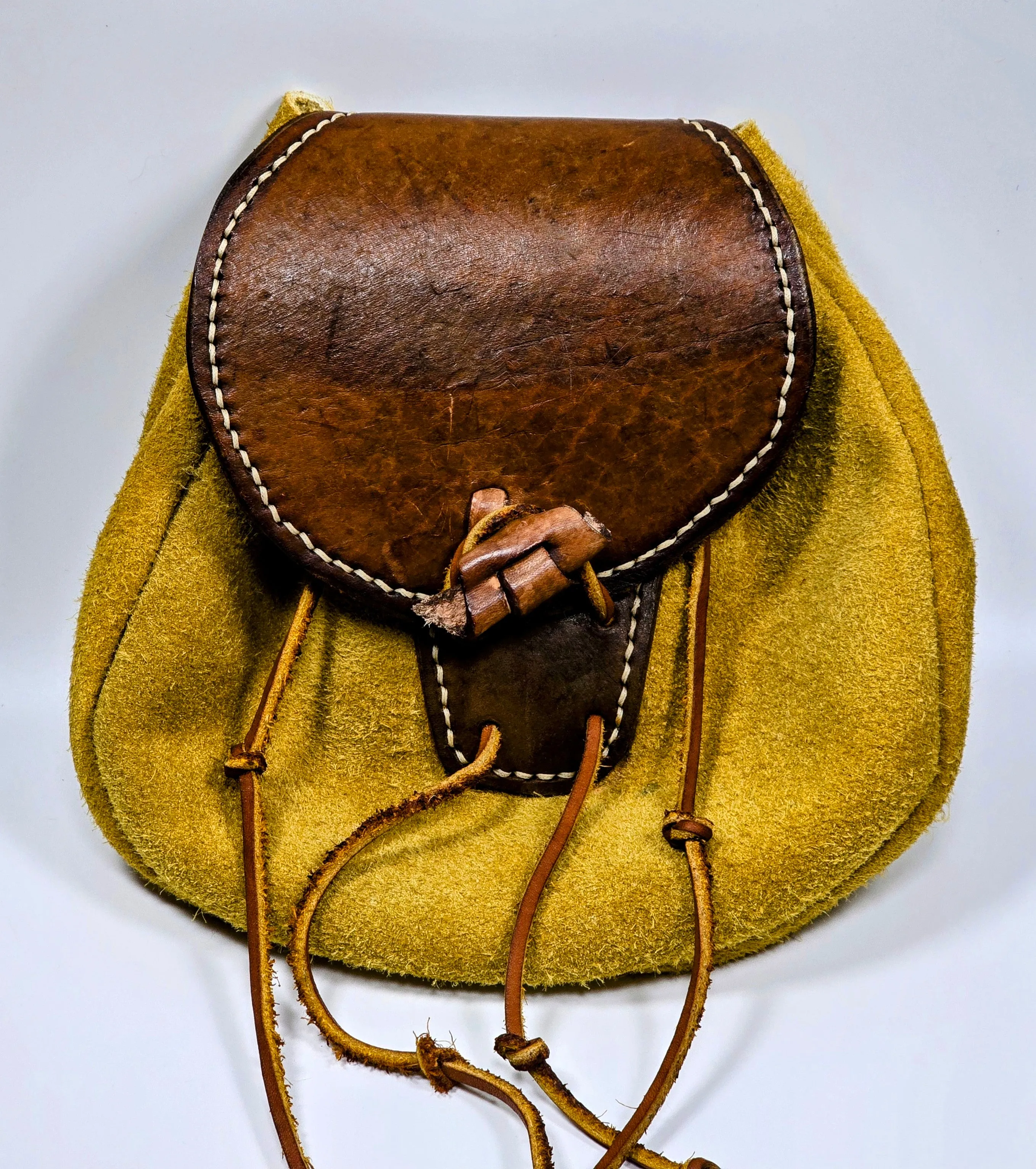
The idea behind The Highland Nomad began with the traditional Scottish sporran. A kilt does not offer ordinary trouser pockets, so the sporran has always been the practical answer: a compact pouch for the things that need to stay with you. That is not an old-fashioned problem. It is the same problem travelers meet when pockets fill up with a phone, keys, cards and a passport.
Eric took that useful premise and shaped it for modern everyday carry. The result is The Highland Nomad, a full-grain buffalo leather pouch made to keep core essentials close without turning your pockets into a jumble. It has the presence of heritage gear, but its job is simple: make the small things easier to carry.
Security starts with placement and routine
Travel can make anyone a little watchful. A bag behind your back is easy to forget about when you are reading a sign, buying a ticket or trying to keep a moving line moving. A belt pouch changes the relationship because the pouch stays against your body and within your normal field of attention.
That is especially useful for the moments that create the most fumbling: presenting an ID, finding a boarding pass, paying for a coffee or putting a phone away after checking directions. Instead of unzipping a backpack and searching, you have one predictable place to reach. Secure clasps and leather toggles also ask for a deliberate opening action, which helps keep the pouch from drifting open in motion.
Keep the practical limits in view. Do not overfill it, do not leave it unattended and do not assume any carry method makes a crowded place risk-free. The advantage is control and easy awareness, not invincibility.
Get the fit right before you leave
Comfort is not a small detail when you will wear a pouch for hours. Start with the belt you normally travel in, not the one you only wear with a costume. The pouch should sit close without folding the leather awkwardly, pulling the belt downward or making it difficult to sit in a car, train or café chair.
Try the pouch in the position you will really use. Some people like it centred at the front while moving through an airport, then shifted slightly to the side for a long walk. Both can work. What matters is that the flap stays easy to open, the pouch does not swing and the weight feels balanced. A pouch that looks handsome but annoys you after twenty minutes is not doing its job.
Keep the closure simple enough to use without staring at it. Practice opening and closing it with your usual phone, card holder and travel papers inside. That small rehearsal reveals whether you have packed too much, whether a loose key needs its own attachment and whether your passport is better in the pouch or a protected place inside your larger bag.
What actually belongs inside
The sweet spot is a focused everyday-carry kit, not your entire travel bag. Begin with the items you need repeatedly, then stop before the pouch becomes heavy. A typical setup might include:
- Phone, wallet or card holder, and keys
- Passport or ID and a folded boarding pass
- A slim power bank or charging cable when it truly earns the space
- A small notebook, such as a Mini Leather Journal Cover, for directions or a quick note
- A Snap Key Strap to keep keys easier to find
Pack it once at home before the trip. Walk around, sit down, bend and get in and out of the car. If it pulls on your belt, digs into your hip or swings when you move, take something out. The pouch works best when it carries the items you can name without looking.
Rugged material, quieter style
There is a reason leather still feels right for a piece of travel gear you handle constantly. It has texture, weight and a warmth that synthetic fabrics rarely match. Full-grain buffalo leather has a strong natural grain, and regular use gives it more character through softened edges, small scuffs and patina.
That is a different proposition from a loud logo or a disposable bag. A good leather pouch can look considered with denim, travel layers or a simple dinner outfit, while still doing the unglamorous work of keeping your essentials in order. It is functional first, but it does not have to look technical or temporary.
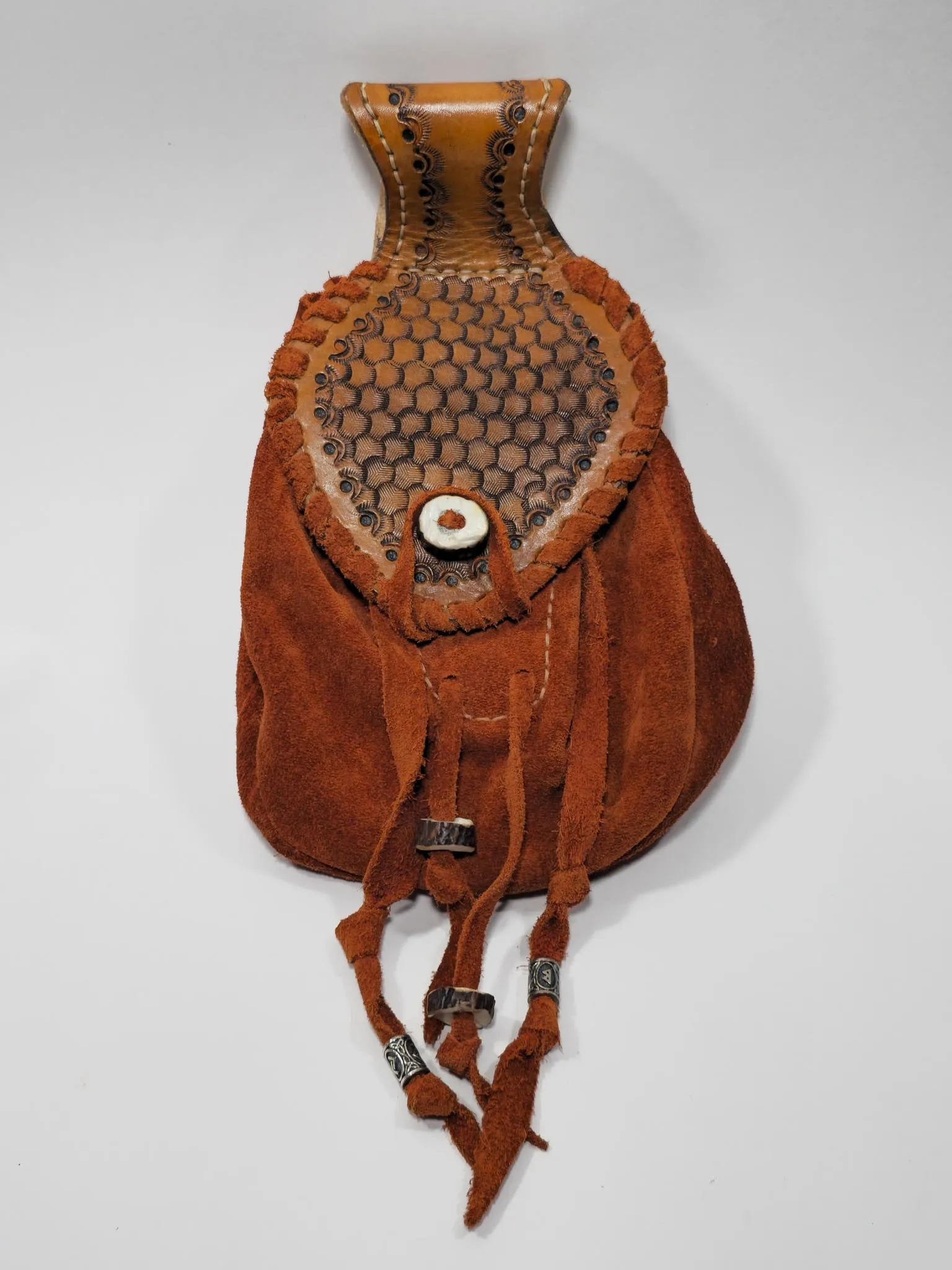
If you prefer a more decorative finish, a tooled leather belt pouch gives you the same focused carry idea with more visual detail. Choose the version that suits the clothes and days you actually have, not a fantasy itinerary you will never take.
Build a travel system, not a pile of bags
The belt pouch becomes even more useful when it has a clear job beside your other carry. For a travel day, let The Wayfarer’s Tote handle the heavier items: a laptop, jacket, water, charger and anything that does not need instant access. Keep the passport, phone, cards and keys in the pouch on your hip.
Heading to a meeting or a café? Slip The Chronicler’s Cover into the tote, then keep the high-value, quick-reach essentials in the pouch. The point is not matching accessories for the sake of it. It is the calm that comes from knowing exactly where each category of item belongs.
That system also makes transitions easier. You can set down the tote at your seat without losing track of your basics. You can leave the car for a trailhead without bringing every piece of gear. You can pay for something without rearranging a whole backpack on a counter.
Let the pouch age with the trip
Good leather does not need fussy treatment to stay useful. Brush away dust after a trail day, blot a splash rather than rubbing it and let damp leather dry naturally away from direct heat. Once the pouch feels genuinely dry rather than simply worn, a light application of conditioner suited to its finish can restore a comfortable feel.
Do not chase a factory-new appearance. The small changes are part of the reward: the flap that softens where you open it, the grain that catches the light differently after a season and the marks that remind you of a trip. Regular care is about preserving function, not erasing the record of use.
Made slowly for the long haul
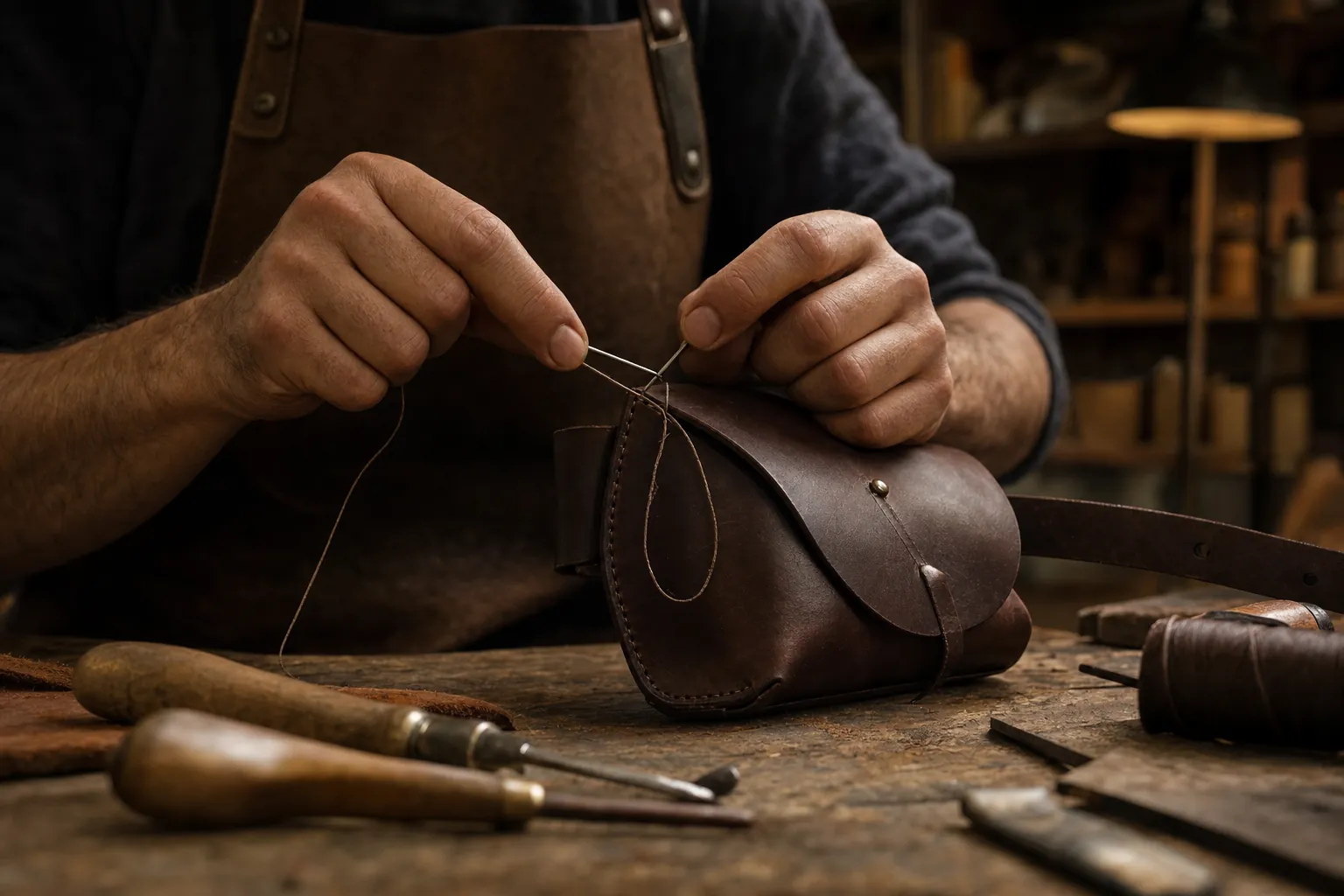
Every handmade pouch begins at Eric’s workbench with a hide chosen for the way it will wear. He cuts the leather, works the details, sets the hardware and pays attention to the places that take the most strain. That slower process is why the pouch feels different in the hand from something stamped out by the thousand.
It is also why we want you to use it. Leather is supposed to pick up evidence of a life in motion. A mark from a trail, a darkened edge from your hand or a softened flap from years of opening it are not signs that the pouch has failed. They are signs that it became yours.
Is a leather belt pouch right for your next trip?
It is a strong choice when you want a hands-free place for immediate essentials and you are willing to keep the carry focused. It is not the right answer for a laptop, a full change of clothes or a day when you need to haul water and camera gear. Those belong in a tote, backpack or larger bag.
But for the airport, the market, a city walk, a road trip stop or a short hike, a pouch can remove a surprising amount of friction. You are not carrying less carelessly. You are carrying the important things with more intention.
If that sounds like the travel rhythm you want, take a closer look at The Highland Nomad. It is made for travelers who want their essentials close, their hands free and their gear to feel better after a few more miles.
Frequently asked questions
Is a belt pouch better than a backpack for travel?
For immediate-access essentials, it can be. A backpack is still better for larger items such as a laptop, water bottle or extra layer, while a belt pouch keeps the things you reach for most close to your body.
What should I keep in a leather belt pouch while travelling?
Start with your phone, wallet or card holder, passport or ID, keys and boarding pass. Add only the small items you need often, so the pouch stays comfortable and easy to open.
Are leather belt pouches secure for busy places?
A pouch worn close and in front of your body can make your essentials easier to monitor. No bag makes valuables risk-free, so keep it closed, stay aware of your surroundings and use the pouch as one part of a sensible travel routine.
How should a belt pouch fit for walking all day?
It should sit close to your body without digging in or bouncing as you move. Test it at home with your usual essentials inside, and keep the load light enough that your belt remains comfortable.
Keep reading
More from the journal.
The Ultimate Guide to Leather Sporrans
What a leather sporran is, how to wear one with or without a kilt, and why this heritage carry piece still works beautifully today.
Read the guide ↗What Fits in a Leather Belt Pouch?
A practical everyday-carry guide to packing a leather belt pouch without making it bulky, awkward or hard to use.
Read the guide ↗