Adventure Journaling
A4 vs. A5 Notebook: Which Size Is Right for You?
Compare A4 and A5 notebook dimensions, writing space, portability and cover fit before choosing the size you will actually use.
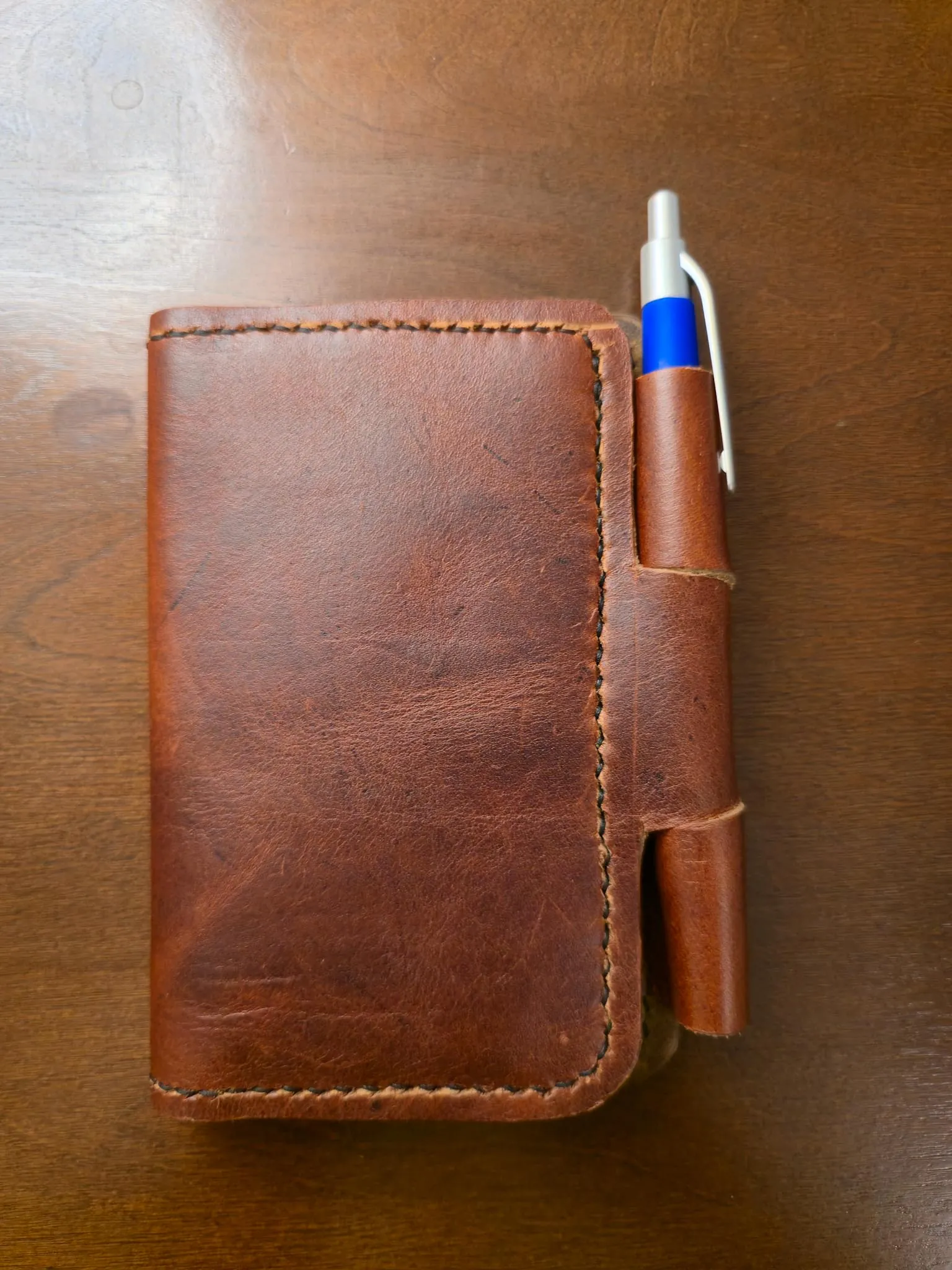
A4 and A5 notebooks belong to the same paper family, but they feel very different once you start using them. A4 gives you a broad page that handles a full day of notes, sketches and paperwork. A5 is half the area of A4, so it keeps enough writing room for real thought while taking up much less space in a bag. Neither size is automatically better. The useful choice comes from the work you want the notebook to do and the places you want it to travel.
Start with the simple question: is this notebook mainly a portable workspace, or is it something you want close by every day? An A4 book earns its size when you need to see a lot at once. An A5 book earns its place when you want a notebook that can leave the desk without becoming a burden. Once you understand the true dimensions, the writing experience, and the finished notebook's thickness, choosing a leather cover becomes much easier too.
The size difference is larger than it sounds
A4 and A5 are part of the international A-series. An A4 sheet measures 210 by 297 millimeters, or about 8.3 by 11.7 inches. An A5 sheet measures 148 by 210 millimeters, or about 5.8 by 8.3 inches. Fold an A4 sheet in half across its longer side and you get A5. That simple relationship is why the two sizes share the same proportions while serving very different routines.
The important point is area, not just height and width. A5 is not a slightly smaller A4. It has half the page area. A4 gives you about twice as much room for handwriting, drawings, printed papers and side-by-side information. A5 gives you a smaller footprint that is easier to hold, pack and use in everyday spaces. The inch conversions are consistent because the National Institute of Standards and Technology defines an inch as exactly 25.4 millimeters.
A notebook's outside size can be a little larger than its paper. Covers, binding, tabs, elastic closures and page count all add bulk. The paper dimensions are still the best place to begin, but measure the closed notebook before ordering a fitted sleeve or refillable leather cover.
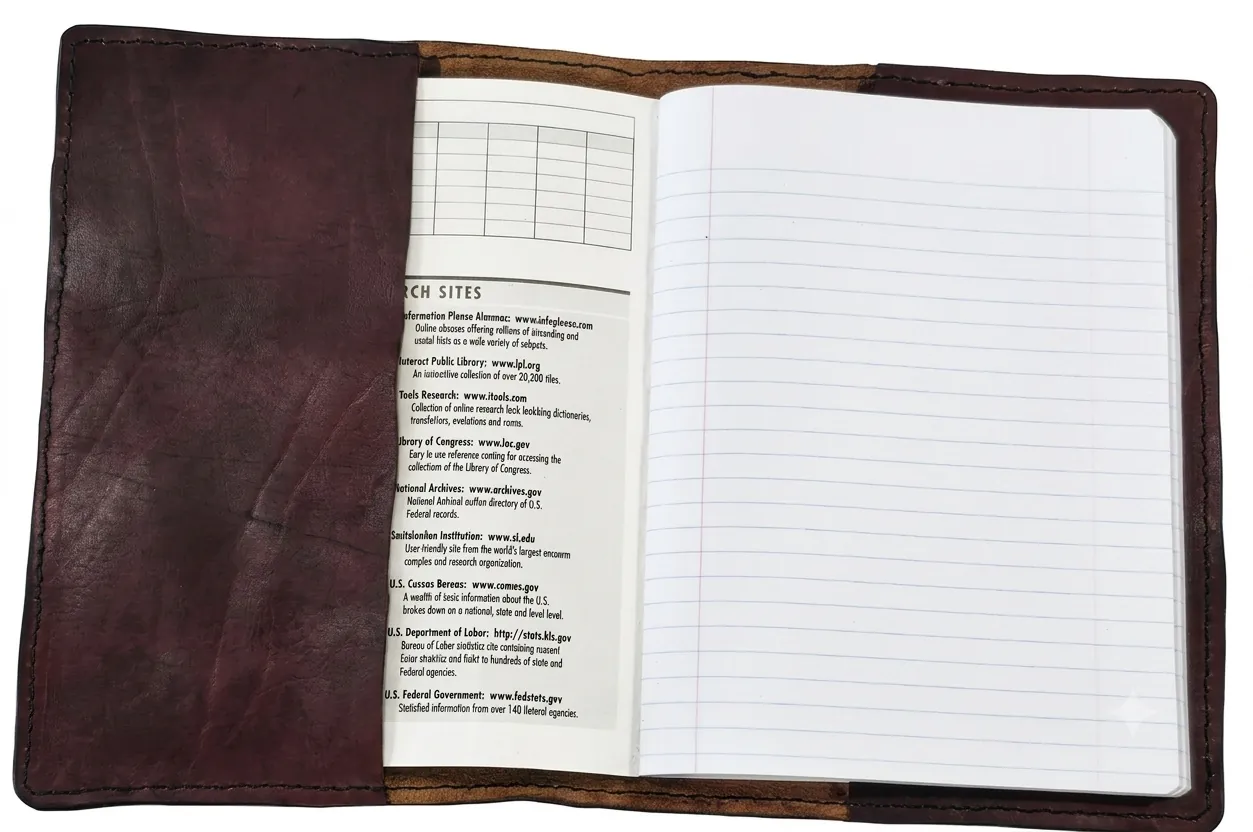
Choose A4 when you need a portable workspace
A4 is the better choice when the notebook needs to hold a lot of information on one page. It is comfortable for class notes, project planning, meeting agendas, long journal entries, large handwriting, music notation and sketches that would feel cramped on a smaller page. You can keep a diagram beside written notes, make a full weekly plan, or paste in a handout without covering most of the page.
It is also useful when you work from printed documents. An A4 notebook can sit naturally beside A4 paper, which makes it easier to copy notes from a worksheet, organize a project, or keep a written response with the reference material that prompted it. If you regularly turn a notebook sideways for a chart, a mind map, or a rough design, the wider landscape space is a real advantage.
The tradeoff is obvious once you carry it. A4 is closer to a document pad than a pocket notebook. It needs a backpack, tote, messenger bag, or a desk. That can be exactly right for school, studio work, home planning, or an office routine. It is less convenient for someone who wants to pull out a notebook on a train, at a cafe table, or while standing in line.
Choose A5 when the notebook has to come along
A5 is a strong everyday size because it lands between a small personal notebook and a full desk pad. It has enough room for a proper journal entry, meeting notes, a packing list, a recipe, a travel plan, or a modest sketch. At the same time, it slips into many backpacks, totes and larger purses without asking you to build the rest of the day around it.
That balance makes A5 a good fit for people who write in short, regular bursts. A daily journal page feels approachable. A project list has room to breathe. You can record a few observations from a trip without unfolding a large notebook across a table. When a notebook is easy to carry, it is more likely to be within reach when a useful thought arrives.
A5 is also one of the most common formats for refillable journal covers. A standard A5 notebook is a natural starting point for The Chronicler's Cover. The key word is standard: a hard cover, a thick spine, or a pen loop can make the finished notebook larger than its pages. The A5 notebook-cover size guide explains how to measure the real book before choosing leather around it.
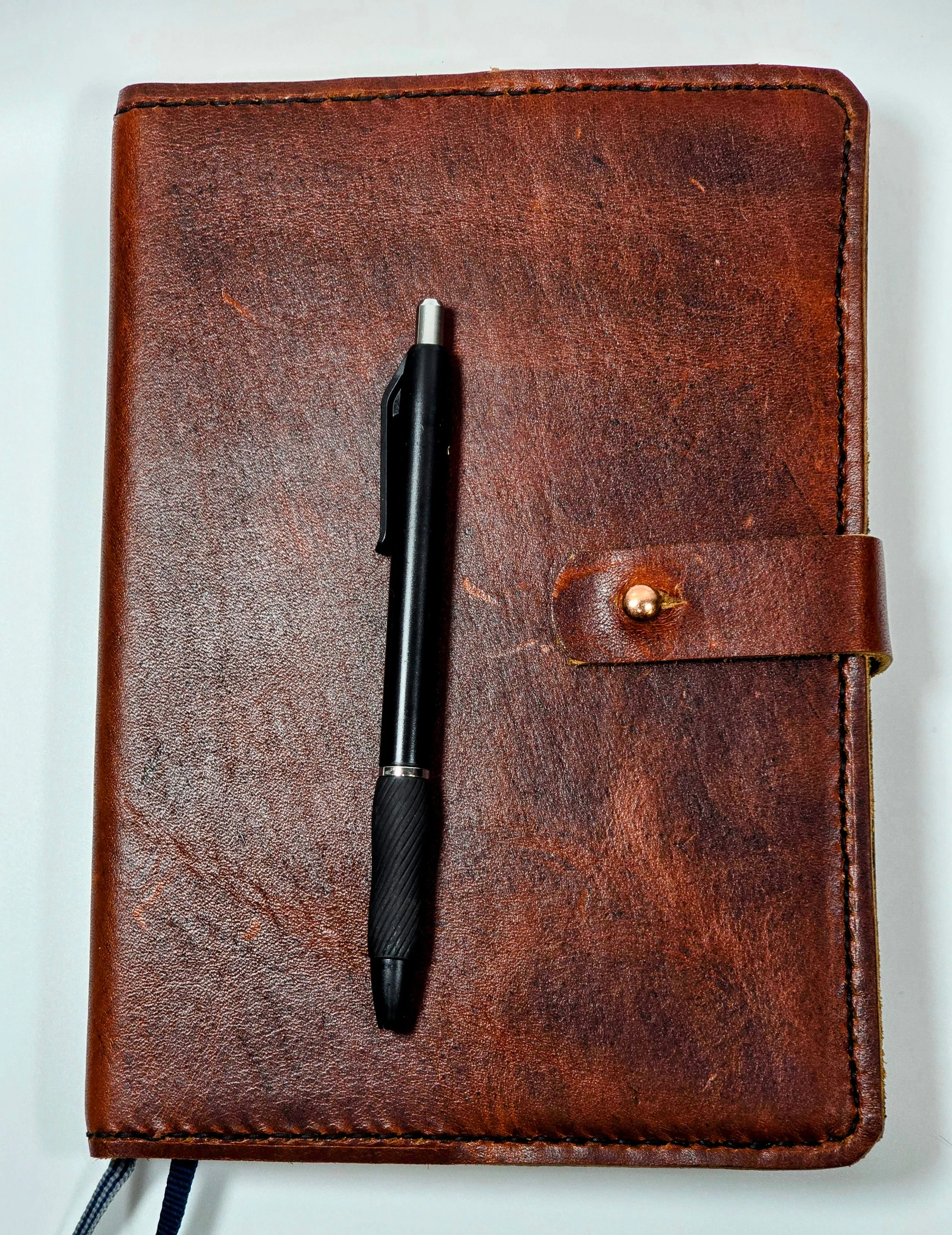
Writing style matters as much as dimensions
Think about how a page looks after you have used it. If your notes grow into diagrams, arrows, boxed ideas, sketches, equations, or several columns of information, A4 gives those ideas space to remain visible together. It is easier to review a dense page when you do not have to turn it sideways or split one thought across several sheets. For creative work, that extra room can make a notebook feel less like a container and more like a working surface.
A5 favors focus. A smaller page gives a list, a journal entry, or a meeting summary a natural boundary. That can be helpful when you want to keep one subject per page or build a habit of writing a little each day. A5 is not too small for serious notes. It simply asks you to decide what belongs on the page instead of spreading every idea out at once.
Try a small reality check with the last notes you took. Were you irritated because you ran out of room, or because the notebook was inconvenient to bring? The first answer points toward A4. The second usually points toward A5. The best size is not the one that looks most impressive on a shelf. It is the one that makes you more willing to open the notebook and use it.
Your usual bag and desk should break the tie
A4 makes sense when it has a reliable home. A desk drawer, a studio table, a classroom bag, or a large laptop tote can all make a full-size notebook easy to live with. If the notebook usually stays where you work, its larger page is an advantage with very little downside. It can open beside a keyboard, a textbook, or a stack of printed material and remain part of the task for hours.
A5 makes more sense when the notebook moves through a day with you. It fits beside a water bottle, a light jacket, or a small tablet in a bag that would feel strained by A4. It is also easier to write in while sitting in a passenger seat, waiting for an appointment, or taking a quick break away from a desk. The smaller format lowers the friction of carrying paper, which is often more important than having a bigger page once in a while.
Make paper stand-ins before buying. Cut one rectangle at A4 size and another at A5 size, then place them in the bag you already use. Open them on the table where you write. Hold them in your lap. This five-minute test is more useful than a product photo because it puts the decision inside your actual routine.
Paper, binding and thickness can change the answer
Page size tells you the footprint. Binding and paper tell you how the finished notebook behaves. A slim stitched A5 notebook can disappear into a bag. A thick A5 planner with dividers, stickers, a hard cover and an elastic loop may feel surprisingly substantial. The same is true for A4. A thin pad can be easy to handle, while a wire-bound sketchbook with heavy paper may be too large for casual carry even before you add a cover.
Spiral, disc-bound and ring-bound notebooks need special attention. Their hardware adds width and can catch on a close leather edge. They are useful formats, especially when you move pages or want a notebook to lay flat, but the widest part of the binding is the measurement that matters. A stitched or glued notebook usually has a cleaner profile and slides more easily into an interior sleeve.
When you choose a cover, measure the notebook closed from outer edge to outer edge. Record its height, width, and thickness at the spine. Include a pen loop, tabs, a back pocket, or the papers you normally tuck inside. A leather cover should hold the notebook securely while letting it open naturally. It should not force the pages, bow the covers, or become difficult to close.
One larger notebook and one smaller notebook can work together
You do not have to choose one size for every kind of thinking. Many people get better results by giving A4 and A5 different jobs. An A4 notebook can stay at a desk as the home base for project plans, study notes, sketches, long meeting notes, or paperwork that needs room to spread out. An A5 notebook can hold the shorter notes that happen away from the desk: a grocery list, a travel plan, a question for a meeting, a book recommendation, or the first rough version of an idea.
That pairing is especially useful when a project has both a big-picture side and a daily side. Use A4 for the material you need to review in depth, such as a full project outline, a course of study, or a business plan. Use A5 for the next actions, observations, and quick notes that need to travel with you. When you get back to the desk, move the few notes worth keeping into the larger book. The smaller notebook becomes a capture tool, not a second place where important details disappear.
The same approach works for creative projects. An A4 sketchbook is satisfying when you need room to explore layouts, write long passages, or make a detailed drawing. An A5 notebook is better for a walk, a coffee shop, a museum visit, or a day when you want a pen and paper close without carrying a full portfolio. The two sizes are not competing for the same job. They can make a simple system when each one has a clear purpose.
If carrying two notebooks feels like too much, start with the one that matches most of your week. Choose A4 when the notebook rarely leaves a working surface and you repeatedly wish you had more room. Choose A5 when the notebook needs to earn a place in your bag, your car, or your hands during an ordinary day. A useful notebook is the one that shows up where the thought occurs.
Do not treat A4, letter and A5 as interchangeable
U.S. Letter paper measures 8.5 by 11 inches. A4 measures about 8.3 by 11.7 inches. They look similar, but A4 is slightly narrower and taller. That difference may not matter for a loose worksheet, yet it can matter when you are choosing a close cover, a folder, or a notebook system with pockets sized around one standard. Check the actual dimensions rather than assuming every full-size notebook is the same.
A5 is even less interchangeable with American half-letter paper. Half Letter measures 5.5 by 8.5 inches, while A5 is about 5.8 by 8.3 inches. The difference is modest on a desk and important in a fitted cover. The A5 versus Half Letter guide compares those two formats in detail, including why a nearly correct fit can still feel wrong once you add a binding and a few kept papers.
The simple rule is to use the name as a clue, not a measurement. A product title can say A4, A5, personal, executive, medium, or large. Before you buy leather around it, look for the dimensions of the closed notebook and compare them to the cover's stated interior fit.
Choose the leather cover around the notebook you use
A leather cover should support a notebook you already enjoy, not persuade you to abandon it. If a standard A5 notebook is your reliable everyday companion, a dedicated cover can protect the pages and make the whole setup feel more personal. The leather becomes the lasting piece while the paper inside can be replaced as each volume fills.
For larger planning or schoolwork, a composition-style setup can be a better fit than trying to force an A4 book into a generic sleeve. The Large Leather Journal Cover is made for a standard 7 by 9.5-inch composition notebook. That is a different format from A4, and it works because the cover is built around a real, stated notebook size rather than a vague label.
When the notebook has unusual proportions, a large binding, specialty paper, or a use that calls for extra pockets, a custom leather order is the straightforward option. Share the closed dimensions, a photo of the front and spine, the binding type, and what you normally keep inside. Those details give the maker the information needed to build for the way you write and carry the book.
A quick A4 versus A5 decision guide
Choose A4 if you need a notebook to function as a serious workspace. It is the stronger choice for detailed study notes, design work, long-form planning, large sketches, meeting materials, and pages where several pieces of information need to remain visible together. It works best when you have a desk or a roomy bag and do not mind the larger footprint.
Choose A5 if you want a capable notebook that can be part of ordinary life. It is the better choice for journaling, travel notes, personal planning, quick work notes, reading lists, recipes, and ideas you want to catch before they disappear. It gives you enough page for real use without turning every outing into a decision about whether the notebook is worth carrying.
There is also a useful middle ground between doing everything in one book and buying a complicated notebook system. Choose one size for the work that repeats most often, then keep loose sheets or a simple folder for the occasional task that needs more room. An A5 notebook does not need to become an A4 binder just because you have one large diagram to keep. An A4 notebook does not need to follow you everywhere just because one project benefits from a broad page.
Whichever size you choose, leave enough room for the book to become useful. A notebook gets thicker when it collects handouts, photos, receipts, sticky notes, sketches, and the small paper reminders that tend to matter later. A cover should make that ordinary use easier. A close fit can feel tidy, but it should never turn page turns, a pen loop, or a few kept papers into a daily struggle.
A good choice also leaves room to change your mind. Use an A5 notebook for a month, then notice whether you keep reaching for a separate sheet when an idea needs more space. Use A4 for a project, then notice whether its size keeps it on the desk. Those habits are more honest than a label, and they point to the format that deserves a permanent cover.
When you are still undecided, start with your routine rather than a specification sheet. Imagine the next ten times you will use the notebook. If most of them happen at a desk, A4 will likely reward you. If most happen between home, work, a coffee shop, and the rest of your day, A5 will probably become the notebook you reach for more often. That choice keeps the paper useful, makes the cover easier to fit, and gives the whole setup a better chance of becoming part of your real life instead of a handsome object left on a shelf.
Frequently asked questions
Is A4 twice as big as A5?
A4 has twice the area of A5. A5 is made by folding an A4 sheet in half across its longer side, so the two sizes share the same proportions while A4 provides a much larger writing surface.
What are the dimensions of A4 and A5 notebooks?
A4 paper measures 210 by 297 millimeters, or about 8.3 by 11.7 inches. A5 paper measures 148 by 210 millimeters, or about 5.8 by 8.3 inches. A finished notebook can be slightly larger because of its cover and binding.
Is A5 big enough for journaling?
For many people, yes. A5 gives enough room for daily entries, plans, lists, travel notes, and small sketches while remaining easy to carry. Choose A4 instead if you regularly need large diagrams, multiple columns, or a full desk-like workspace.
Will an A4 notebook fit an A5 leather cover?
No. A4 is substantially larger than A5, so an A5 cover will be too small. Choose a cover made for the closed measurements of the notebook, including its thickness and binding.
Should I choose A4 or A5 for school notes?
Choose A4 when you want room for dense notes, handouts, diagrams, and review on one page. Choose A5 when carrying the notebook easily between classes matters more and your notes are usually shorter or more focused.
Keep reading
More from the journal.
How to Make a Leather Journal Cover: A Maker’s Starter Guide
A practical introduction to planning, cutting and finishing a simple leather journal cover, with the measurements and mistakes worth understanding before you begin.
Read the guide ↗The Best Gifts for Writers, Travelers and Tabletop Gamers
Thoughtful handmade leather gift ideas for people who write, roam, roll dice and keep the good details close.
Read the guide ↗