Adventure Journaling
A5 vs. Half Letter Notebook: Which Size Fits You?
Compare A5 and Half Letter notebook dimensions, writing space and cover fit before choosing the format you will actually carry.

A5 and Half Letter notebooks live in almost the same part of a bag, which is why they are so easy to confuse. Both are compact enough for everyday notes and large enough for real writing. But they are not interchangeable. A5 is a little wider and slightly shorter. Half Letter is narrower and slightly taller. Those small differences change the way a page feels, the way a notebook opens, and whether a fitted leather cover feels comfortably made for it or merely close enough.
The useful choice is not about which label sounds more official. It is about what you write, where the notebook has to travel, and whether you want to buy refills easily from American stationery shelves or choose from the broader international A5 world. Start with the true finished dimensions, then consider the writing experience and the cover that will hold it for the long haul.
The short answer: A5 is wider, Half Letter is taller
A standard A5 page measures 148 by 210 millimeters, which is about 5.83 by 8.27 inches. Half Letter measures 5.5 by 8.5 inches. Put side by side, A5 is roughly one third of an inch wider, while Half Letter is roughly one quarter of an inch taller. The total page area is close, so neither size feels dramatically larger. The shape is the meaningful difference: A5 has a slightly broader page, while Half Letter has a more upright, narrow profile.
A5 belongs to the international A-series defined by ISO 216. Half Letter is a common U.S. stationery size, created by cutting a standard Letter sheet in half across its long side. That shared ancestry explains why Half Letter is easy to find in American planners and disc-bound systems, while A5 appears often in journals, refillable covers and travel notebooks from brands around the world.
The conversion can make the difference look fussy on paper, but it is worth respecting when you are choosing a sleeve or cover. The inch is defined as exactly 25.4 millimeters in the international system, as noted by the National Institute of Standards and Technology. That means the small gap between these formats is real, repeatable and not something a close-fitting cover can ignore.
Why the shape changes the way you write
The broader A5 page gives your hand a little more room across the line. That is helpful for people who write medium or large, make two-column lists, sketch a map, keep meeting notes beside next steps, or like a planner spread that feels open without becoming a full desk pad. The difference is modest, but a wider writing lane can make a notebook feel calmer when you are trying to keep several thoughts visible at once.
Half Letter's taller, narrower shape tends to feel more vertical. It works naturally for a running list, a dated daily page, a simple task stack, or notes taken one point after another. Many U.S.-made inserts, binders and disc-bound planners use the format because it is a familiar halfway point between a full Letter page and a pocket notebook. If your pages are mostly lists, appointments, quick observations or one subject at a time, that narrow profile may feel tidy rather than restrictive.
There is no universal winner. A page that feels spacious to someone writing a travel journal may feel unnecessarily broad to someone keeping a clean daily checklist. Think about the last three pages you filled. If they were crowded with arrows, diagrams, side notes and pasted keepsakes, A5 probably gives you the more forgiving workspace. If they were orderly lines, dates and short entries, Half Letter may be all the room you need.
A5 is the stronger choice for all-purpose journaling
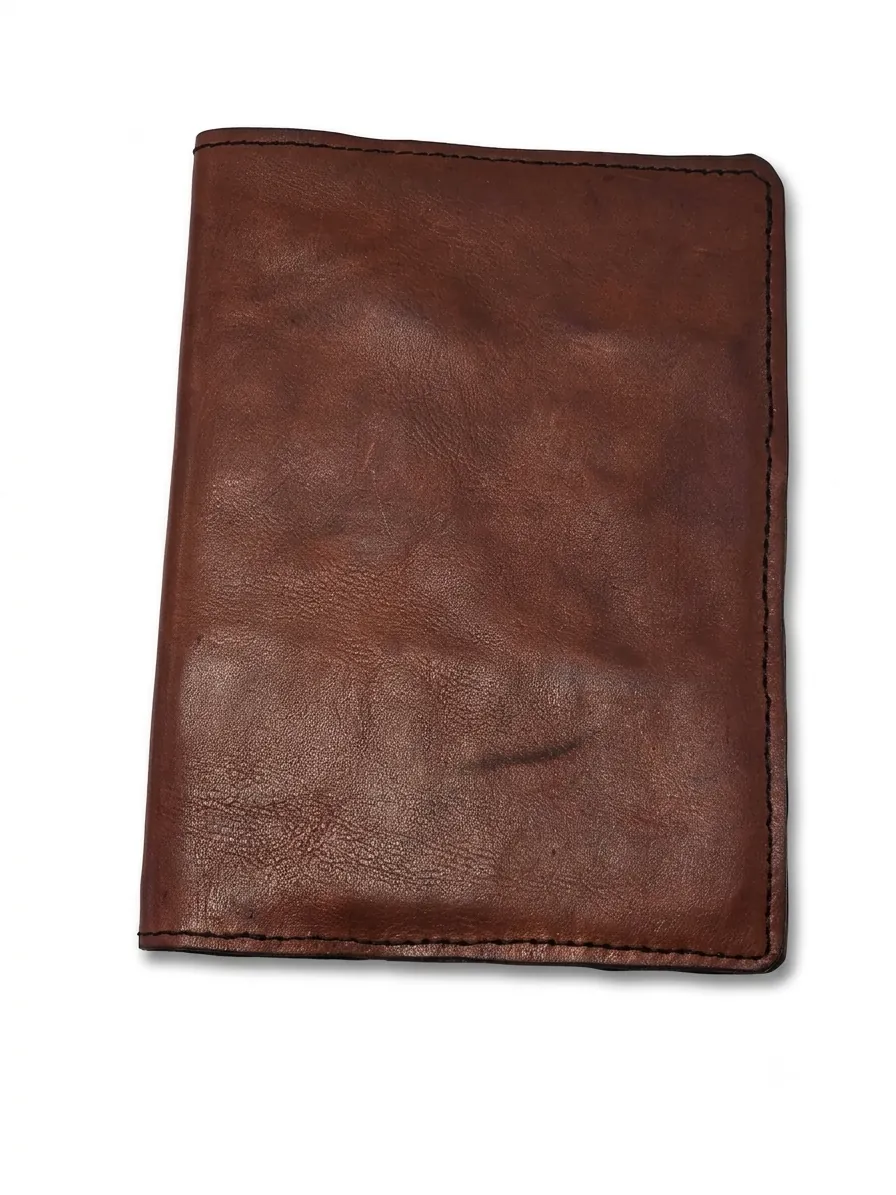
A5 has become a dependable middle size because it moves easily between desk use and everyday carry. It handles a longer journal entry, a few paragraphs of travel notes, a project outline, a recipe, a small sketch and a meeting page without forcing you to turn the page too soon. It is still compact enough for many backpacks, larger purses and totes, especially when the notebook itself has a flexible cover.
It also gives you a wide choice of refill styles. You can find lined, dot-grid, blank and planner inserts in A5, along with notebooks with elastic closures, stitched spines and replaceable paper. That flexibility is valuable when the leather cover is the lasting piece and the paper inside changes with the season. One refill might be a work notebook. The next might become a travel journal or a place to keep family recipes.
For a leather cover, A5 is especially satisfying when you want a setup that feels substantial in the hand without feeling oversized. A standard A5 notebook can be a good starting point for The Chronicler's Cover, while the broader question of finished size is covered in the A5 notebook cover size guide. The important part is still the actual notebook: paper size tells you where to start, while the closed book tells you what has to fit.
Half Letter makes sense when U.S. refills and planners matter
Half Letter is practical for people who prefer U.S. paper measurements, shop local office and stationery suppliers, or already use an American planner system. It is easy to understand at a glance: a standard Letter sheet is 8.5 by 11 inches, so Half Letter is 5.5 by 8.5 inches. That makes home printing, cutting inserts and buying loose-leaf paper straightforward. For someone who likes to customize pages, it can be an easy format to live with.
The format is also a favorite in ring, disc-bound and loose-leaf systems. Those binding styles can be genuinely useful because pages can move as projects change. A work plan can be lifted out and archived. A packing list can move to the front. A fresh calendar can take the place of an old one without replacing the whole cover. The tradeoff is that rings, discs and coils add width and can catch inside a close leather sleeve.
If you use a Half Letter planner, measure it when it is full, not when it is empty. Tabs, dashboards, dividers, pockets, elastic bands and a pen loop all change the outside dimensions. A slim stitched notebook may fit comfortably into a cover designed around its page size. A thick disc-bound planner with accessories may need a roomier design or a custom measurement. This is where an almost-right cover becomes annoying fast.
Do not buy a fitted cover by paper size alone
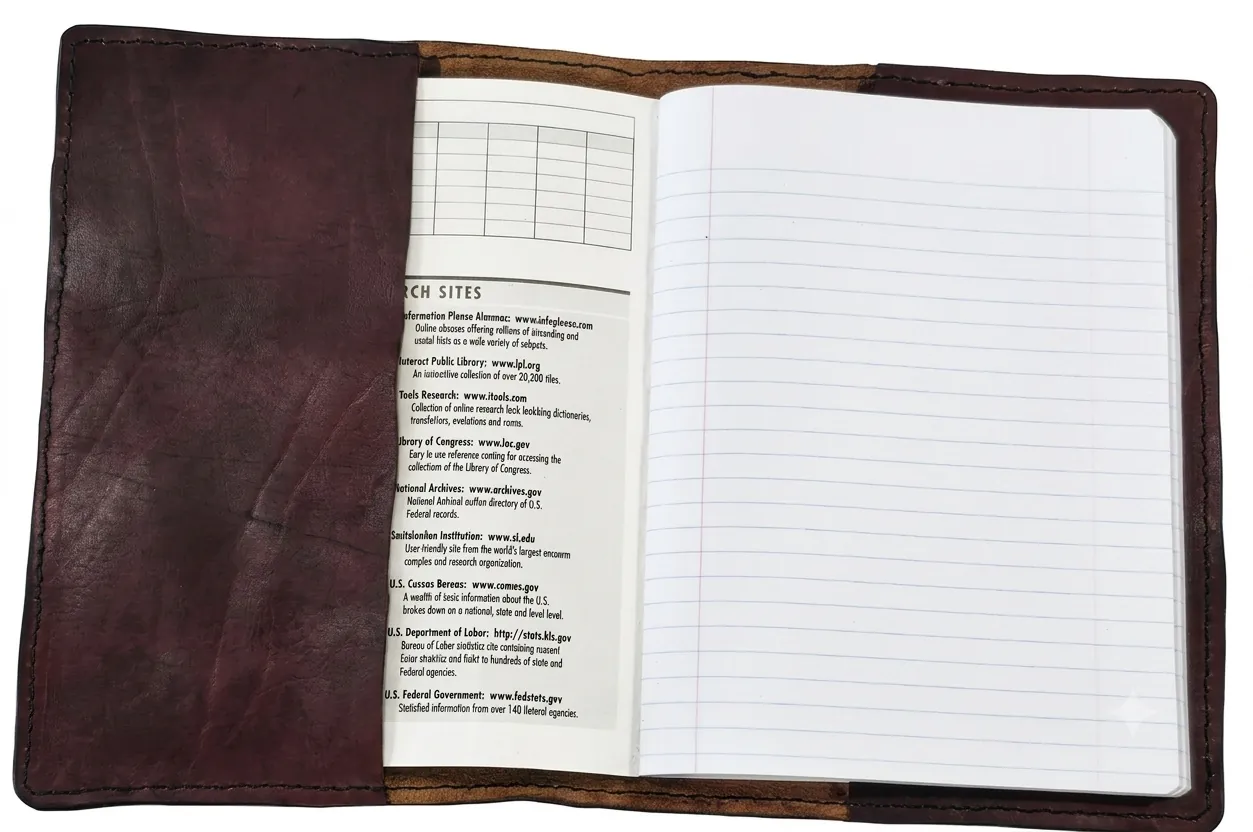
Paper size is only the first number. A finished notebook may be taller, wider or thicker than the page inside it. Hardcover boards can add a noticeable edge. A sewn notebook may have a rounded spine. A spiral or disc-bound book can be wider at the binding than at the paper. An elastic closure, pen loop or back pocket can also affect the fit. A close leather cover needs the complete outside measurement, not a guess based on the page label.
Measure the notebook closed on a flat surface. Note the height from top to bottom, the width from cover edge to cover edge, and the thickness at the spine or widest point. If it has a coil, rings or discs, measure the hardware too. If it will carry a pen inside the cover, include that allowance in your thinking. A cover should support the notebook's natural shape, open without a fight and leave enough room for the pages to get a little fuller with use.
This is especially important for a gift. A5 and Half Letter are close enough that a well-meant guess can miss by just enough to cause rubbing, sliding or an edge that will not close properly. When you know the exact notebook, measure it. When you do not, a flexible wrap-style cover or a custom conversation is more sensible than pretending that all notebooks with a familiar label share the same outside size.
Check the binding before you choose the cover
A stitched, glued or thread-bound notebook usually has a smooth outside edge. That makes it the easiest partner for a leather cover because the book slides in cleanly and opens naturally. A refillable cover can also give the notebook a little protection from bent corners, spilled coffee and the ordinary wear of being carried from one place to another.
Spiral, ring and disc-bound formats solve a different problem. They lay flat well and allow pages to move, but the hardware changes the notebook's effective width. A coil can press into a close sleeve. Large discs can make the book sit unevenly. Ring mechanisms can add hard edges that are better suited to a cover designed specifically around them. Do not force a structured planner into a narrow sleeve just because the paper itself looks right.
For a standard composition-style notebook, the composition notebook cover guide shows the same practical rule at a different scale: measure the finished book, including the binding and cover. It takes only a minute and keeps the final setup from feeling like a compromise.
Carry test: where will this notebook actually go?
A5 and Half Letter both travel well, but the bags you already use should decide the winner. Lay a sheet of cardboard or folded paper cut to each size inside your everyday bag. Try the pocket that usually holds a notebook. Check whether it can sit flat beside a wallet, water bottle or charger. Then hold each size as if you were writing on a train seat, in a coffee shop or standing at a counter. The better size tends to announce itself quickly.
A5 is often the better fit for a tote, messenger bag, backpack or larger purse. It is substantial enough for longer writing and still compact enough to go almost anywhere you are carrying a real bag. Half Letter has a small advantage in narrow spaces. It can feel better in a compact shoulder bag or when it needs to ride beside a tablet, book or other daily gear without taking over the whole compartment.
Weight matters too. The difference between bare sheets is tiny. The difference between a slim softcover notebook and a thick planner with metal discs, dividers and a leather cover is not. If you want the notebook to come with you every day, build the lightest setup that still handles your real writing. A beautiful cover cannot make an overstuffed system convenient.
Choose the cover around the notebook you use most
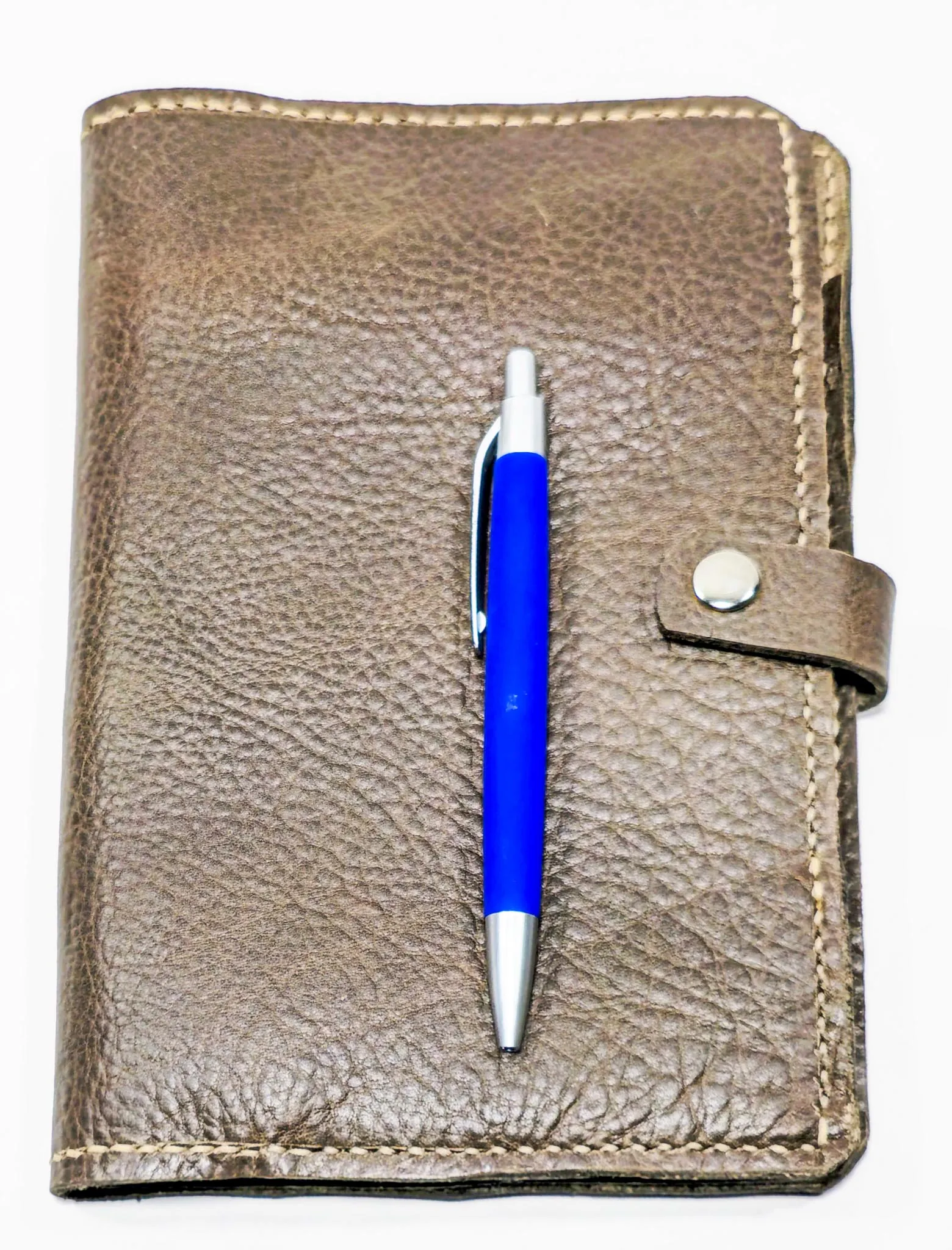
The best leather cover is not the one with the most features. It is the one that makes a notebook you already enjoy easier to keep close. If your everyday book is a standard A5, start with a cover designed for that finished size and leave room for the spine and any interior pocket. If you rotate between different A5 notebooks, a flexible cover with some tolerance is more useful than a tight sleeve made for one exact edition.
For a smaller, lighter notebook, the Mini Leather Journal Cover is a useful starting point. For a larger U.S. composition notebook, the Large Leather Journal Cover is made around that familiar format. Those are different jobs, and that is the point. A cover feels better when it respects the book inside instead of asking one size to pretend it is another.
When the notebook has unusual proportions, a thick binding, planner hardware, specialty paper or personal additions such as tabs and a pen loop, a custom leather order is the cleanest path. Share the closed height, width, thickness, binding type and the way you carry it. That gives the maker enough information to build for the routine rather than merely the label.
Thickness changes the answer more than most people expect
Two notebooks with the same page size can behave like completely different objects. A 60-page stitched notebook stays slim and slides easily into a close cover. A planner with 200 pages, cardstock dividers, a pocket, stickers, an elastic strap and a pen can be more than twice as thick before you add the cover itself. Page size is a footprint. Thickness is the part that determines how much material has to bend around the notebook.
A simple way to judge this is to close the notebook the way you normally carry it, then look at the spine rather than the front. Is it flat or rounded? Do tabs push past the page edge? Does the elastic pull it closed? Is there a pen tucked under the band? Those details affect the required allowance. A leather cover that is too tight can strain at the spine, resist opening and make the notebook feel bulkier than it did by itself.
Leave a little room for a notebook that is meant to collect a life. Journal pages gain notes, ticket stubs, sketches, taped-in photographs and folded lists. A planner gains completed months and project pages until you archive them. That does not mean every cover should be oversized. It means the right fit should account for the book at its honest working thickness, not its thinnest first-day version.
Structured leather is especially worth treating carefully. A crisp cover or padfolio looks and feels better when the contents settle inside it naturally. If you need to tug the book into place, force a flap shut or watch the corners bow outward, the sizing is not doing its job. Choose a roomier design or measure for a custom cover before the leather has to pay for a bad guess.
Make a quick paper template before you buy
When you are deciding between A5 and Half Letter, make the comparison physical. Cut one rectangle at 5.83 by 8.27 inches and a second at 5.5 by 8.5 inches. Label the back if you need to, then place each shape where the notebook has to work. Put it inside the bag you use on weekdays. Lay it on your desk next to your keyboard. Hold it with one hand as if you were writing while standing. This small test beats a long afternoon of comparing product descriptions.
Try the template in the spaces that usually cause trouble. A narrow purse compartment may favor Half Letter's smaller width. A tote with a horizontal organizer may make A5 feel more natural. A jacket pocket may reject both once a leather cover is added. Do the test with the other things that compete for space, such as a water bottle, charger, wallet or paperback. The goal is not to find the largest notebook that technically fits. It is to find the one you will not resent carrying.
Then test the page shape itself. Draw a few lines across each rectangle, a small weekly plan, a shopping list and a quick meeting note. If you like seeing a wide thought spread across the page, A5 may win. If you naturally write from top to bottom and turn pages often, Half Letter may feel more orderly. This is a low-stakes decision that becomes much easier once it leaves the screen and gets into your hands.
Finally, remember that a leather cover adds a little more width, height and presence. That is part of its appeal, but it is also why the paper test should be a starting point, not the final measurement for a fitted case. Once you have chosen your notebook, measure the actual closed book and use those numbers for the cover.
Think about page orientation and refills
Most A5 and Half Letter notebooks are used vertically, but both sizes can work in landscape when the project calls for it. A5 landscape gives a compact, wide spread for a travel map, a meeting outline or a small sketchbook. Half Letter landscape can feel like a slim notepad, useful for short lists, tracker pages and planning blocks. Neither orientation changes the dimensions of the paper, but it changes how the page fits the way you think.
Refills are the other practical difference. A5 is widely used internationally, so travelers and people who enjoy specialty notebooks often find a broad selection of sewn journals, dot-grid books and inserts. Half Letter is particularly convenient when you want to print your own pages at home or add loose paper to a U.S. planner system. Before investing in a cover, make sure you can easily replace the paper in the format you choose. A good leather cover should outlast many notebooks, not tie you to a refill you cannot find.
If you use a refillable cover, decide whether you want one notebook at a time or a simple collection of inserts. One book keeps the profile slim and uncomplicated. Two or three thin inserts can separate work notes, personal journaling and travel plans, but the total thickness adds up quickly. The same principle applies to both sizes: keep enough paper for the habit, then leave the rest at home.
The practical test is whether you can find the refills you want without turning every replacement into a special order. Choose the page style, binding and size you genuinely enjoy, then build the leather around that reliable choice. That approach gives the cover a long useful life while letting the contents change with your needs.
A practical decision rule
Choose A5 when you want a versatile journal, a little more room across the page, and access to the broad A5 refill world. It is the better match for longer entries, planning spreads, sketches and notes that need side-by-side context. It also makes sense when you want a leather cover to become a lasting companion for several future notebooks of the same general format.
Choose Half Letter when you already use a U.S. planner or loose-leaf system, want easy home-printed inserts, or prefer a narrow, vertical page for lists and daily planning. It is a strong practical choice, but only when the binding and accessories remain manageable. If the planner uses large discs or rings, plan for their full width before you settle on a fitted cover.
Either format can be excellent. The point is to choose the notebook you will open, fill and carry, then give it a cover that belongs with it. A little measurement now is cheaper than an almost-right fit later. Good leather should make the habit easier, not make you work around the gear.
Frequently asked questions
Is A5 the same size as Half Letter?
No. A5 measures about 5.83 by 8.27 inches, while Half Letter measures 5.5 by 8.5 inches. Their total page area is close, but A5 is wider and shorter, and Half Letter is narrower and taller.
Will a Half Letter notebook fit an A5 leather cover?
It may fit loosely in a flexible cover, but it will not have the same secure fit as a cover made around its true finished dimensions. The difference in width and height matters more when the cover is structured or close-fitting.
Which is better for a planner, A5 or Half Letter?
Half Letter is often convenient for U.S. planner inserts, home printing and disc-bound systems. A5 is often better when you want a broader writing area and a wider choice of internationally sized notebooks and refills. The best option depends on your binding, page style and daily carry.
How do I measure a notebook for a leather cover?
Measure the closed notebook's full height, full width and thickness at its widest point. Include the cover boards, spiral, rings, discs, elastic closure, tabs and any pen loop. A fitted cover needs the outside measurements of the real book, not only the page size.
Keep reading
More from the journal.
How to Make a Leather Journal Cover: A Maker’s Starter Guide
A practical introduction to planning, cutting and finishing a simple leather journal cover, with the measurements and mistakes worth understanding before you begin.
Read the guide ↗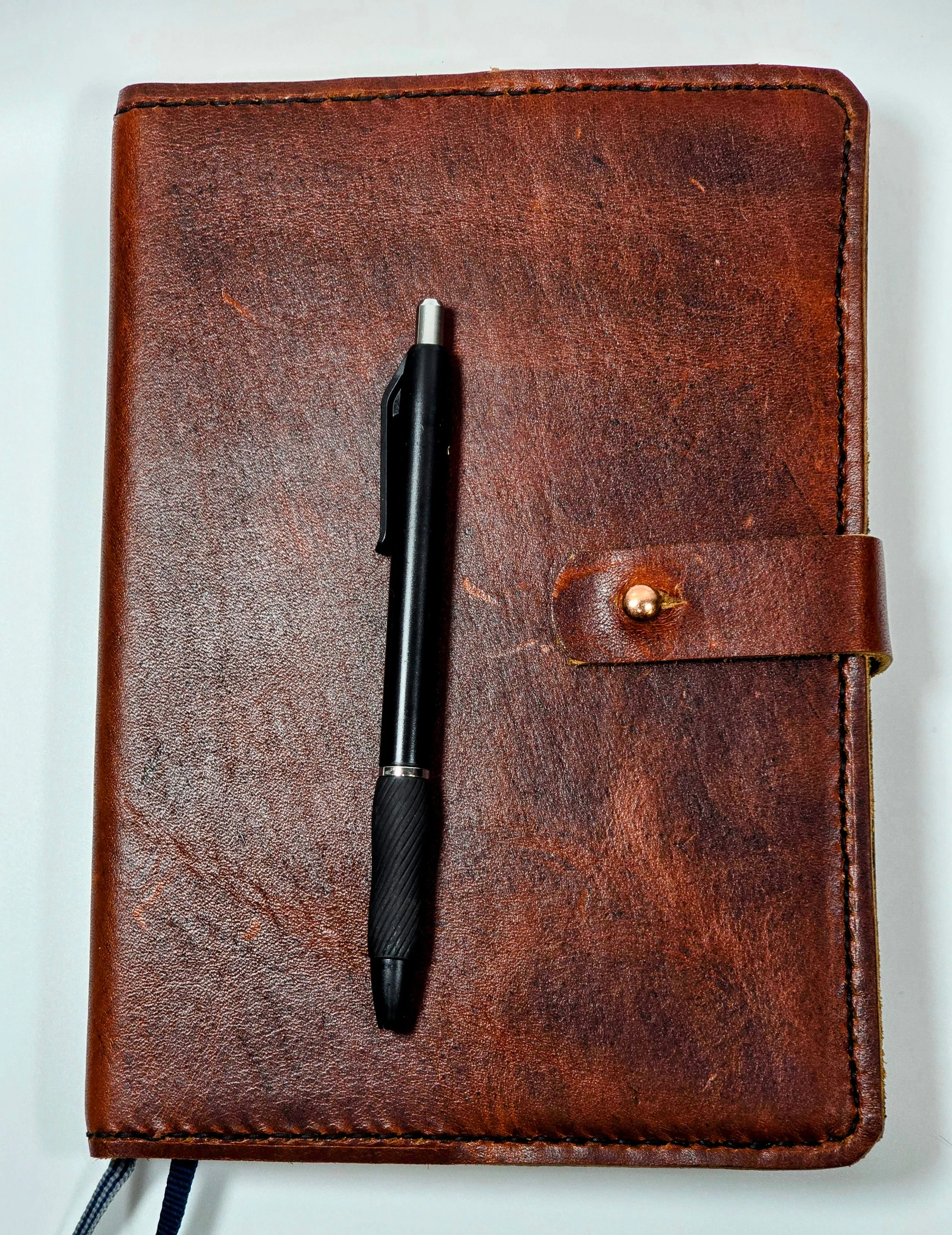
The Best Gifts for Writers, Travelers and Tabletop Gamers
Thoughtful handmade leather gift ideas for people who write, roam, roll dice and keep the good details close.
Read the guide ↗