Adventure Journaling
B6 Notebook Size: Dimensions, A5 Comparison and Cover Fit
Learn B6 notebook dimensions, the difference between ISO and Japanese B6, and how to choose a cover that fits the book you actually carry.
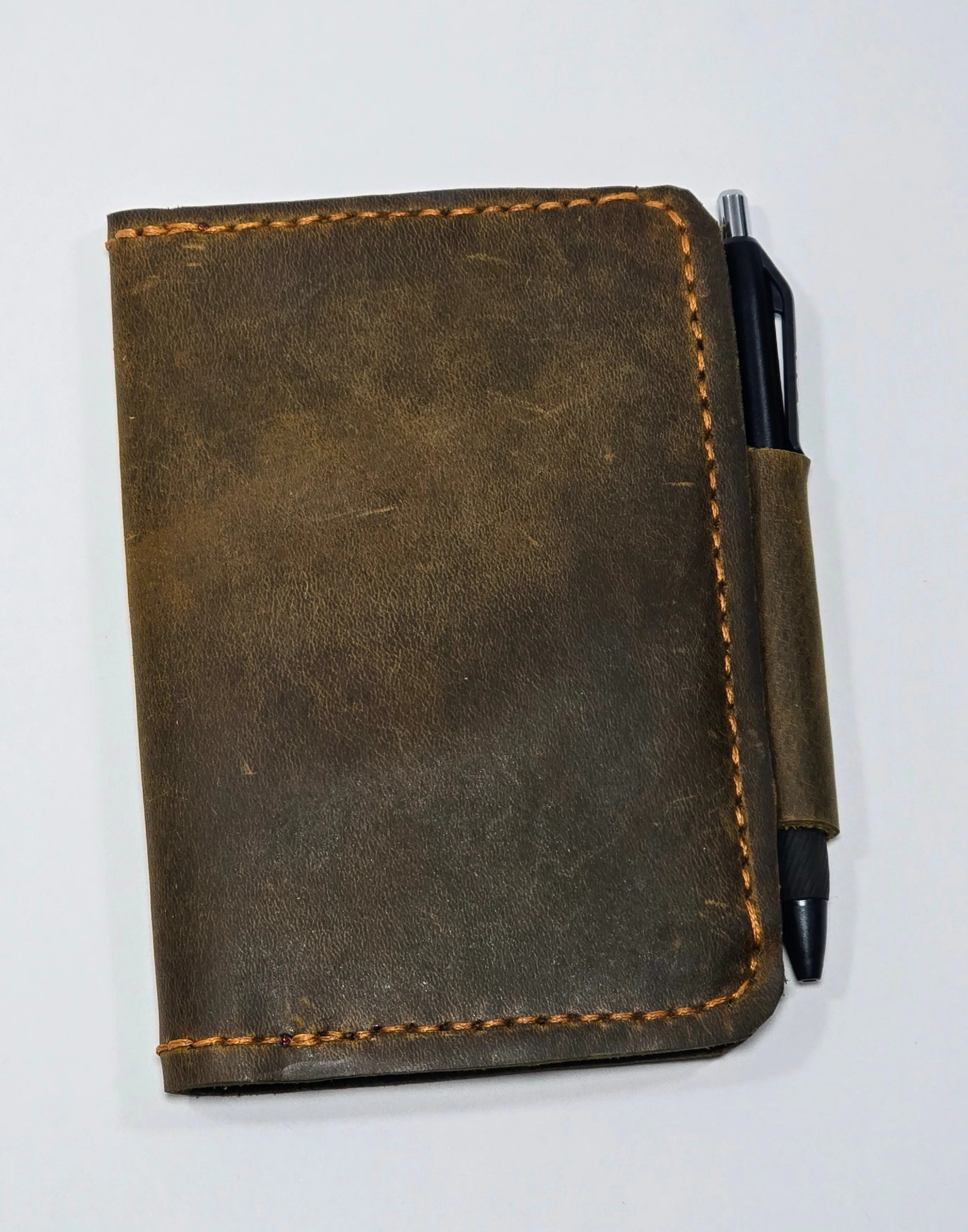
B6 is one of those notebook sizes that looks straightforward until you try to buy a cover for it. The name appears on journals, planners and slim notebooks, but it does not always point to one exact set of measurements. An ISO B6 page measures 125 by 176 millimeters, or about 4.9 by 6.9 inches. A Japanese B6 notebook is commonly 128 by 182 millimeters, or about 5.0 by 7.2 inches. The difference is small in a tote and significant in a close leather cover.
That is why a B6 label is a starting point, not the final answer. Before you choose a cover, compare the standard, the notebook's outside dimensions, the binding and the thickness you expect it to carry. B6 can be a wonderful middle ground for people who want more room than a pocket notebook without taking an A5 journal everywhere. It simply needs an honest fit check.
B6 notebook size at a glance
The term B6 comes from the B-series paper system. In the international ISO system, B6 measures 125 by 176 millimeters, which is roughly 4.9 by 6.9 inches. It is smaller than A5, which measures 148 by 210 millimeters, and larger than A6, which measures 105 by 148 millimeters. That puts B6 in a useful in-between position: it is compact enough for everyday carry while still giving you a page that does not feel like a tiny note card.
There is one important wrinkle. Some notebooks made for the Japanese market use JIS B6, a related standard that measures 128 by 182 millimeters, or about 5.0 by 7.2 inches. The extra few millimeters may sound fussy, but leather is a physical material. A fitted sleeve, inner pocket or wrap with a fixed flap can reveal that difference immediately. When a product says B6, look for the printed dimensions before assuming an ISO B6 cover will be exact.
The paper standards themselves are designed around consistent proportions. The ISO 216 standard covers the familiar A, B and C paper series, while paper makers often publish practical charts to help compare the finished sizes. The ISO 216 paper-size standard is the useful technical reference. For shopping, though, the notebook in your hand is what matters most.
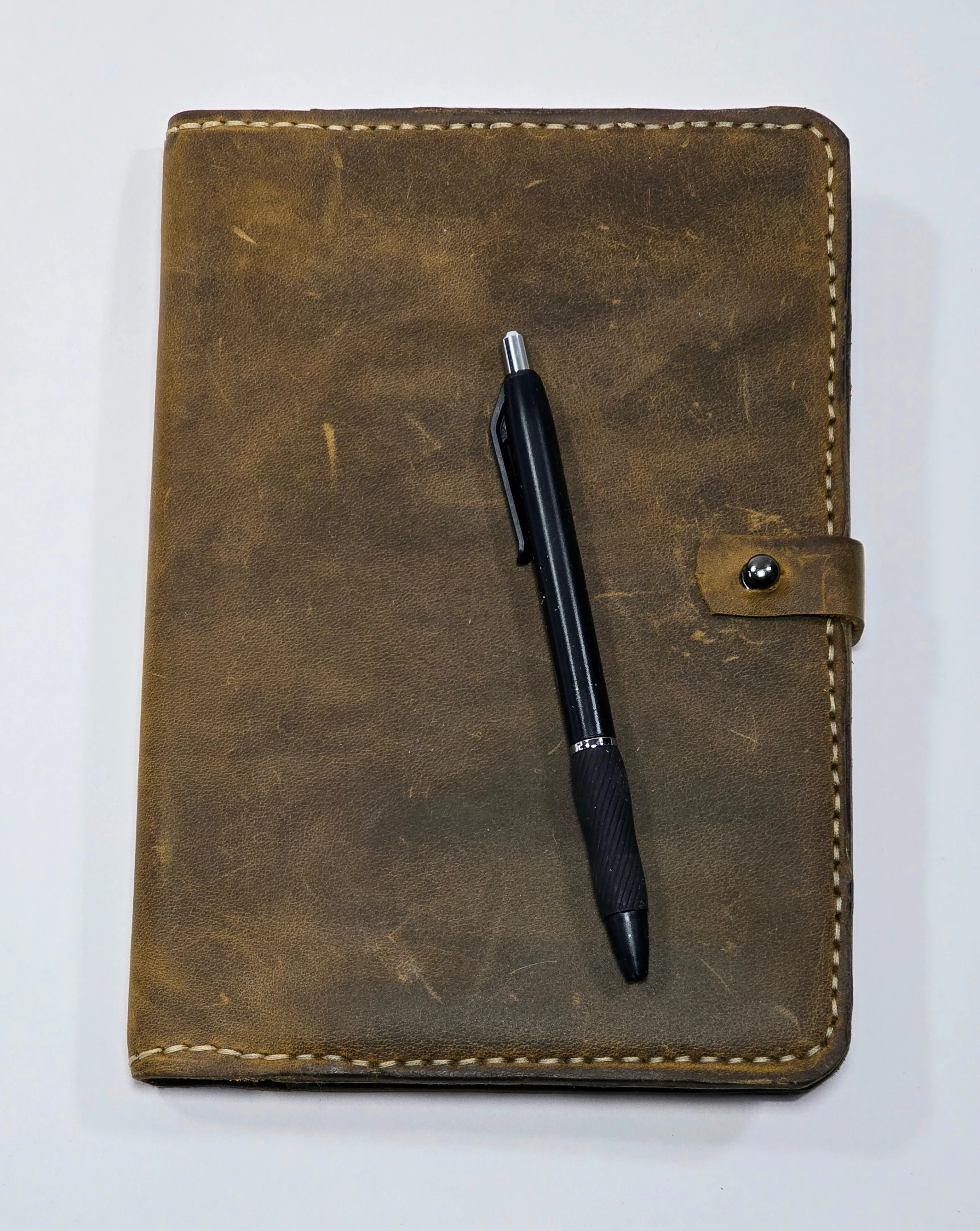
ISO B6 and Japanese B6 are close, but not interchangeable
Think of ISO B6 and Japanese B6 as close relatives rather than identical twins. Both are compact formats that sit between A6 and A5, and both are commonly used for planners, journals and everyday notes. But the Japanese version is a little taller and wider. A loose elastic cover may handle either one comfortably. A leather cover with stitched pockets, a close sleeve or a snap placed for one size may not.
The safest way to tell them apart is not by the country printed on a listing. Look for a height and width in millimeters or inches. If the notebook is close to 125 by 176 millimeters, start with ISO B6. If it is close to 128 by 182 millimeters, treat it as Japanese B6. A finished notebook can be larger than either paper size because a hard cover, rounded corners, an elastic closure and the binding all add material outside the page.
This is especially important with leather because a good cover is made to feel settled, not stretched. A cover that is too small can catch corners, pull at a spine or refuse to close naturally. One that is too loose can make a compact notebook slide around and lose the tidy feel that made B6 appealing in the first place. Measure first, then let the cover follow the notebook.
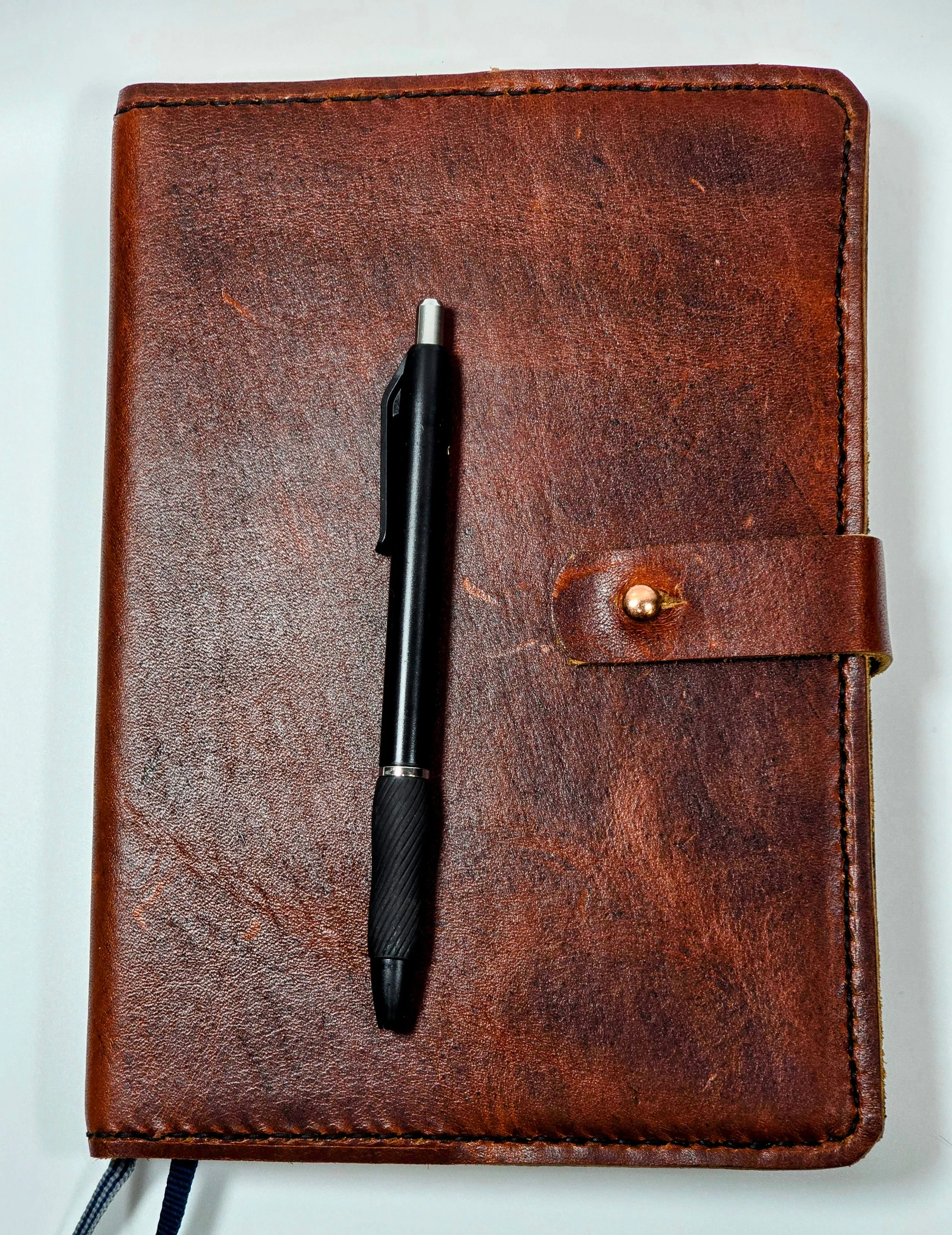
How B6 compares with A5, A6 and composition notebooks
B6 is about 4.9 by 6.9 inches in the ISO system. That makes it visibly smaller than A5 at 5.8 by 8.3 inches, yet much roomier than A6 at 4.1 by 5.8 inches. An A5 page has more breathing room for long meeting notes, journal entries, sketches and planning spreads. A6 is easier to carry in a small bag or jacket pocket, but it asks you to keep your writing brief. B6 sits between those two jobs.
For many people, B6 feels like a personal notebook. It is large enough for a daily page, a packing list, a few paragraphs of travel notes, a small sketch or a spread of appointments. It is less suited to wide diagrams, full-page study notes or a planner layout with several columns. If you routinely turn the notebook sideways to make room, A5 is probably the better choice. If you want something that can come along without filling your bag, B6 earns a serious look.
A composition notebook is a different category entirely. The common 7 by 9.5-inch composition format gives you a larger page and more space for schoolwork, detailed planning and longer entries. The composition notebook cover guide explains why even notebooks that share a familiar name can vary at the outside edges. B6 is not a smaller composition book. It is a deliberate compact format with a different kind of carry in mind.
If you are deciding between B6 and A5, start with the moments when you actually write. The A5 versus A6 guide is helpful for seeing the larger range. B6 works well when A5 feels just a little too large to carry daily, while A6 feels just a little too cramped once you begin writing.
Choose B6 when you want a capable notebook that travels lightly
B6 is a strong choice for people who like to keep a notebook nearby rather than leave it at a desk. It fits comfortably in many day bags, small backpacks and larger purses. It is easier to use on a train seat, in a waiting room or over coffee than a larger book that needs a clear table. That makes it a natural format for daily journaling, quick work notes, reading lists, field notes and short travel entries.
It can also make a good planner size for someone who wants to see more than a pocket page without carrying a large ring binder. You can fit a weekly view, a handful of tasks and a few notes on a spread, then close the book and put it away without rearranging the rest of your bag. The smaller footprint creates a useful limit: it encourages you to keep the notebook focused instead of turning it into a place where every loose paper lives.
B6 is less convincing when you need to draw large diagrams, compare several pages at once or write dense class notes. In those situations, A5 gives you more working room without jumping all the way to a full-size notebook. The choice is not about which format looks more serious. It is about whether the notebook is available when the thought, plan or detail arrives.
Check the finished notebook, not only the paper size
Paper size describes the pages. A cover has to fit the whole notebook. Close the book naturally and measure the outside height, outside width and thickness at the spine. Include the existing cover, elastic band, pen loop, tabs and any papers you regularly tuck inside. A spiral or disc binding deserves special attention because it can be the widest part of the notebook even when the pages are true B6.
For a close leather sleeve, height and width matter first. The cover needs enough room for the notebook to slide in without rubbing its corners. For a refillable cover with interior pockets, thickness matters just as much. A thin stitched notebook and a thick planner can use the same B6 paper while needing very different amounts of room at the spine. A closure that works beautifully with a fresh notebook may become frustrating after you add stickers, receipts, cards or a full year of planning pages.
A simple paper test can remove uncertainty. Cut a piece of paper to the advertised B6 dimensions, lay it over the notebook and check whether the pages and outer cover agree. Then wrap another sheet around the closed notebook to get a sense of the thickness and where a flap would land. You are not trying to make a perfect pattern. You are checking whether the finished object needs a close fit, a little more give or a custom solution.
Binding changes how a B6 cover behaves
A stitched or glued B6 notebook usually has the cleanest profile for a leather cover. It slides into a sleeve easily, opens with little resistance and does not create a hard ridge at one edge. Many people prefer this setup for journaling because it keeps the outside simple and lets the leather take on the work of protecting the paper in a bag.
Spiral-bound B6 notebooks lay flat and make it easy to fold pages back, which can be excellent for practical notes. The tradeoff is the coil. It adds width, can press into a close pocket and may catch as you slide the notebook in or out. A cover made specifically around a spiral binding can work well, but a generic fitted sleeve is more likely to feel awkward. Measure across the widest point of the coil, not only the page.
Ring and disc-bound planners create a similar question. They offer flexible pages and inserts, but the hardware adds bulk that changes as the notebook fills. A wrap cover or a design with more room at the spine is often kinder than a tight sleeve. If you want to keep one leather cover through several refill styles, choose the notebook system first and make sure the cover has the tolerance to follow it.
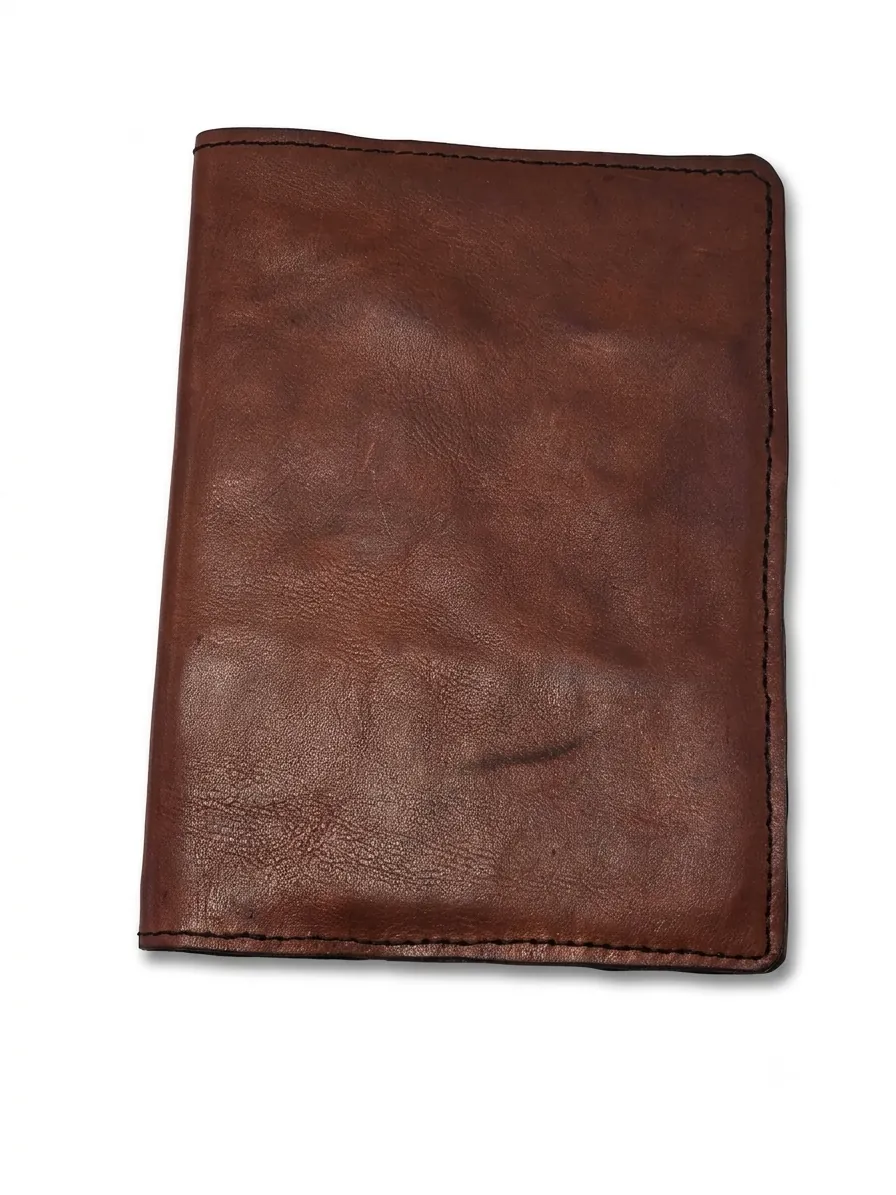
Give each notebook size a job
A notebook size becomes easier to choose once you stop asking it to do every job. B6 works beautifully as the book that stays with you: a morning plan, a few notes from a meeting, a restaurant recommendation, a short journal entry or a page of ideas captured before they disappear. Its smaller page helps keep one thought or one day contained. That can make it easier to return to, especially for someone trying to build a regular writing habit rather than fill a large blank page.
A5 is a better home base when your notes naturally expand. It gives more room for a full project plan, several lists on the same spread, a detailed journal entry or a sketch that needs context around it. If you often write on a desk and later review what you wrote, that larger page can be worth carrying. The A5 versus B5 notebook guide shows how this tradeoff continues when your work needs an even broader writing surface.
There is no rule that says you must choose only one notebook format. A compact B6 book can carry daily observations and next actions, while an A5 notebook stays at home or work for the material that needs more space. When you sit down, move the few notes that deserve a longer treatment into the larger book. This keeps your portable notebook light and prevents important ideas from getting lost across a stack of unrelated papers.
Try a short test before investing in a cover. Carry the B6 notebook you already own, or make a paper stand-in at the dimensions you are considering. Put it in the bag you use most. Open it where you normally take notes. Write a typical page, then notice what bothers you. If the page feels cramped, step up to A5. If the notebook keeps staying at home because it takes up too much room, B6 is likely the size that will actually become part of your routine.
Choose the paper and page layout with the same care
Notebook dimensions are only one part of how a B6 book feels in use. A B6 notebook with lightweight ruled paper can be an excellent daily carry because it stays slim even after you fill many pages. A B6 notebook with thick sketch paper or paper chosen for fountain pens may have the same height and width, yet its spine can become noticeably deeper. That difference matters when you are choosing a leather cover.
The page layout changes the practical feel too. Ruled B6 pages make compact writing easy to scan later. Dot-grid pages give you freedom for lists, diagrams and small planning spreads without dictating the structure. Blank pages suit sketches, pasted mementos and looser journal entries. None of those choices changes the cover height and width, but they do shape whether B6 feels like a notebook you reach for every day.
If you work with several B6 inserts, compare their paper count and finished spine depth before settling on a cover. A cover fitted around one slim notebook can feel crowded with a second insert, a pen loop or a few folded travel papers. Starting with the actual book and the way you fill it gives you a better result than choosing from a size label alone. The right amount of room should make daily use feel easy, without leaving the notebook loose and unprotected.
A practical B6 cover checklist
Before ordering a B6 cover, write down the notebook's exact outside dimensions. Then compare them with the maker's stated fit, not just a product title that says B6. Ask whether the listed size refers to the page, the interior pocket or the maximum notebook the cover will hold. Those are different measurements, and the answer tells you whether the fit is likely to be calm or frustrating.
Use this short checklist: measure height, measure width, measure the spine, note the binding, account for elastic and pen loops, and think about how much the notebook will grow. If you use a planner, check it when it is loaded for a normal week. If you journal, tuck in the few keepsakes you usually carry. A cover should work on an ordinary day, not only when the notebook is brand new and empty.
Also consider how you carry it. A compact Mini Leather Journal Cover may be the better ready-made starting point when B6 is part of a light everyday kit. For a larger notebook or a book with unusual proportions, the goal is not to force a near match. It is to find a cover designed for the real dimensions.
When a custom leather cover is the better answer
A custom cover becomes worthwhile when your B6 notebook has an unusual outside size, a thick binding, a pen loop, added pockets or a planner setup that grows through the year. Those details are not a nuisance. They are the information that helps a maker build something comfortable to use. A good custom cover can leave room where the notebook needs it and stay tidy where it does not.
The Kilted Leatherworker makes covers one piece at a time around the books people actually use. Bring the closed height, width and thickness, along with a photo of the front, spine and open notebook. Mention whether you want a simple wrap, interior pockets, a pen loop or room for a fuller notebook later on. The custom leather notebook cover page walks through the practical details that make the fit work.
For a standard A5 routine, The Chronicler's Cover is made around that widely available format. For B6, the same principle applies: start with the notebook you enjoy using, then choose leather around its real shape. That gives you a better opening feel, easier page turns and a cover you will keep reaching for after the paper is full.
The simple B6 decision
Choose B6 when you want more writing room than a pocket notebook but less bulk than A5. It is especially useful for daily notes, compact planners, travel journaling and personal writing that happens away from a desk. Choose A5 when you want a notebook that can handle longer pages, bigger layouts and more ambitious planning without feeling like a full portfolio.
Then check the standard. ISO B6 and Japanese B6 are close enough to confuse a product search and different enough to change how a fitted cover feels. Read the dimensions, measure the closed book and leave room for the binding and ordinary use. The best notebook cover does not make you change the notebook you like. It gives that notebook a durable place to go.
Frequently asked questions
What size is a B6 notebook?
An ISO B6 notebook page measures 125 by 176 millimeters, or about 4.9 by 6.9 inches. Japanese B6 is commonly 128 by 182 millimeters, or about 5.0 by 7.2 inches. Always check the notebook's printed outside dimensions before buying a fitted cover.
Is B6 bigger than A6?
Yes. ISO B6 is 125 by 176 millimeters, while A6 is 105 by 148 millimeters. B6 gives you more room for a daily page, a planner spread or a small sketch while still remaining compact enough for everyday carry.
Is B6 smaller than A5?
Yes. A5 measures 148 by 210 millimeters, so it has a larger page than B6. B6 is a useful middle option when A5 feels too large for daily carry but A6 feels too limited for the way you write.
Will an ISO B6 cover fit Japanese B6?
Not always. Japanese B6 is usually a little taller and wider than ISO B6. A flexible wrap may have enough tolerance, but a close sleeve or stitched interior pocket should be chosen around the exact outside measurements of your notebook.
How do I measure a B6 notebook for a leather cover?
Close the notebook naturally and measure its outside height, outside width and spine thickness. Include its cover, binding, elastic, pen loop, tabs and anything you normally keep inside. Compare those numbers with the maker's stated interior fit before ordering.
Keep reading
More from the journal.
A5 Notebook Cover Size: How to Get the Fit Right
Measure an A5 notebook the practical way, account for thickness, and choose a leather cover that fits without fighting the pages.
Read the guide ↗
A5 vs. A6 Notebook Size: Dimensions, Differences and Which to Choose
Compare A5 vs. A6 notebook dimensions in inches and millimeters, writing space and portability, then choose the size that fits your routine.
Read the guide ↗